Pharm'Up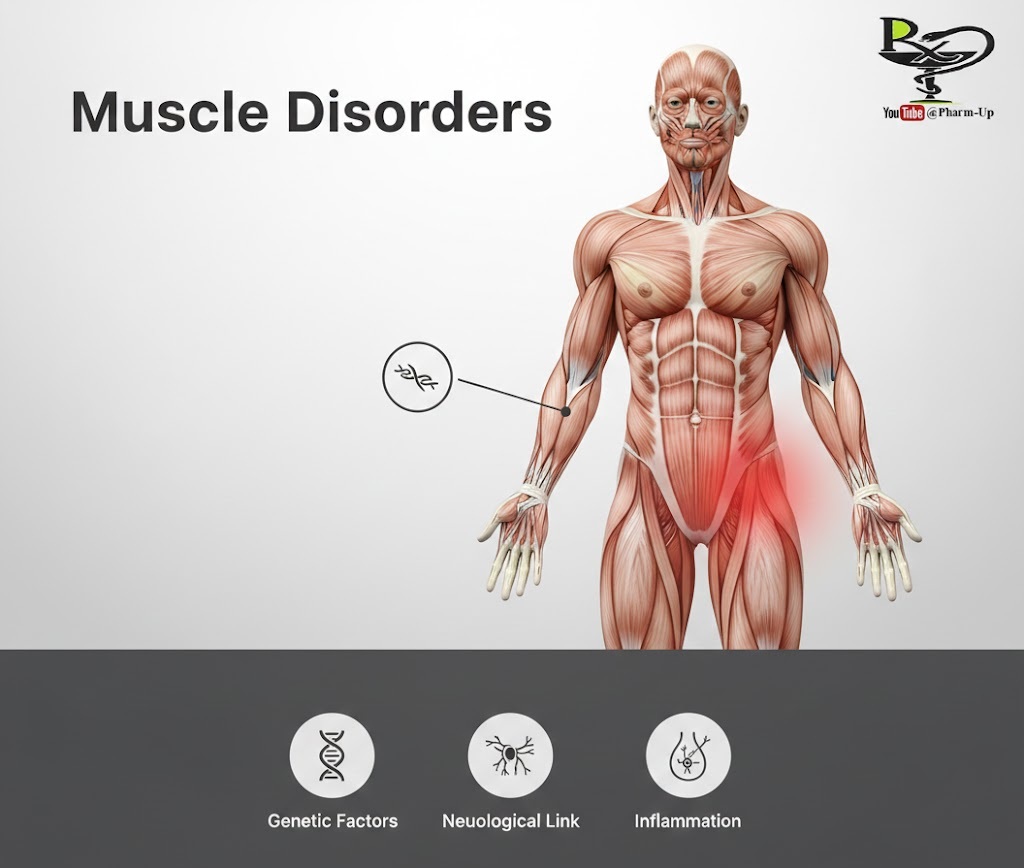
Your muscles are the engines of your body, responsible not only for movement but also for vital functions like digestion and circulation. When muscles are healthy, they contract and relax seamlessly; however, various disorders can lead to debilitating pain, weakness, or a complete loss of function.
The Three Types of Muscle
To understand muscle disorders, it is helpful to know what is being affected:
- Skeletal Muscle: Attached to bones; responsible for voluntary movement.
- Smooth Muscle: Found in internal organs; works automatically (involuntary).
- Cardiac Muscle: The specialized muscle of the heart.
Primary Causes of Muscle Disorders
Muscle problems arise from a wide range of sources, from lifestyle factors to complex genetic coding:
- Physical Stress: Overuse, sudden injuries like strains, or chronic inflammation like tendinitis.
- Genetic Factors: Conditions like Muscular Dystrophy, where the body lacks the proteins needed to build healthy muscle.
- Neurological Link: Because nerves tell muscles when to move, diseases of the nervous system (like ALS or MS) often manifest as muscle disorders.
- Inflammatory Diseases: Myositis occurs when the immune system mistakenly attacks muscle tissue, causing chronic swelling and weakness.
- Systemic Issues: Certain infections, cancers, or side effects from specific medications can also degrade muscle health.
Symptoms to Watch For
While pain is the most common indicator, other signs of a muscle disorder include:
- Progressive weakness that makes daily tasks difficult.
- Atrophy (visible wasting away of the muscle).
- Frequent, intense cramping or “charley horses.”
- Loss of coordination or paralysis.
About the Author