Pharm'Up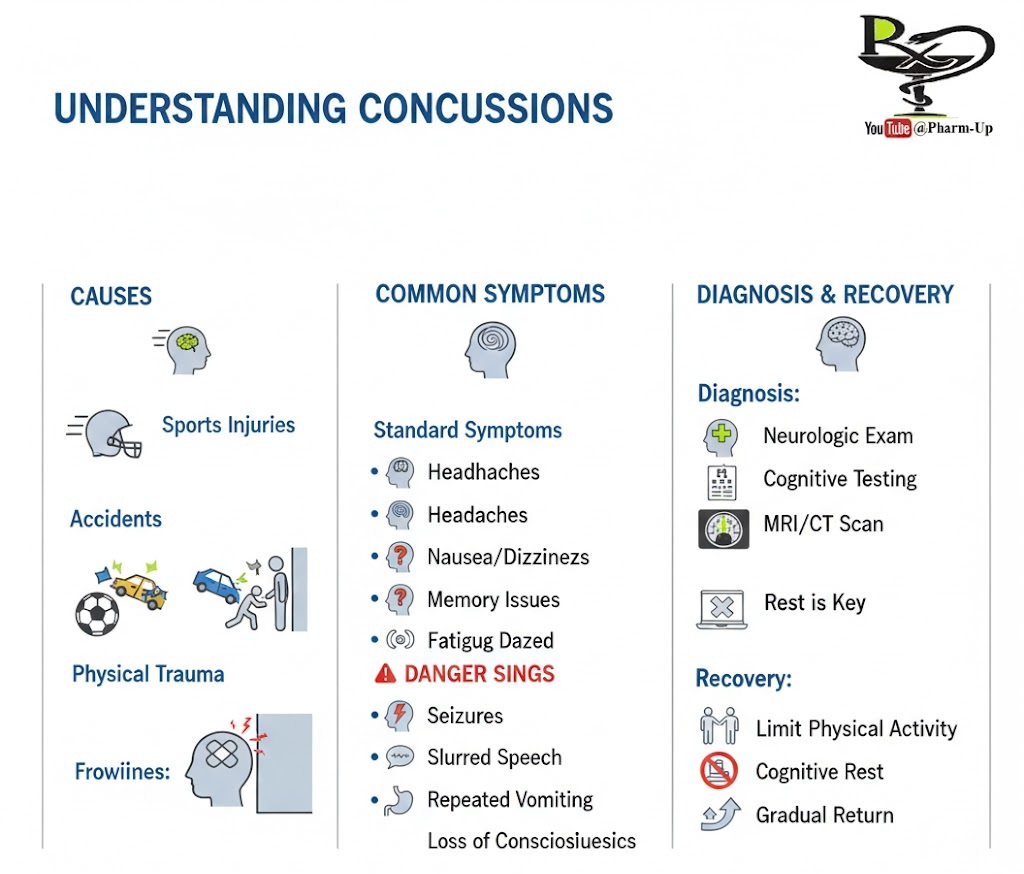
A concussion is a type of traumatic brain injury (TBI) caused by a bump, blow, or jolt to the head or body. This sudden movement causes the brain to bounce or twist inside the skull, leading to chemical changes and potential damage to brain cells.
While often described as a “mild” brain injury, every concussion should be taken seriously to ensure proper healing.
Common Causes
Concussions aren’t just limited to high-impact sports; they can happen in various everyday situations:
- Sports Injuries: Impacts during football, soccer, cycling, or gymnastics.
- Accidents: Car crashes or falls (especially in children and the elderly).
- Physical Trauma: Being violently shaken or hitting your head on an object.
Recognizing the Symptoms
Symptoms may not appear immediately—they can surface days or even weeks after the initial impact.
Standard Symptoms
- Physical: Headaches, neck pain, nausea, dizziness, or ringing in the ears.
- Sensory: Feeling dazed, foggy, or “not quite right.”
- Cognitive: Fatigue and difficulty concentrating.
⚠️ Danger Signs (Seek Immediate Medical Care)
You should consult a healthcare professional immediately if symptoms worsen or if you experience:
- Seizures or convulsions.
- Slurred speech or extreme confusion.
- Repeated vomiting.
- Loss of consciousness.
- Inability to wake up or extreme drowsiness.
- Numbness or decreased physical coordination.
Diagnosis and Recovery
Because concussions involve chemical changes, they don’t always show up on standard imaging, but medical evaluation is still critical.
How Doctors Diagnose
- Neurological Exam: Checking balance, vision, coordination, and reflexes.
- Cognitive Testing: Evaluating memory and thinking speed.
- Imaging (CT/MRI): Used primarily to rule out more severe issues like brain bleeding or skull fractures.
The Path to Healing
Rest is the primary treatment. In the early stages, the brain needs a break from both physical and mental exertion. This means:
- Limiting Physical Activity: Avoiding sports or heavy lifting.
- Cognitive Rest: Reducing time spent on computers, video games, or intense studying.
- Gradual Return: Slowly reintroducing activities only after symptoms subside and a doctor provides clearance.
About the Author