Pharm'Up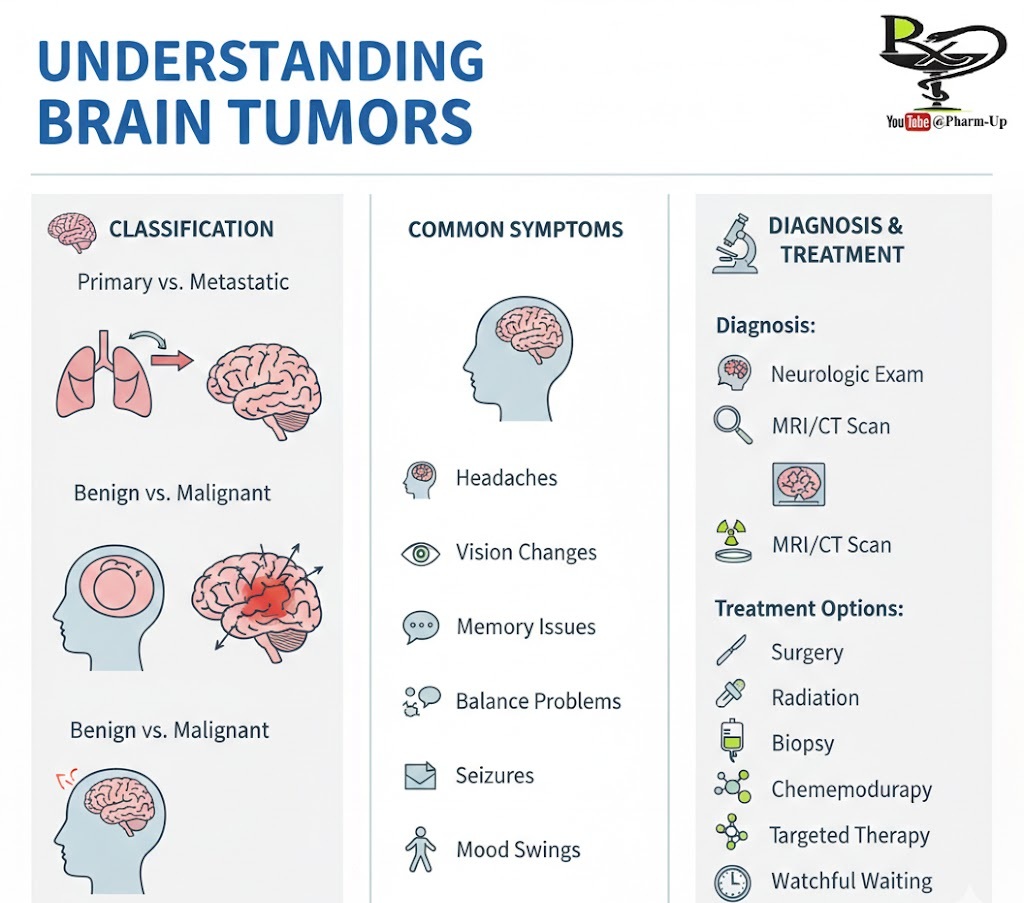
A brain tumor is a growth of abnormal cells within the tissues of the brain. These growths are categorized by their behavior and their origin, which significantly impacts how they are managed by medical professionals.
Classification of Tumors
Understanding the nature of a tumor is the first step in determining a prognosis and treatment plan:
- Benign: These do not contain cancer cells. While they grow slowly and don’t spread, they can still be life-threatening if they press on vital brain structures.
- Malignant: These are cancerous growths that expand rapidly and invade surrounding healthy brain tissue.
- Primary: Tumors that originate within the brain itself.
- Metastatic: Tumors that begin as cancer elsewhere in the body (such as the lungs or breasts) and spread to the brain.
Common Symptoms
Because the brain controls every bodily function, symptoms often depend on the tumor’s size and location. Common warning signs include:
- Neurological Changes: Headaches (frequently worse in the morning), seizures, and nausea or vomiting.
- Sensory & Motor Issues: Changes in vision, hearing, or speech; difficulty walking; or a loss of balance.
- Cognitive & Emotional Shifts: Problems with memory and thinking, unexplained mood swings, or personality changes.
- Physical Fatigue: Feeling unusually weak or excessively sleepy.
Diagnosis and Treatment Options
Modern medicine uses a multi-faceted approach to identify and combat brain tumors.
Diagnosis
Doctors typically begin with a neurologic exam to check vision, hearing, balance, and reflexes. This is followed by advanced imaging such as MRI or CT scans. In many cases, a biopsy (taking a small tissue sample) is necessary to identify the specific cell type.
Treatment Modalities
Most patients receive a combination of treatments tailored to their specific case:
- Watchful Waiting: Monitoring slow-growing, asymptomatic tumors with regular scans.
- Surgery: Physical removal of the tumor, provided it can be reached safely.
- Radiation Therapy: Using high-energy beams to kill tumor cells.
- Chemotherapy: Using drugs to destroy cancer cells.
- Targeted Therapy: A specialized approach using drugs that attack specific vulnerabilities in cancer cells, causing less damage to normal, healthy cells.
About the Author