Pharm'Up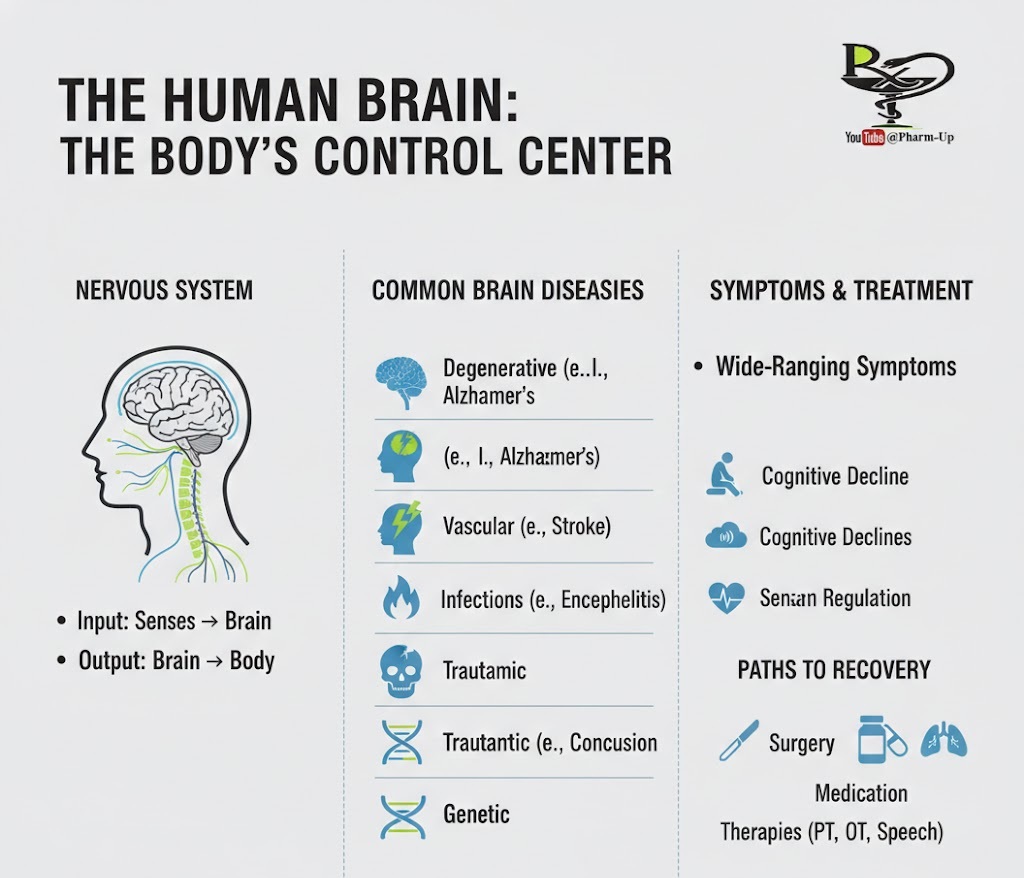
The brain is the most complex organ in the human body, acting as the central “command station” for everything you think, feel, and do. It is the core of the nervous system, working alongside the spinal cord and peripheral nerves to send electrical signals that regulate every bodily function.
How the Nervous System Works
The brain doesn’t work in isolation; it relies on a sophisticated communication network:
- Input: Nerves gather information from your senses (sight, touch, etc.) and send it to the brain.
- Processing: The brain interprets this data and makes decisions.
- Output: The brain sends signals back through the nerves to trigger movement or regulate organ functions like heart rate and breathing.
Common Brain Diseases and Disorders
When the brain’s “wiring” or tissue is damaged, it can significantly impact daily life. These issues are generally categorized by their cause:
| Disease Type | Examples | Primary Impact |
| Degenerative | Alzheimer’s, Parkinson’s | Gradually affects memory, movement, and balance. |
| Vascular | Stroke | Caused by lack of blood flow; affects speech and movement. |
| Infectious | Encephalitis | Inflammation that can cause paralysis or vision loss. |
| Traumatic | Concussions, TBI | Physical damage that can have temporary or permanent effects. |
| Genetic | Gene mutations | Affects how the brain develops from birth. |
| Structural | Brain Tumors | Growths that press on nerves and disrupt function. |
Symptoms and Treatment Pathways
Because the brain is so specialized, symptoms depend entirely on which part of the brain is affected.
Wide-Ranging Symptoms
- Loss of motor control or paralysis.
- Cognitive decline (memory loss, confusion).
- Sensory changes (blurred vision, slurred speech).
- Physical changes in breathing or heart rhythm.
Paths to Recovery
While some brain damage can be permanent, many conditions are manageable or curable through:
- Surgery: To remove tumors or repair vascular issues.
- Medication: To manage symptoms or fight infections.
- Rehabilitative Therapies: Physical, occupational, and speech therapy are vital for “re-training” the brain to regain lost skills.
About the Author