Pharm'Up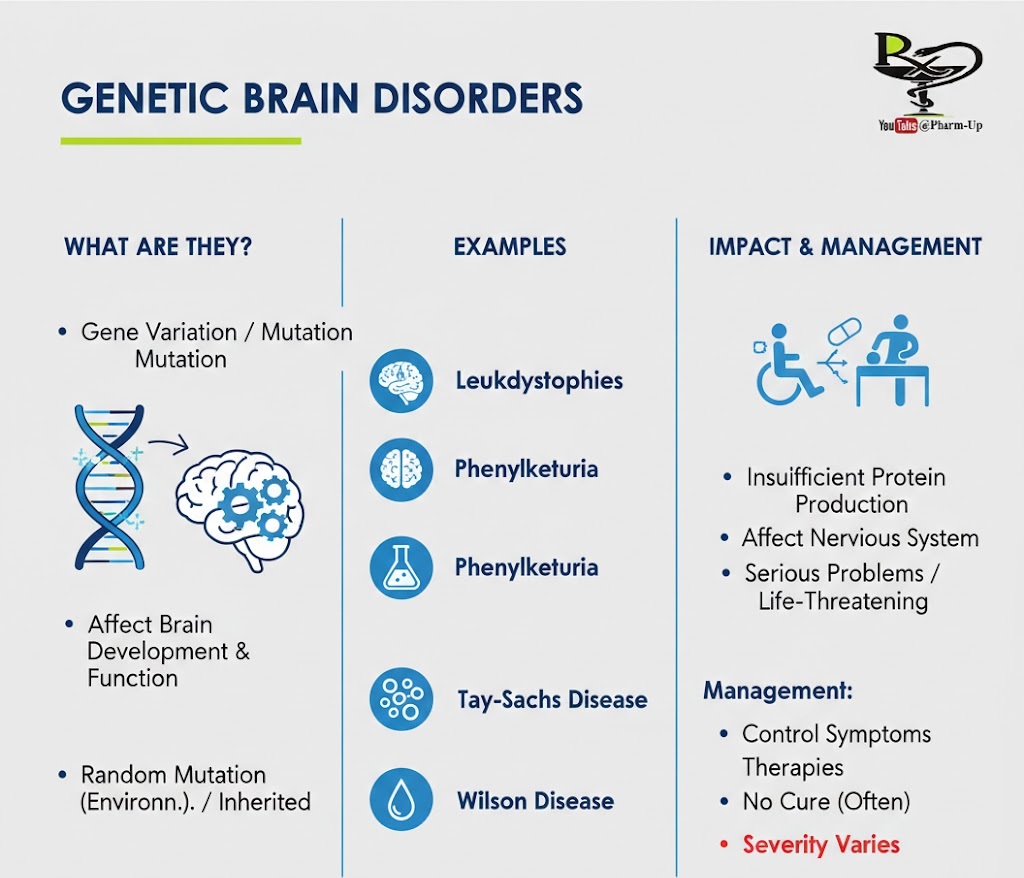
A genetic brain disorder occurs when a variation (a different form of a gene) or a mutation (a permanent change in a gene) disrupts the normal development and function of the brain. These changes often result in the body failing to produce vital proteins needed for neurological health.
How Genetic Disorders Develop
Genetic changes in the brain can arise from several different sources:
- Inherited Mutations: Passed down through family members via DNA.
- Random Mutations: Spontaneous changes that occur during cell division.
- Environmental Factors: Exposure to external triggers, such as cigarette smoke or toxins, which can damage genetic material.
- Multifactorial: A combination of genetic predisposition and outside environmental influences.
Notable Examples
These disorders often involve metabolic or structural issues within the nervous system:
- Leukodystrophies: A group of rare diseases that affect the “white matter” (myelin) of the brain, disrupting signal transmission.
- Phenylketonuria (PKU): A condition where the body cannot break down an amino acid called phenylalanine, leading to toxic buildup in the brain.
- Tay-Sachs Disease: A fatal genetic disorder that results in the destruction of nerve cells in the brain and spinal cord.
- Wilson Disease: Causes excessive copper to accumulate in the brain and liver, leading to neurological or psychiatric symptoms.
Impact on the Nervous System
Because these disorders often prevent the production of essential proteins, the effects on the nervous system can be profound:
- Developmental Delays: Failure to reach milestones in speech, movement, or cognition.
- Systemic Failure: Issues with basic motor functions and organ regulation.
- Variable Severity: While some conditions can be managed with strict diets or medication to control symptoms, others are unfortunately life-threatening.
About the Author