Pharm'Up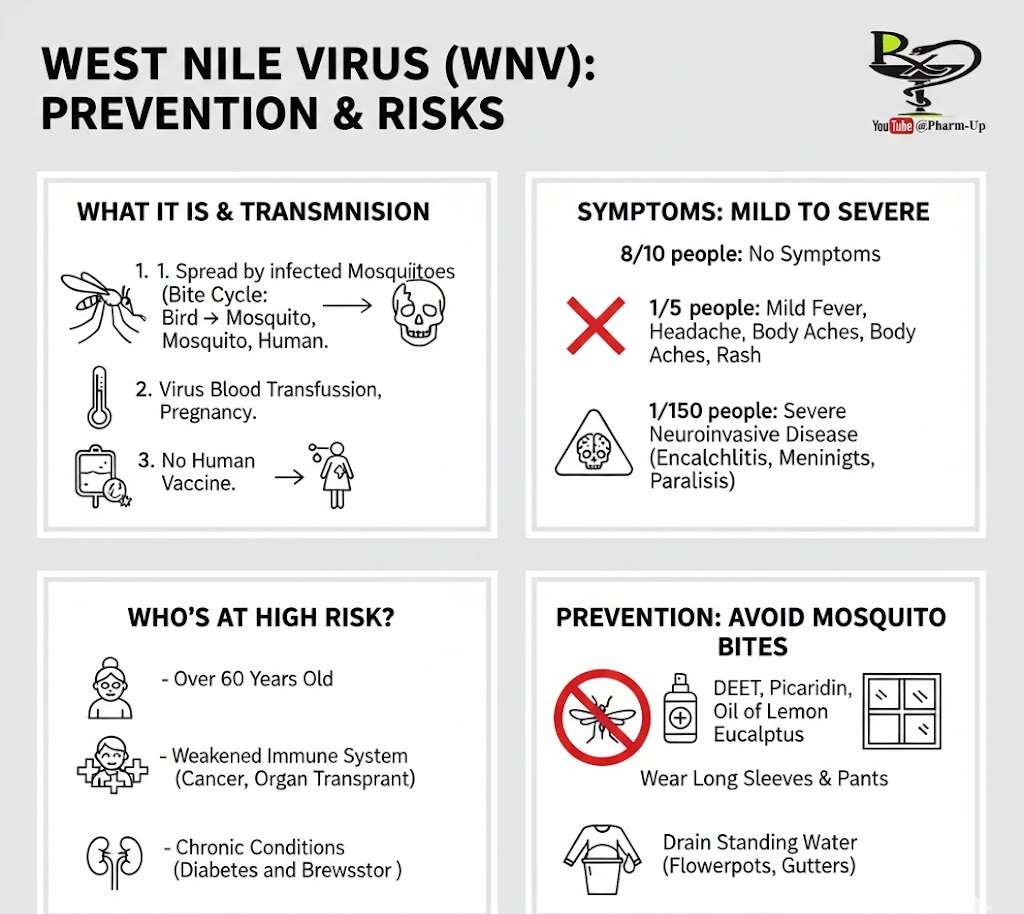
West Nile virus (WNV) is a viral infection primarily transmitted through the bite of an infected mosquito. While it is the leading cause of mosquito-borne disease in the continental United States, it is important to note that most people who become infected do not feel sick.
Transmission and Spread
WNV is maintained in nature through a cycle involving birds and mosquitoes.
- Mosquito Bites: Most people are infected when a mosquito bites a bird carrying the virus and then bites a human.
- Rare Person-to-Person Spread: In very limited circumstances, the virus can be transmitted through organ transplants, blood transfusions, or from mother to child during pregnancy, delivery, or breastfeeding.
- Casual Contact: You cannot get WNV from casual contact like touching or kissing an infected person.
Understanding the Symptoms
The severity of WNV varies significantly from person to person:
- No Symptoms (8 out of 10 people): Most infected individuals show no signs of illness.
- Febrile Illness (1 out of 5 people): Some develop a fever accompanied by headache, body aches, joint pains, vomiting, diarrhea, or a rash. Most recover completely, though fatigue can persist for months.
- Serious Neurological Symptoms (1 out of 150 people): In rare cases, the virus crosses the blood-brain barrier, causing:
- Encephalitis: Inflammation of the brain.
- Meningitis: Inflammation of the membranes surrounding the brain and spinal cord.
Risk Factors
While anyone can get WNV, certain groups face a higher risk of developing severe neurological disease:
- People over 60 years of age.
- Individuals with underlying medical conditions (cancer, diabetes, hypertension, or kidney disease).
- Organ transplant recipients.
Diagnosis, Treatment, and Prevention
Because WNV is a virus, antibiotics are not effective, and there is currently no human vaccine or specific antiviral treatment available.
- Diagnosis: Doctors typically use a physical exam and blood tests to look for WNV-specific antibodies.
- Treatment: Focuses on supportive care, such as rest, fluids, and over-the-counter pain relievers. Severe cases require hospitalization for intravenous fluids and respiratory support.
- Prevention (The Best Defense):
- Repel: Use EPA-registered insect repellents containing DEET, Picaridin, or Oil of Lemon Eucalyptus.
- Cover: Wear long sleeves and pants during dawn and dusk.
- Drain: Eliminate standing water in gutters, tires, or birdbaths where mosquitoes lay eggs.
About the Author