Pharm'Up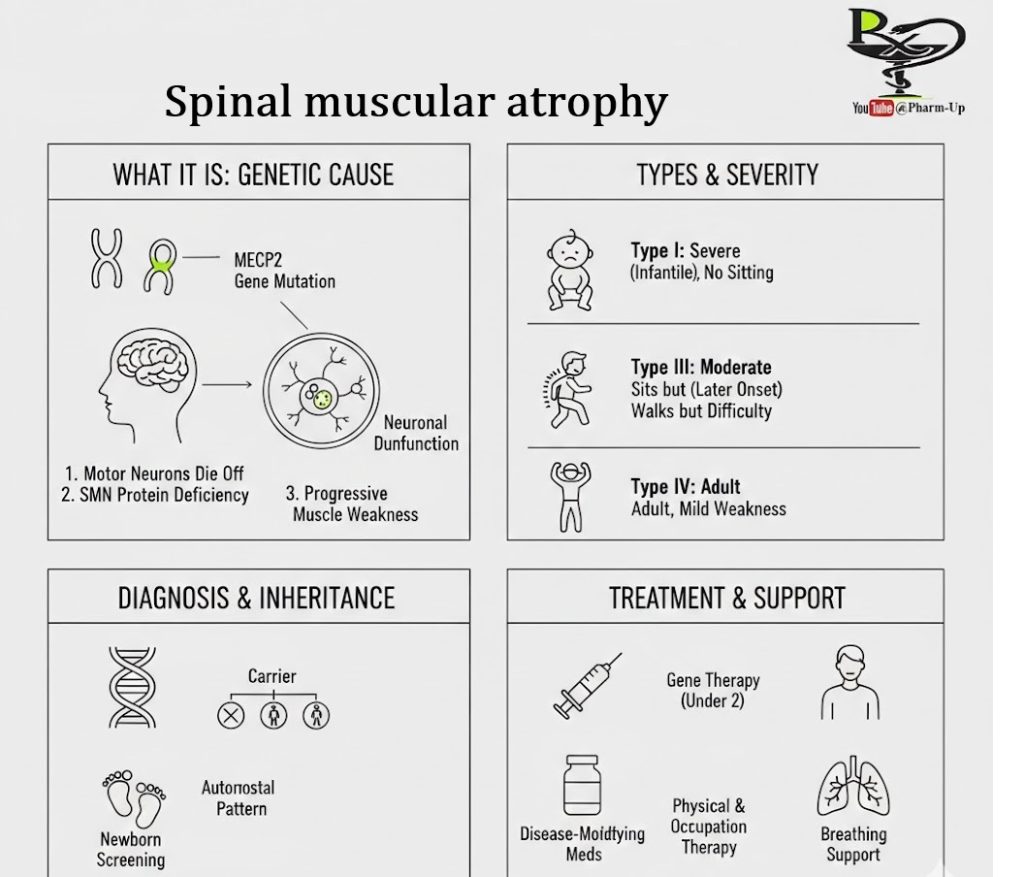
Spinal muscular atrophy (SMA) is a genetic disorder characterized by the loss of motor neurons in the spinal cord and lower brainstem. Because these neurons are responsible for sending signals to the muscles, their deterioration leads to progressive muscle weakness and atrophy (wasting away).
Types of SMA and Their Impact
SMA is classified into four primary types based on the age of onset and the highest physical milestones achieved.
| Type | Name / Onset | Severity & Symptoms |
| Type I | Werdnig-Hoffmann (Before 6 months) | Severe. Infants often have difficulty breathing, swallowing, and cannot sit without support. |
| Type II | Intermediate (6–18 months) | Moderate to Severe. Children can typically sit but usually cannot stand or walk independently. |
| Type III | Kugelberg-Welander (After 18 months) | Mild. Individuals can walk but may lose this ability later in life. Often includes scoliosis. |
| Type IV | Adult-onset (After age 21) | Mild. Affects adults; involves walking difficulties and tremors. Lifespan is generally unaffected. |
The Genetic Cause: The SMN1 Gene
Most cases of SMA are caused by a mutation or deletion in the SMN1 (Survival Motor Neuron 1) gene.
- Protein Deficiency: This gene is responsible for producing the SMN protein, which is vital for the survival of motor neurons. Without enough of this protein, the neurons shrink and die.
- Inheritance: SMA is an autosomal recessive condition. This means a child usually only develops the disease if they inherit a faulty gene from both parents.
Diagnosis and Screening
Because early intervention is critical for the best outcomes, many regions now include SMA in newborn screening programs.
- Genetic Testing: A blood test to look for the missing or mutated SMN1 gene is the primary diagnostic tool.
- Electromyography (EMG): Measures the electrical activity of muscles to see how well the nerves are communicating.
- Prenatal Testing: Procedures like amniocentesis can be used if there is a known family history of the disorder.
Treatment and Management
While there is no cure, recent medical breakthroughs have significantly changed the outlook for patients with SMA.
- Disease-Modifying Medications: New drugs help the body produce more functional SMN protein, slowing or even halting the progression of the disease.
- Gene Therapy: For children under age 2, a one-time infusion can replace the function of the missing or non-working SMN1 gene.
- Supportive Care: * Physical & Occupational Therapy: To maintain joint flexibility and mobility.
- Respiratory Support: Non-invasive ventilation (like BiPAP) to assist with breathing.
- Nutritional Support: Feeding tubes may be necessary if swallowing muscles are too weak.
About the Author