Pharm'Up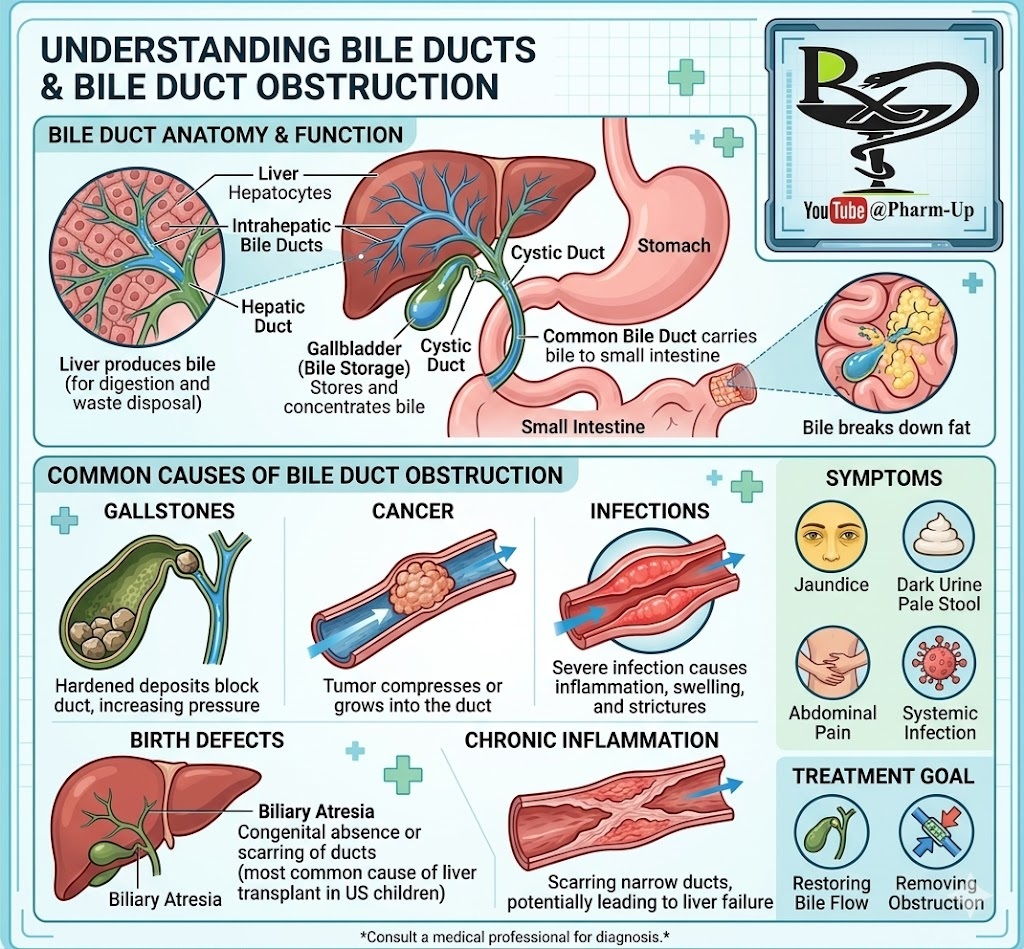
The bile ducts are a sophisticated network of drainage pipes that connect the liver and gallbladder to the small intestine. Their primary role is to transport bile, which is essential for digesting fats and filtering out metabolic waste. When these ducts become blocked or “obstructed,” bile backs up into the liver, potentially causing serious health complications.
Common Causes of Bile Duct Blockage
Various conditions can impede the flow of bile, ranging from temporary physical obstructions to chronic inflammatory diseases:
- Gallstones: The most frequent cause of blockage. These hardened deposits of digestive fluid can lodge in a duct, increasing pressure and triggering a “gallbladder attack”—intense pain that can last for several hours.
- Cancer: Malignant tumors in the bile ducts (cholangiocarcinoma), pancreas, or liver can physically compress or grow into the ducts, cutting off flow.
- Infections: Severe infections can cause the duct walls to swell or lead to the formation of strictures (narrowing).
- Birth Defects: Some children are born with structural issues like biliary atresia, a condition where the bile ducts are absent or abnormally narrow. This is the leading cause of liver transplants in the pediatric population.
- Chronic Inflammation: Conditions that cause persistent inflammation can result in scarring (fibrosis). Over time, this scarring can permanently block the ducts and lead to liver failure.
Signs and Symptoms of Obstruction
When bile cannot reach the small intestine, it enters the bloodstream, often resulting in:
- Jaundice: A noticeable yellowing of the skin and the whites of the eyes.
- Dark Urine: Caused by excess bilirubin being filtered by the kidneys.
- Pale Stools: Since bile gives stool its brown color, a blockage often results in light-colored or “clay-like” bowel movements.
- Abdominal Pain: Usually concentrated in the upper right side.
Why Treatment is Critical
A blocked bile duct is not just a digestive issue; it is a serious medical concern. If the flow of bile is not restored, the buildup of toxins can damage liver cells, leading to cirrhosis or systemic infection (cholangitis). Treatment typically focuses on removing the obstruction—whether through surgery, endoscopic procedures (like ERCP), or medication—to prevent long-term liver damage.
About the Author


 Pharm'Up