Pharm'Up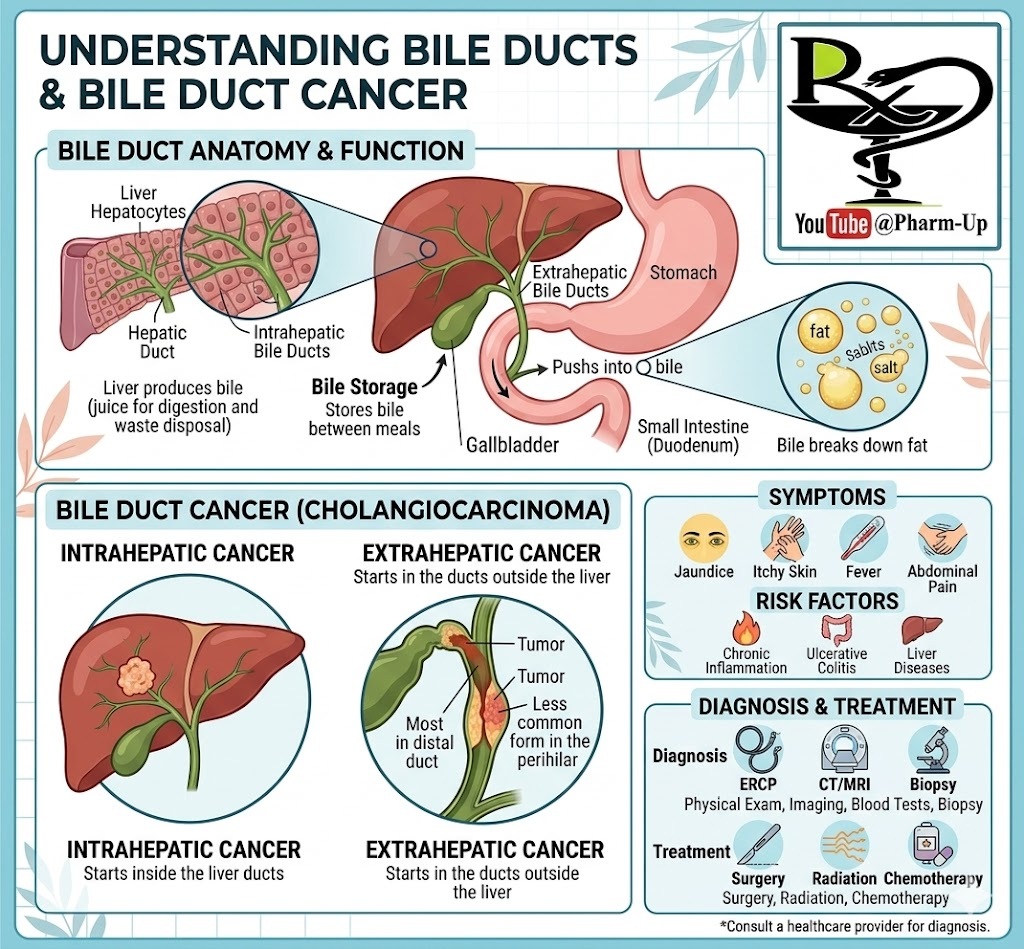
The bile ducts are a critical system of tubes that carry bile, a digestive juice crucial for fat breakdown, from the liver to the gallbladder (for storage) and eventually to the small intestine. This intricate network of ducts plays a key role in digestion and toxin removal from the body.
What is Bile Duct Cancer?
Bile duct cancer, while rare, is a condition that occurs when malignant cells form in this system. It can manifest in two distinct areas:
- Intrahepatic Bile Duct Cancer: Starts in the ducts located inside the liver.
- Extrahepatic Bile Duct Cancer: Starts in the ducts located outside the liver (This is the most common form).
Recognizing Symptoms
Bile duct cancer can be difficult to detect in its early stages as symptoms often appear only after the cancer has grown. Common signs include:
- Jaundice: Yellowing of the eyes and skin due to bilirubin buildup.
- Itchy Skin (Pruritus): Caused by excess bilirubin.
- Persistent Fever: Potentially related to infection or tumor progression.
- Unexplained Abdominal Pain: Often in the upper right quadrant.
Risk Factors, Diagnosis, and Treatment
Understanding the factors that increase the likelihood of developing bile duct cancer can help with risk assessment. Key risk factors include chronic inflammation of the bile ducts (cholangitis), ulcerative colitis, and certain other liver diseases.
Diagnosing this condition typically requires a combination of methods:
- Physical Examination: To assess for jaundice and abdominal tenderness.
- Imaging Tests: Such as ultrasound, CT scans, and MRIs to visualize the liver and ducts.
- Blood Tests: To evaluate liver function and identify potential tumor markers.
- Biopsy: The removal of a tissue sample for laboratory analysis (Crucial for definitive diagnosis).
Treatment plans are tailored to the stage of the cancer and the patient’s overall health, often involving surgery to remove the tumor or affected duct, radiation therapy, and chemotherapy.
About the Author