Pharm'Up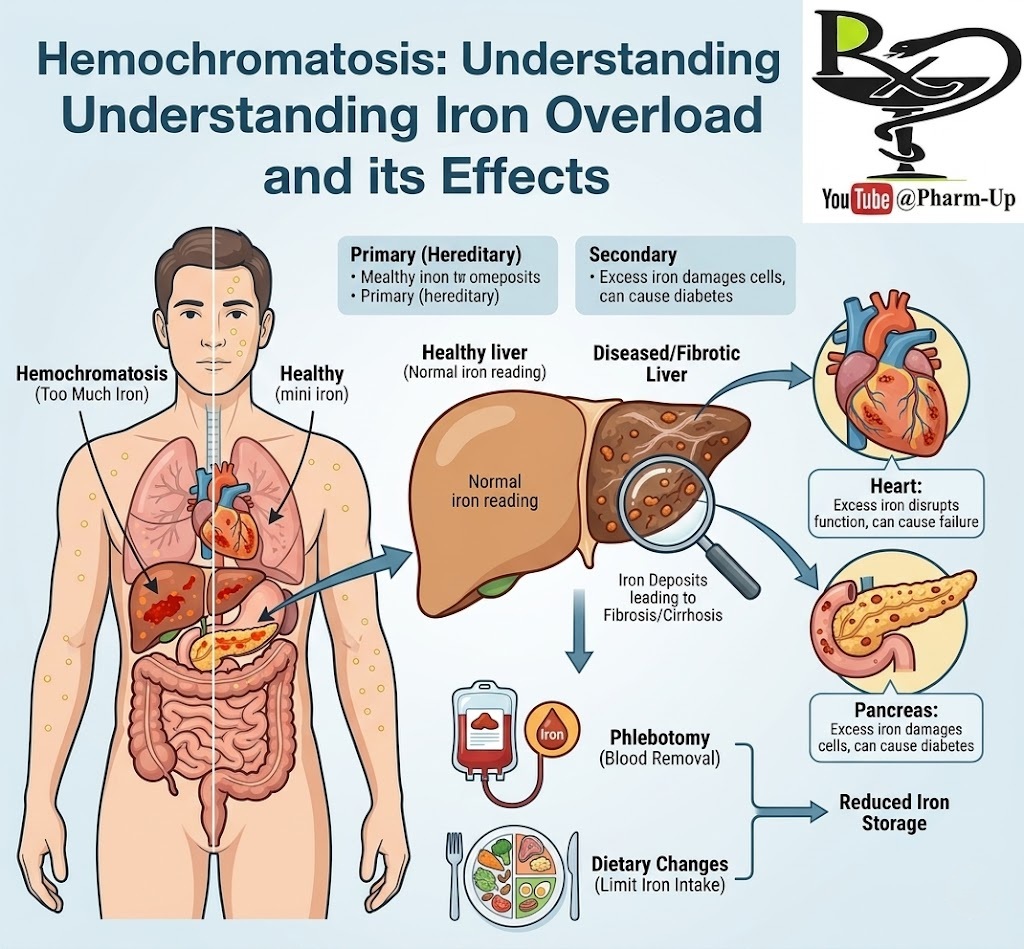
Hemochromatosis is a condition where the body accumulates excessive levels of iron. While iron is essential for health, an overabundance is toxic. Because the body has no natural mechanism to excrete surplus iron, it stores it in vital organs, which can lead to organ failure if left untreated.
Types of Hemochromatosis
The disease is categorized based on its underlying cause:
- Primary Hemochromatosis: A hereditary condition passed down through families.
- Secondary Hemochromatosis: Usually develops as a complication of other conditions, such as anemia, thalassemia, liver disease, or frequent blood transfusions.
Symptoms and Warning Signs
Many people with hemochromatosis exhibit no symptoms at first. When they do occur, they often mimic other health issues:
- Joint and Stomach Pain: Persistent discomfort in the abdomen or joints.
- Systemic Issues: Chronic fatigue, general physical weakness, and unexplained weight loss.
- Organ Impact: If unmanaged, iron deposits primarily damage the liver, heart, and pancreas.
Diagnosis and Management
Early detection is key to preventing long-term organ damage.
- Diagnosis: Doctors use medical history, family history, physical exams, and specific blood tests or procedures to confirm the condition.
- Treatment Options:
- Phlebotomy: The regular removal of blood (and therefore iron) from the body.
- Medication: Iron-chelating medicines that help the body clear iron.
- Dietary Changes: Adjustments to limit further iron accumulation.
About the Author