Skip to content
  • YouTube
  • Facebook
  • LinkedIn
Pharm'Up

Pharm'Up

An E-platform for Learners

Primary Menu
  • Home
  • News
  • Industries
  • Disease
  • Drugs
  • Events
  • Jobs
  • Trainings
  • Conferences
  • Syllabus
  • Previous Papers
  • Notes
  • Colleges
Live
  • Home
  • 2026
  • April
  • 21
  • H. pylori Infection: Causes, Symptoms, and Prevention
  • Disease

H. pylori Infection: Causes, Symptoms, and Prevention

Pharm'Up 2 min read

Helicobacter pylori (H. pylori) is a common type of bacteria that infects the stomach. While many people carry it without knowing, it is a leading cause of digestive complications, including gastritis, peptic ulcers, and stomach cancer.


How It Affects the Body

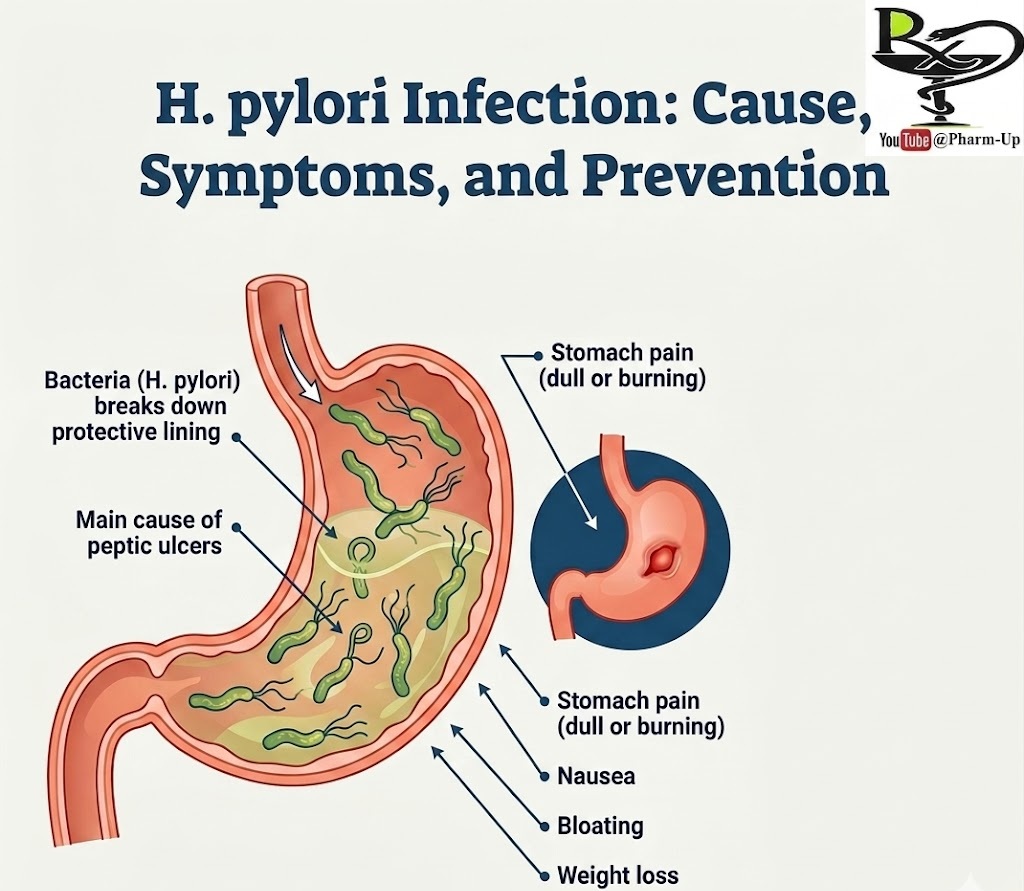
H. pylori attacks the protective lining of the stomach. When this lining is compromised, stomach acid can cause inflammation and sores.

  • Prevalence: It is estimated that 30% to 40% of people in the U.S. carry the bacteria, often contracting it during childhood.
  • Transmission: Though the exact path is unclear, it is believed to spread through contaminated food and water or direct contact with an infected person’s saliva.

Signs of a Peptic Ulcer

If the infection leads to an ulcer, you may experience:

  • Stomach Pain: A dull or burning sensation, particularly when the stomach is empty.
  • Duration: Pain can last for minutes or hours and may persist for several weeks.
  • Other Symptoms: Nausea, bloating, and unintended weight loss.

Diagnosis and Treatment

Health care providers use several methods to detect the bacteria:

  • Testing: Stool tests, breath tests, blood tests, or an upper endoscopy (with biopsy).
  • Treatment: A combination of antibiotics to kill the bacteria and acid-reducing medications to allow the stomach lining to heal.
  • Follow-up: Re-testing after treatment is essential to confirm the infection is fully cleared.

Prevention Tips

Currently, there is no vaccine available. Prevention relies on good hygiene and food safety:

  1. Hand Hygiene: Wash hands thoroughly after using the bathroom and before handling food.
  2. Food Safety: Only eat food that has been properly prepared and cooked.
  3. Clean Water: Ensure your drinking water comes from a safe, treated source.

About the Author

Pharm'Up

Author

An E-platform for Pharma Learners

View All Posts

Post navigation

Previous: Gluten Sensitivity vs. Celiac Disease: Identifying the Difference
Next: Hemochromatosis: Understanding Iron Overload

Related Stories

Pharmup 21
2 min read
  • Disease

Hepatitis A: Acute Viral Infection and Prevention

Pharm'Up
Pharmup 20
1 min read
  • Disease

Hepatitis: Understanding Liver Inflammation and Its Causes

Pharm'Up
Pharmup 19
1 min read
  • Disease

Liver Transplantation: A Lifesaving Procedure

Pharm'Up

Recent Posts

  • Hepatitis A: Acute Viral Infection and Prevention
  • Hepatitis: Understanding Liver Inflammation and Its Causes
  • Liver Transplantation: A Lifesaving Procedure
  • Understanding Hemorrhoids: Causes, Symptoms, and Care
  • Hemochromatosis: Understanding Iron Overload

Recent Comments

No comments to show.

Archives

  • April 2026
  • March 2026
  • February 2026
  • January 2026
  • December 2025
  • November 2025
  • October 2025
  • September 2025
  • August 2025
  • July 2025

Categories

  • Colleges
  • Conferences/ Workshops
  • Disease
  • Drugs
  • Events
  • Industries
  • Notes
  • Pharma Jobs
  • Pharma News
  • Previous Papers
  • Syllabus
  • Trainings/ Courses
  • Uncategorized

Read These Too

Pharmup 21
2 min read
  • Disease

Hepatitis A: Acute Viral Infection and Prevention

Pharm'Up
Pharmup 20
1 min read
  • Disease

Hepatitis: Understanding Liver Inflammation and Its Causes

Pharm'Up
Pharmup 19
1 min read
  • Disease

Liver Transplantation: A Lifesaving Procedure

Pharm'Up
Pharmup 18
1 min read
  • Disease

Understanding Hemorrhoids: Causes, Symptoms, and Care

Pharm'Up
  • YouTube
  • Facebook
  • LinkedIn
Copyright ©Pharm'UP All rights reserved by Eduversity India | MoreNews by AF themes.