Pharm'Up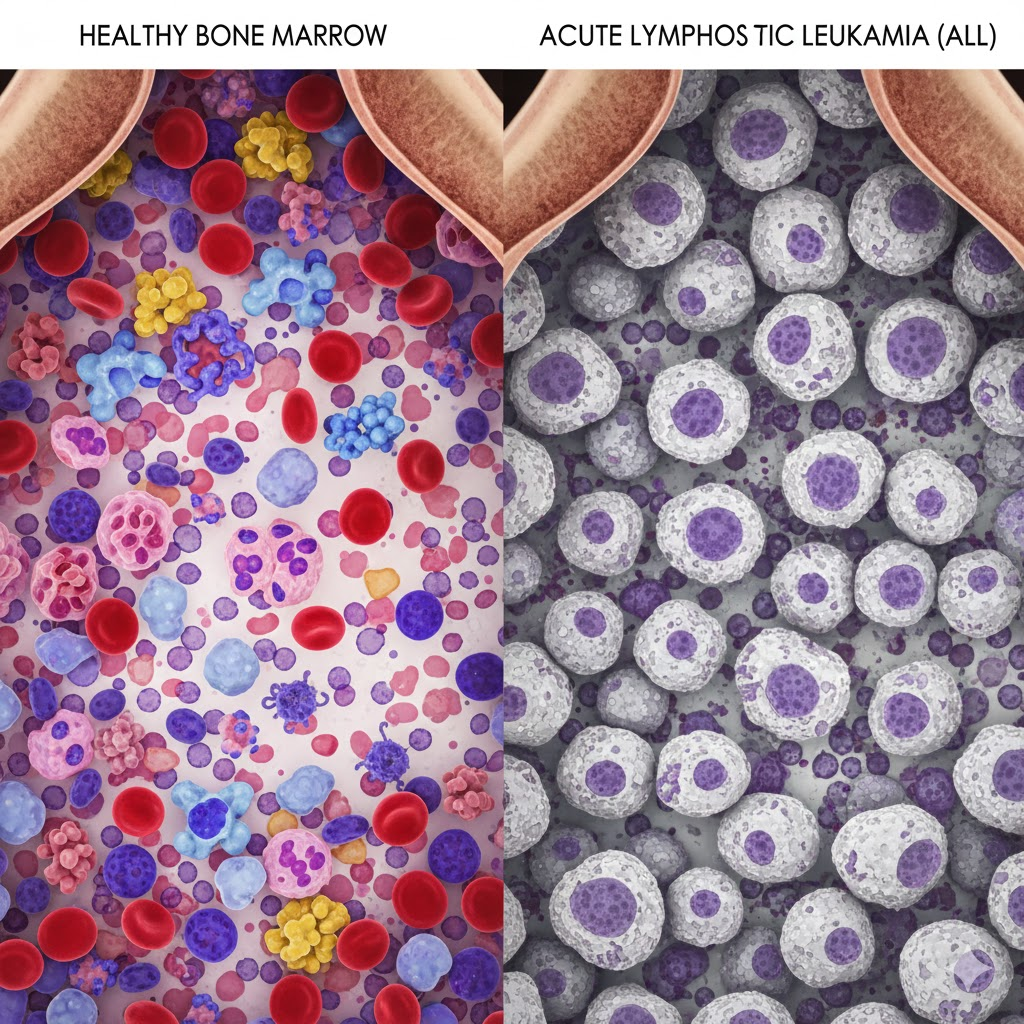
Leukemia is more than just a “blood cancer”—it is a disruption at the very source of your body’s life force: the bone marrow. When your marrow is healthy, it functions like a precision factory, churning out the perfect balance of oxygen-carrying red cells, germ-fighting white cells, and wound-sealing platelets.
In a person with leukemia, this factory malfunctions, producing a massive surplus of “glitchy” cells that can’t do their jobs.
What is ALL? The “Acute” Reality
Acute Lymphocytic Leukemia (ALL) is a fast-paced version of this disease. The word “Acute” signifies that the cancer progresses rapidly, requiring immediate medical intervention. In ALL, the body overproduces lymphoblasts—immature white blood cells that are stuck in an early stage of development.
Because these cells are “broken,” they don’t fight infection. Instead, they act like a crowd at a stadium that refuses to leave, taking up all the seats (the bone marrow) and preventing the “players” (healthy cells) from getting onto the field.
The Body’s Warning Signals
When your healthy cells are “crowded out,” your body begins to send out SOS signals. These symptoms are essentially a reflection of which blood component is missing:
- Missing Red Cells? You feel extreme fatigue, weakness, and shortness of breath (Anemia).
- Missing Platelets? You notice easy bruising, nosebleeds, or petechiae (tiny red dots on the skin).
- Missing Functional White Cells? You suffer from frequent fevers and persistent infections.
The Roadmap to Recovery
Diagnosing ALL involves a deep dive into the body’s chemistry using Blood Smears and Bone Marrow Biopsies. Once confirmed, doctors typically follow a two-step “Search and Destroy” mission:
- Induction (The Big Clear): The first goal is to force the cancer into remission. This phase uses intensive chemotherapy to kill as many leukemia cells as possible.
- Post-Remission (The Safety Net): Even when the blood looks clear, tiny “sleeping” cancer cells may remain. This phase (and CNS prophylaxis) ensures the cancer doesn’t hide in the brain or spinal cord and attempt a comeback.
About the Author




 Pharm'Up