Pharm'Up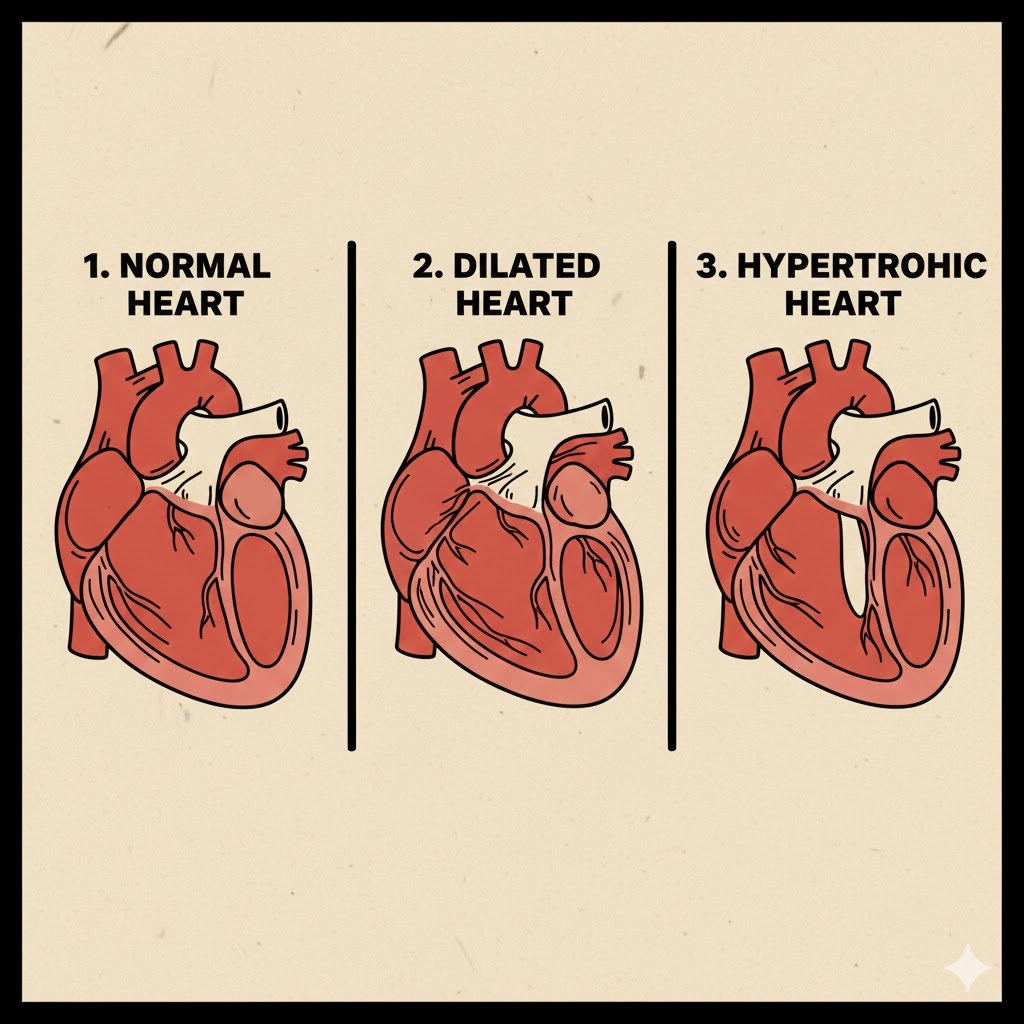
Cardiomyopathy refers to a group of diseases that affect the heart muscle itself. These conditions change the physical structure of the heart, making it harder for the muscle to pump blood to the rest of the body. Over time, this can lead to heart failure or electrical issues.
How Cardiomyopathy Changes the Heart
Unlike coronary artery disease (which affects the “pipes”), cardiomyopathy affects the “pump” itself. There are three main ways the muscle changes:
- Dilation: The heart muscle becomes thin and stretched out, causing the chambers (usually the left ventricle) to enlarge.
- Hypertrophy: The heart muscle becomes abnormally thick, making it harder for the heart to fill with blood.
- Restrictive/Rigid: The heart muscle becomes stiff or scarred, preventing it from expanding properly.
Potential Complications
While some people have no symptoms, for others, the structural changes can lead to:
- Heart Failure: The heart simply isn’t strong enough to circulate blood.
- Arrhythmias: Changes in the muscle can disrupt the heart’s electrical signals.
- Heart Valve Problems: As the heart changes shape, the valves may no longer close tightly, causing leaks (regurgitation).
- Sudden Cardiac Arrest (SCA): A life-threatening emergency where the heart suddenly stops beating.
Causes and Risk Factors
The cause of cardiomyopathy can be “acquired” (developed over time) or “inherited” (passed down through genes).
- Acquired Causes: Damage from a heart attack, long-term high blood pressure, infections (viral myocarditis), or heavy alcohol/drug use.
- Inherited Causes: Many types, especially Hypertrophic Cardiomyopathy (HCM), are frequently linked to genetic mutations and run in families.
- Idiopathic: In many cases, the exact cause is never identified.
Diagnosis and Management
Diagnosis usually involves imaging like an Echocardiogram or Cardiac MRI to see the thickness and movement of the muscle walls.
Treatment Options
Treatment aims to manage symptoms and prevent the condition from worsening:
- Medications: Beta-blockers or calcium channel blockers to help the heart beat more efficiently.
- Surgical Procedures: * Septal Myectomy: Removing part of the thickened muscle.
- Alcohol Septal Ablation: Using alcohol to shrink thickened tissue.
- Implanted Devices: Pacemakers or ICDs to manage dangerous rhythms.
- Lifestyle Changes: Reducing salt intake and managing stress.
About the Author





 Pharm'Up