Pharm'Up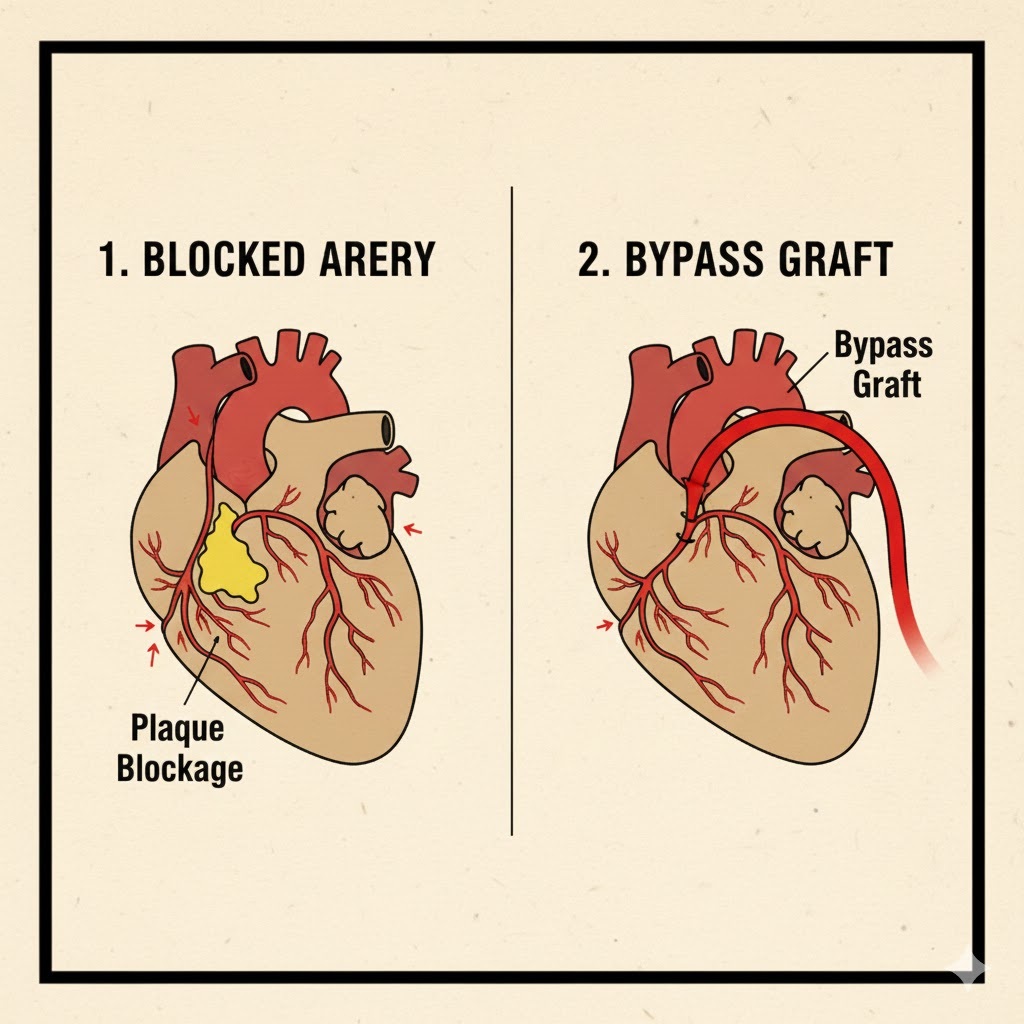
Coronary artery bypass surgery, often called CABG (pronounced “cabbage”) or heart bypass, is the most common type of open-heart surgery in adults. Its purpose is to improve blood flow to the heart muscle by creating a “detour” around blocked or narrowed coronary arteries.
Why is it Performed?
The surgery primarily treats Coronary Artery Disease (CAD). In CAD, a waxy substance called plaque builds up inside your coronary arteries (the vessels that supply oxygen-rich blood to the heart). This buildup, known as atherosclerosis, can narrow the arteries and starve the heart of oxygen.
Who is a Candidate?
Doctors usually consider CABG when other treatments—like lifestyle changes, medication, or angioplasty (inflating a balloon to open the artery)—have not worked. You might need this surgery if you have:
- Multiple blocked arteries or a blockage in the “left main” coronary artery.
- Severe Angina: Chest pain that doesn’t improve with medicine.
- Diabetes: Patients with diabetes and CAD often have better outcomes with CABG.
- Emergency: To treat a severe heart attack when other interventions aren’t possible.
How the Procedure Works
During the surgery, a surgeon “harvests” a healthy blood vessel (a graft) from another part of your body—usually the leg (saphenous vein), the chest (internal mammary artery), or the arm (radial artery).
The surgeon attaches one end of the graft above the blockage and the other end below it. This allows blood to “bypass” the clogged area, restoring flow to the heart muscle.
Types of CABG Surgery
| Method | Description |
| Traditional CABG | The chest is opened (sternotomy). A heart-lung bypass machine takes over the work of the heart and lungs so the heart can be stopped during surgery. |
| Off-Pump CABG | Similar to traditional surgery, but the heart is not stopped. Surgeons use specialized equipment to stabilize the heart while it is still beating. |
| Minimally Invasive | Performed through small incisions between the ribs rather than opening the chest bone. Often uses robotic assistance. |
Risks and Recovery
While CABG has a high success rate, it is a major procedure with potential risks, including:
- Arrhythmias: Irregular heartbeats (like Atrial Fibrillation).
- Infection: Particularly at the chest or graft harvest site.
- Organ Stress: Potential for temporary kidney issues or stroke.
- Graft Failure: The new vessel can eventually become blocked if lifestyle changes aren’t maintained.
Life After Surgery
CABG is not a “cure” for heart disease; it is a way to manage the symptoms and reduce heart attack risk. To keep the new grafts open, patients must commit to:
- Heart-Healthy Diet: Low in saturated fats and sodium.
- Medication: Such as aspirin, statins, or beta-blockers.
- Cardiac Rehabilitation: A supervised exercise and education program.
About the Author




 Pharm'Up