Pharm'Up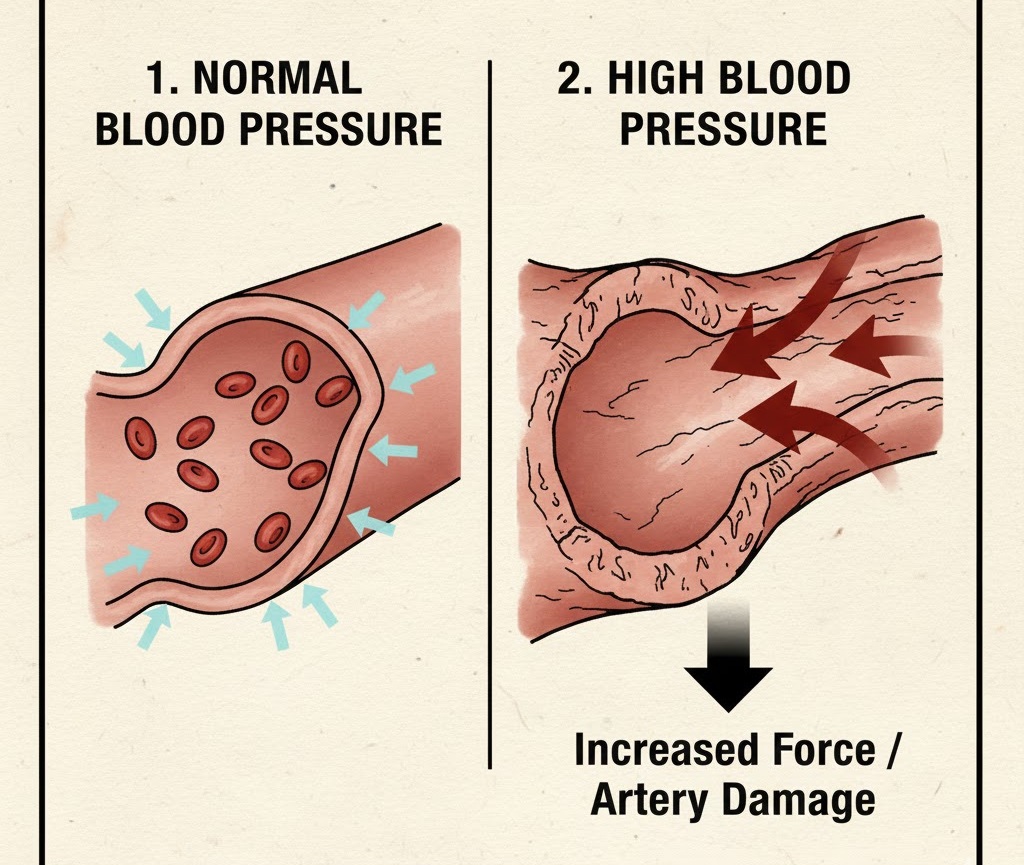
Blood pressure is the measurement of the force exerted by your blood against the walls of your arteries. It is a critical indicator of cardiovascular health because it shows how hard your heart is working to circulate blood throughout your body.
Systolic vs. Diastolic: What the Numbers Mean
When you get a reading like 120/80 mmHg, you are looking at two distinct phases of your heart’s activity:
- Systolic Pressure (Top Number): The pressure in your arteries when your heart beats and actively pumps blood.
- Diastolic Pressure (Bottom Number): The pressure in your arteries when your heart is at rest between beats.
Blood Pressure Categories
High blood pressure (hypertension) often has no symptoms. Regular checks are the only way to know your status. Doctors use the following guidelines for adults:
| Category | Systolic (Top) | Diastolic (Bottom) | |
| Normal | Less than 120 | and | Less than 80 |
| Elevated | 120 – 129 | and | Less than 80 |
| Hypertension Stage 1 | 130 – 139 | or | 80 – 89 |
| Hypertension Stage 2 | 140 or higher | or | 90 or higher |
| Hypertensive Crisis | Higher than 180 | and | Higher than 120 |
Note: A Hypertensive Crisis is a medical emergency. If you get this reading, seek medical care immediately.
Types of High Blood Pressure
- Primary (Essential) Hypertension: The most common type. It usually develops gradually over many years as you age.
- Secondary Hypertension: Caused by an underlying condition (like kidney disease) or a medication. It often appears suddenly and can cause higher blood pressure than primary hypertension.
Why High Blood Pressure is Dangerous
When blood pressure remains high over time, it damages the arteries and forces the heart to work overtime. This strain increases the risk of:
- Heart Attack and Heart Failure
- Stroke
- Kidney Failure
Treatment and Management
Managing high blood pressure usually involves a combination of two approaches:
- Lifestyle Changes: This is often the first line of defense. It includes heart-healthy eating (low sodium), regular physical activity, maintaining a healthy weight, and limiting alcohol.
- Medicines: If lifestyle changes aren’t enough, your doctor may prescribe one or more types of blood pressure medications to help your vessels relax or reduce blood volume.
About the Author