Understanding Acute Myeloid Leukemia: A Comprehensive Guide to Symptoms, Risks, and Recovery
 Pharm'Up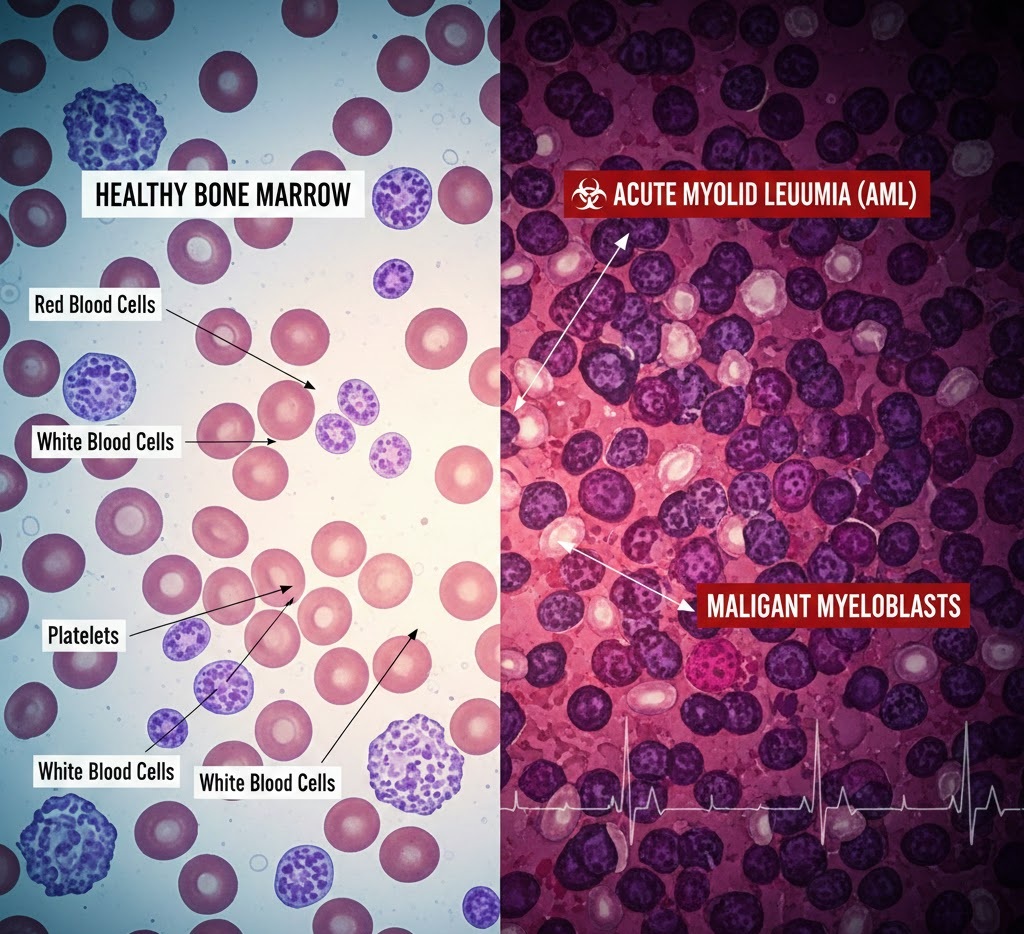
Acute Myeloid Leukemia (AML) is an aggressive cancer of the blood and bone marrow that develops rapidly. Unlike chronic leukemias, which can persist for years without symptoms, AML requires urgent medical attention to prevent the fast-spreading abnormal cells from overwhelming the body’s healthy blood production.
What is Leukemia and AML?
Leukemia is a general term for cancers affecting blood-forming tissues, primarily the bone marrow. In a healthy person, bone marrow produces:
- White Blood Cells: Fight infections.
- Red Blood Cells: Carry oxygen.
- Platelets: Aid in blood clotting.
In Acute Myeloid Leukemia (AML), the marrow produces large numbers of abnormal myeloblasts (immature white blood cells). These “blasts” multiply rapidly and “crowd out” healthy cells, leading to a shortage of functional blood components.
Identifying the Warning Signs
Because AML is an “acute” condition, symptoms typically appear suddenly and worsen over a few weeks. Common indicators include:
- Systemic Issues: Persistent fever, chills, and unintended weight loss.
- Anemia Symptoms: Extreme fatigue, shortness of breath, and pale skin.
- Bleeding & Bruising: Frequent nosebleeds, bleeding gums, or petechiae (tiny red dots under the skin caused by minor bleeding).
- Physical Discomfort: Bone or joint pain and a feeling of “fullness” in the abdomen due to an enlarged spleen.
Risk Factors: Who is Most Vulnerable?
While the exact cause is often a mystery of DNA mutation, several factors are known to increase risk:
- Age & Gender: Most common in adults over 65 and slightly more prevalent in males.
- Environmental Toxins: Long-term exposure to benzene (found in cigarette smoke, gasoline, and certain industrial solvents).
- Medical History: Previous treatment with certain chemotherapy drugs or radiation therapy for other cancers.
- Blood Disorders: A history of myelodysplastic syndrome (MDS) or other bone marrow disorders.
- Genetics: Specific conditions like Down Syndrome.
The Path to Diagnosis
To confirm AML and identify its specific subtype, doctors use a combination of high-tech tests:
- Complete Blood Count (CBC): To check levels of red cells, white cells, and platelets.
- Bone Marrow Aspiration & Biopsy: Removing a sample of fluid and solid tissue from the hip bone to look for cancer cells.
- Flow Cytometry: Analyzing the surface of cells to identify the exact type of leukemia.
- Genetic/Molecular Testing: Looking for specific DNA changes that help predict how the cancer will respond to treatment.
Modern Treatment Strategies
Treatment is typically broken into two distinct phases to ensure the cancer is not just suppressed, but eliminated.
| Phase | Goal | Common Methods |
| Induction Therapy | To clear the blood and marrow of visible leukemia cells and achieve “remission.” | High-dose Chemotherapy (e.g., the “7+3” regimen), Targeted Therapy. |
| Consolidation Therapy | To kill any “hidden” cells that could cause a relapse. | Additional Chemotherapy or a Stem Cell Transplant. |
About the Author



 Pharm'Up