Pharm'Up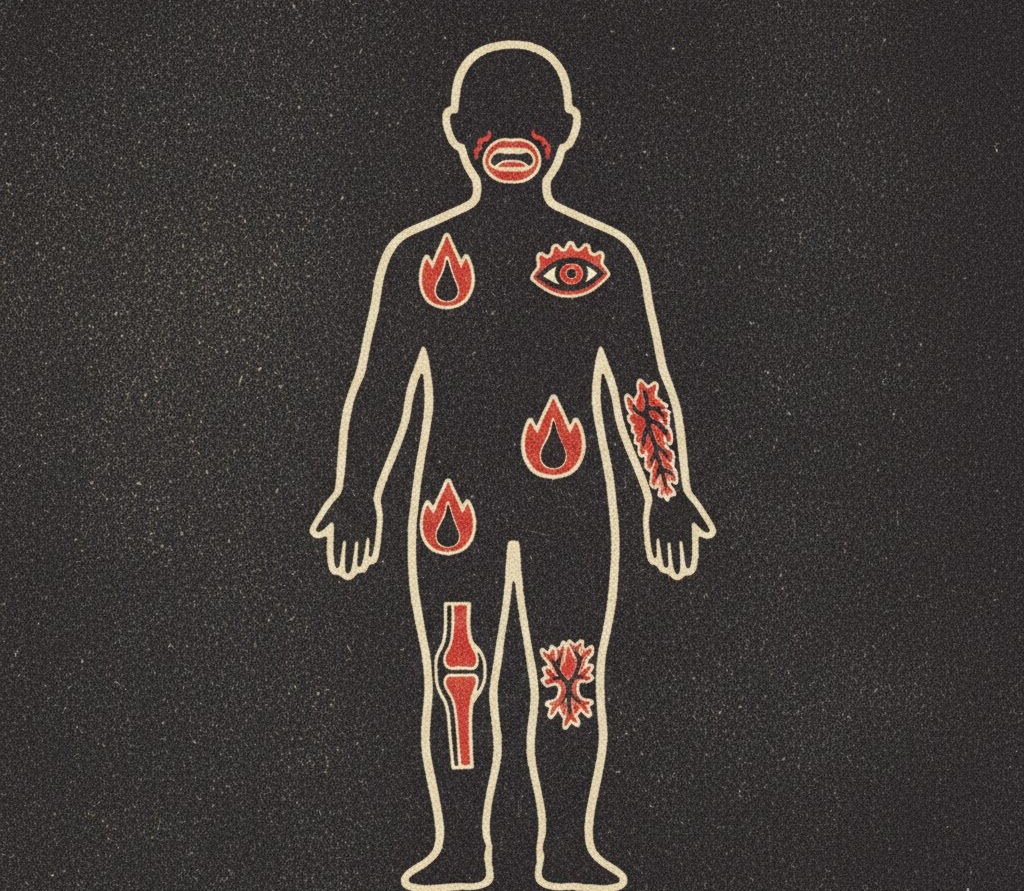
Behcet’s Syndrome (also known as Behcet’s Disease) is a rare, chronic condition characterized by widespread vasculitis—the inflammation of blood vessels throughout the body. Unlike some forms of vasculitis that target specific organs, Behcet’s can affect nearly any system, leading to a complex array of symptoms that often appear, disappear, and relocate over time.
Prevalence and Origins
While the exact cause of Behcet’s remains a medical mystery, researchers have noted distinct geographic and demographic patterns:
- The “Silk Road” Disease: It is most common in populations along the historic Silk Road, stretching from the Middle East and Turkey to East Asia (China and Japan).
- Age of Onset: It primarily strikes young adults, typically those in their 20s and 30s.
- Rarity: It is considered a rare disease in the United States and Western Europe.
Clinical Manifestations: From Common to Severe
Because Behcet’s affects blood vessels of all sizes (arteries and veins), the symptoms are diverse.
Most Common Symptoms
- Oral Ulcers: Painful sores in the mouth (canker sores) are often the first sign.
- Genital Sores: Similar painful ulcers on the sex organs.
- Skin Lesions: Acne-like sores or painful nodules (erythema nodosum) on the legs.
- Uveitis: Inflammation of the eye, which causes redness, pain, and blurred vision.
- Joint Issues: Pain, stiffness, and swelling, usually in the knees or ankles.
Serious Complications
- Neurological: Inflammation of the brain and spinal cord (meningitis or “Neuro-Behcet’s”).
- Vascular: Increased risk of life-threatening blood clots (thrombosis) or aneurysms.
- Digestive: Ulcers and inflammation throughout the GI tract, causing abdominal pain and bleeding.
- Vision Loss: Chronic eye inflammation can lead to permanent blindness if not managed.
Diagnosis and Challenges
Diagnosing Behcet’s is notoriously difficult and can take years. There is no single “Behcet’s test.” Doctors must:
- Track Symptoms: Because symptoms are episodic, it may take a long time for a patient to meet the full clinical criteria.
- Rule Out Other Conditions: Doctors must exclude other autoimmune diseases like Lupus or Crohn’s.
- Pathergy Test: A skin prick test that looks for an overreactive immune response, common in Behcet’s patients.
Management and Treatment
While there is currently no cure, the majority of patients can lead productive lives by controlling the inflammation.
- Symptom Relief: Topical creams and gels for mouth and genital sores.
- Anti-inflammatories: Steroids to reduce swelling during “flares.”
- Immunosuppressants: Powerful medications used to quiet the immune system and prevent it from attacking the blood vessels, particularly for eye or brain involvement.
About the Author


 Pharm'Up