Pharm'Up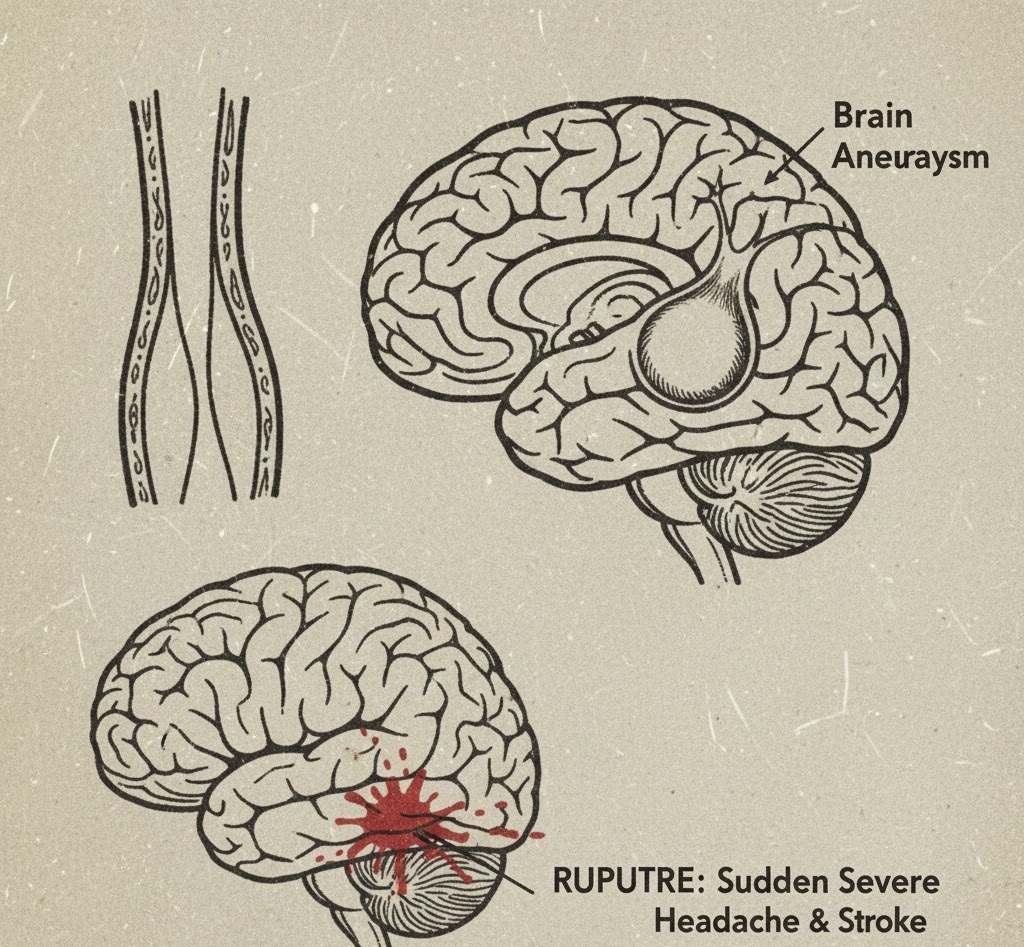
A brain aneurysm is a localized, abnormal bulging or “ballooning” of an arterial wall within the brain. Often referred to as berry aneurysms due to their characteristic shape and small size, these vascular anomalies occur at weak points in the blood vessel. While many people live with an aneurysm without ever knowing it, the risk lies in the potential for the vessel wall to thin and eventually leak or rupture.
Symptoms of an Unruptured Aneurysm
Most aneurysms are asymptomatic. However, if an aneurysm grows large enough to press against surrounding brain tissue or cranial nerves, it can act like a small tumor, causing:
- Ocular Changes: A noticeably droopy eyelid or a single dilated pupil.
- Vision Disturbances: Blurred or double vision.
- Localized Pain: Sharp or steady pain located specifically above or behind one eye.
- Neurological Weakness: Numbness, tingling, or weakness affecting only one side of the face or body.
The Emergency: Ruptured Aneurysms
A ruptured aneurysm causes blood to leak into the space around the brain (a subarachnoid hemorrhage), which is a life-threatening medical emergency.
Seek immediate medical help if you experience:
- The “Thunderclap” Headache: A sudden, agonizing headache often described as the “worst headache of my life.”
- Meningeal Signs: A sudden stiff neck, nausea, and projectile vomiting.
- Loss of Consciousness: Fainting, confusion, or seizures.
- Stroke Symptoms: Sudden slurred speech or inability to move limbs.
Diagnosis and Treatment Options
Because many aneurysms are found incidentally during scans for other issues, doctors categorize treatment based on the risk of rupture versus the risk of surgery.
Common Interventions:
- Surgical Clipping: A neurosurgeon places a tiny metal clip across the “neck” of the aneurysm to stop blood flow into it.
- Endovascular Coiling: A less invasive procedure where a catheter is used to fill the aneurysm with soft platinum wires (coils), triggering a clot that seals off the bulge.
- Observation: For very small, low-risk aneurysms, doctors may choose “watchful waiting” with regular imaging and blood pressure management.
About the Author




 Pharm'Up