Pharm'Up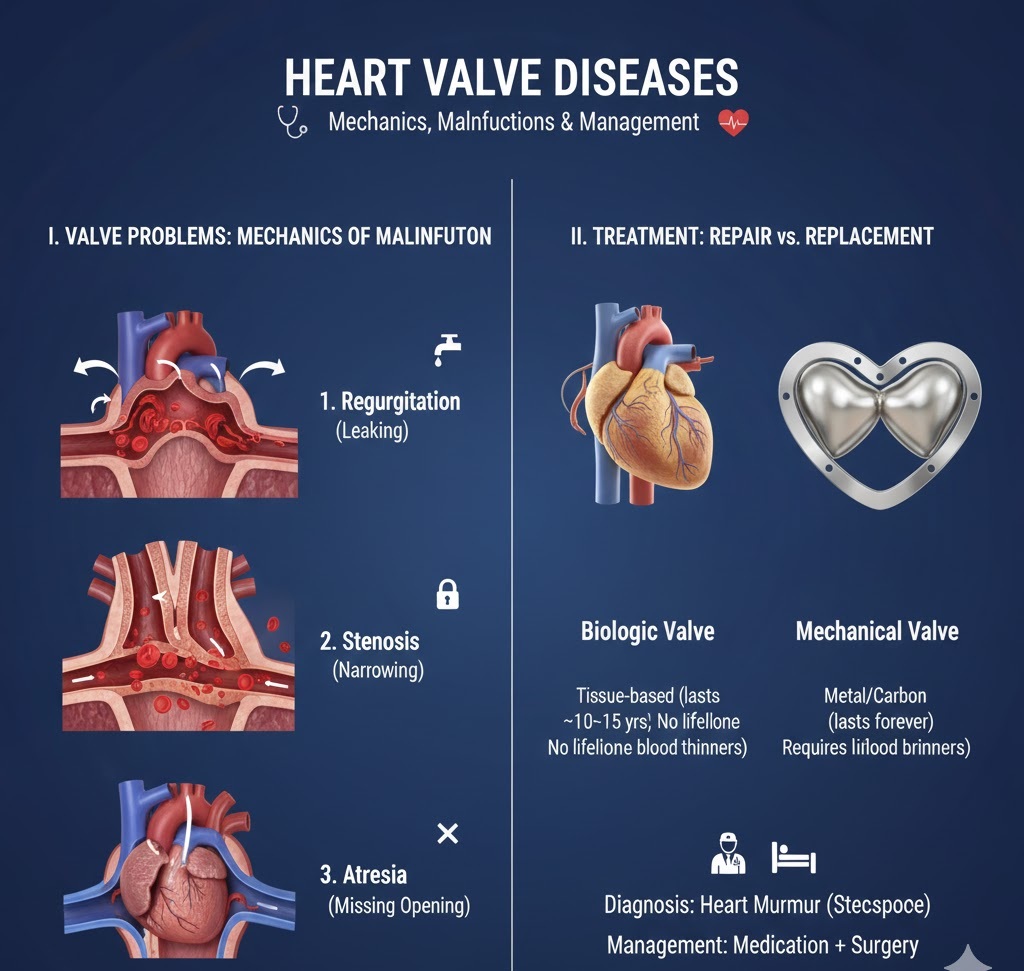
The heart is a sophisticated pump, and its efficiency depends entirely on four critical valves: the Tricuspid, Pulmonary, Mitral, and Aortic valves. These valves act as one-way gates, using flaps (leaflets) to ensure blood travels in the correct direction. When these valves fail to open or close properly, the heart must work significantly harder to circulate blood, leading to potential long-term damage.
Three Primary Types of Valve Problems
Heart valve disease generally falls into one of three mechanical categories:
1. Regurgitation (Leaking)
This occurs when valve flaps do not close tightly, allowing blood to leak backward. A common subtype is Prolapse, where the flaps bulge or flop back into the chamber. This most frequently affects the Mitral valve.
2. Stenosis (Narrowing)
In stenosis, the flaps become thick, stiff, or fused together. This prevents the valve from opening fully, restricting the amount of blood that can pass through. Aortic valve stenosis is the most common form in adults.
3. Atresia (Missing Opening)
This is a congenital defect where a valve lacks an opening entirely, preventing blood from flowing through that specific pathway.
Risk Factors and Causes
While some are born with these issues (Congenital), many develop valve disease over time due to:
- Age: Valves naturally thicken and stiffen as we get older.
- Infections: Rheumatic fever (from untreated strep throat) and Endocarditis (a bacterial infection of the heart lining) can permanently scar valves.
- Secondary Conditions: High blood pressure, heart failure, heart attack, and diabetes all put additional strain on the valve structures.
- Lifestyle: Obesity, lack of activity, and smoking contribute to the wear and tear of the cardiovascular system.
Recognizing the Symptoms
Symptoms often develop slowly. Many people remain asymptomatic for years, but as the strain on the heart increases, you may notice:
- Shortness of breath and persistent fatigue.
- Swelling in the ankles, feet, or abdomen.
- Chest pain during physical exertion.
- Dizziness or fainting spells.
- Heart Murmurs: Unusual clicking or “whooshing” sounds heard by a doctor through a stethoscope.
Treatment and Surgical Options
The goal of treatment is to protect the heart from failure and stroke. Depending on the severity, options include:
Medical Management
Doctors may prescribe medications to manage symptoms or heart-healthy lifestyle changes to reduce the overall workload on the heart.
Surgical Intervention
If the damage is severe, the valve must be addressed physically. Repair is always preferred over Replacement because it carries fewer risks. However, if a replacement is necessary, two types of valves are used:
| Valve Type | Material | Pros | Cons |
| Biologic | Pig, cow, or human tissue | No lifelong blood thinners needed. | Wears out in 10–15 years. |
| Mechanical | Man-made materials | Extremely durable; rarely wears out. | Requires lifelong blood thinners; higher infection risk. |
About the Author




 Pharm'Up