Pharm'Up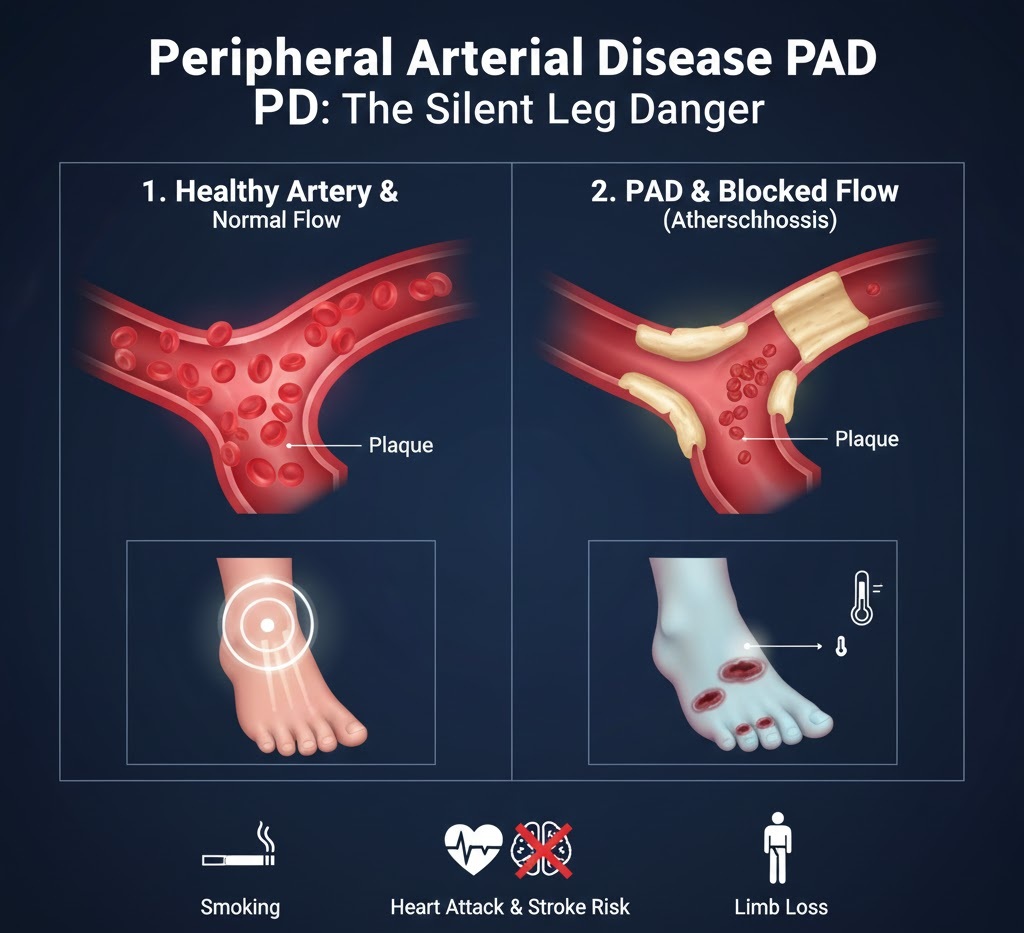
Peripheral Arterial Disease (PAD) is a common circulatory problem in which narrowed arteries reduce blood flow to your limbs. It is a sign of a more widespread accumulation of fatty deposits in your arteries (atherosclerosis). This condition most commonly affects the legs, but it can also involve the arms. When blood flow is restricted, the muscles cannot get enough oxygen and nutrients to keep up with demand, leading to pain and, in severe cases, tissue death.
The Root Cause: Atherosclerosis
PAD is primarily caused by the buildup of plaque—a sticky substance composed of fat, cholesterol, calcium, and other materials found in the blood.
- Plaque Accumulation: Over time, plaque hardens and narrows the arteries.
- Reduced Flow: As the “pipes” narrow, blood flow to the extremities slows down or stops entirely.
- Severe Complications: If a blockage is total and prolonged, it can cause gangrene (tissue death), which may necessitate the amputation of a foot or leg.
Recognizing the Symptoms
Many individuals with PAD experience no symptoms at all. However, for those who do, the signs are often physical indicators of poor circulation:
- Intermittent Claudication: Muscle pain, numbness, or heaviness in the legs triggered by walking or climbing stairs, which typically subsides with rest.
- Physical Changes: * Weak or undetectable pulses in the feet or legs.
- Shiny skin, hair loss on the legs, or slow-growing toenails.
- One leg feeling significantly colder than the other.
- Non-Healing Wounds: Sores on the toes or feet that heal very slowly or not at all.
- Skin Discoloration: A pale or bluish tint (cyanosis) to the skin of the legs.
- Men’s Health: Erectile dysfunction, particularly in men who also have diabetes.
Risk Factors and Global Dangers
PAD is not just a leg problem; it is an indicator of vascular health throughout the body.
Major Risk Factors
- Smoking: The single most significant preventable risk factor.
- Age: Risk increases significantly after age 50.
- Chronic Conditions: Diabetes, high blood pressure, and high cholesterol.
- Medical History: Having a history of heart disease or stroke.
Associated Risks
Because PAD indicates plaque buildup in the body, individuals with this condition are at a much higher risk for:
- Heart Attack
- Stroke
- Transient Ischemic Attack (TIA) or “mini-strokes.”
Diagnosis and Treatment
Early detection is vital to prevent limb loss and cardiovascular events.
- Diagnosis: Doctors use physical exams to check pulses and specialized imaging tests (like an Ankle-Brachial Index) to measure blood pressure in the limbs.
- Lifestyle Changes: The foundation of treatment includes quitting smoking, structured exercise programs to improve circulation, and a heart-healthy diet.
- Medical Intervention: Medications to lower cholesterol, control blood pressure, and prevent blood clots. In advanced cases, surgery or angioplasty may be required to bypass or open the blocked artery.
About the Author