Pharm'Up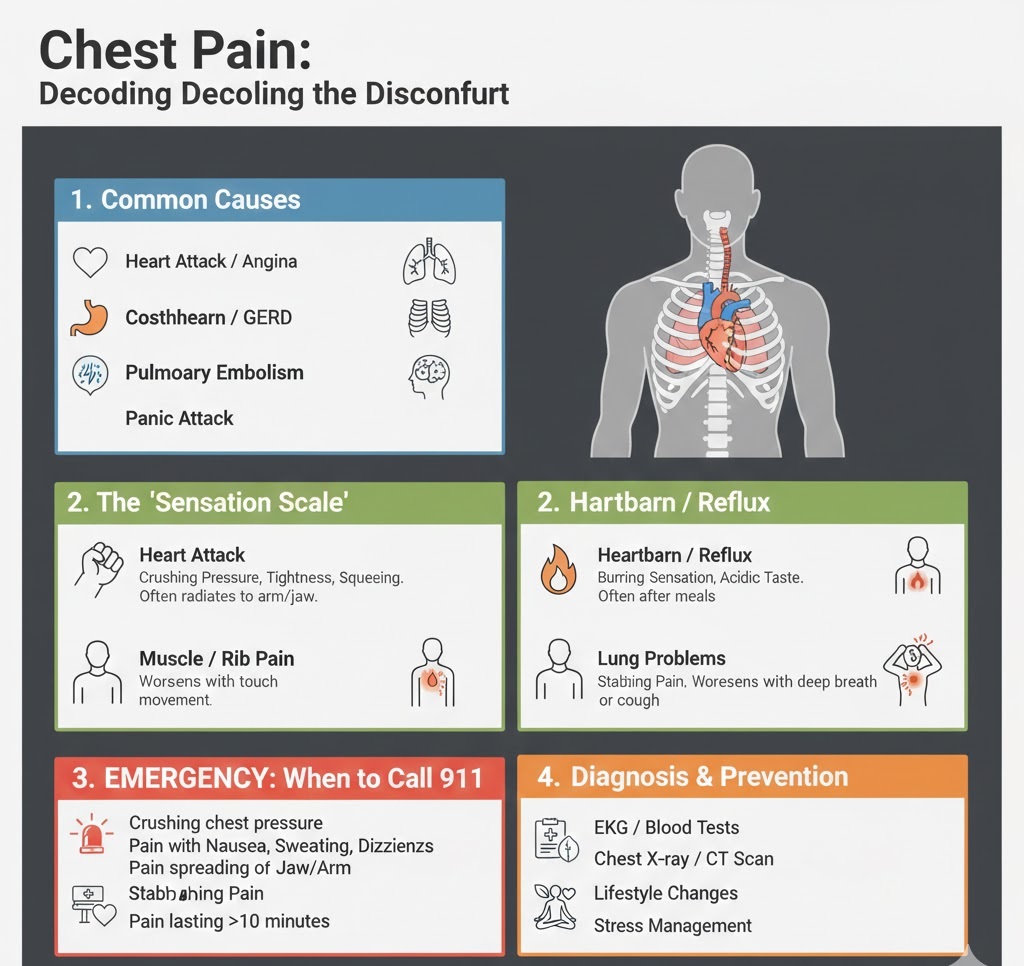
Experiencing chest pain can be alarming, but it is important to know that not all chest discomfort signals a heart attack. The chest cavity contains various organs, muscles, and bones, all of which can be sources of pain. However, because some causes are life-threatening, understanding the “red flags” is vital.
1. Common Causes of Chest Pain
Chest pain is categorized based on the system of the body it originates from:
| Category | Condition | Description |
| Cardiac | Angina | Pain caused by reduced blood flow to the heart; often feels like pressure. |
| Digestive | Heartburn/GERD | A burning sensation caused by stomach acid moving into the esophagus. |
| Musculoskeletal | Costochondritis | Inflammation of the cartilage that connects a rib to the breastbone. |
| Pulmonary | Pulmonary Embolism | A blood clot in the lung; causes sudden shortness of breath and sharp pain. |
| Psychological | Panic Attack | Intense fear accompanied by a racing heart, sweating, and chest tightness. |
2. Heart Attack vs. Other Pain
While only a medical professional can provide a definitive diagnosis, certain characteristics can help differentiate the source of pain:
- Heart-Related: Usually feels like a heavy pressure, squeezing, or fullness. It may radiate to the left arm, jaw, or back.
- Lung-Related: Often feels sharp and gets worse when you take a deep breath or cough (pleurisy).
- Digestive-Related: Often follows a meal and may leave a sour taste in the mouth.
- Muscle-Related: The area usually feels tender to the touch; the pain may change when you twist or move your torso.
3. When is Chest Pain an Emergency?
Do not wait to see if the pain goes away. Seek emergency medical care immediately if you experience:
- Crushing Pressure: A feeling like an elephant is sitting on your chest.
- Associated Symptoms: Pain combined with nausea, cold sweats, dizziness, or extreme shortness of breath.
- Radiation: Pain that spreads to your neck, jaw, shoulders, or arms.
- Persistence: Pain that lasts more than a few minutes or worsens with activity.
4. Diagnosis and Next Steps
At the hospital, doctors use several tools to quickly find the cause:
- EKG (Electrocardiogram): To record the heart’s electrical activity.
- Blood Tests: To look for increased levels of certain enzymes found in heart muscle.
- Chest X-ray: To check the condition of the lungs and the size/shape of the heart.
5. Prevention and Care
Since chest pain is a symptom, treatment focuses on the underlying cause. Managing stress, treating acid reflux, and maintaining heart-healthy habits (like monitoring blood pressure) are the best ways to reduce the frequency of non-emergency chest discomfort.
About the Author