Pharm'Up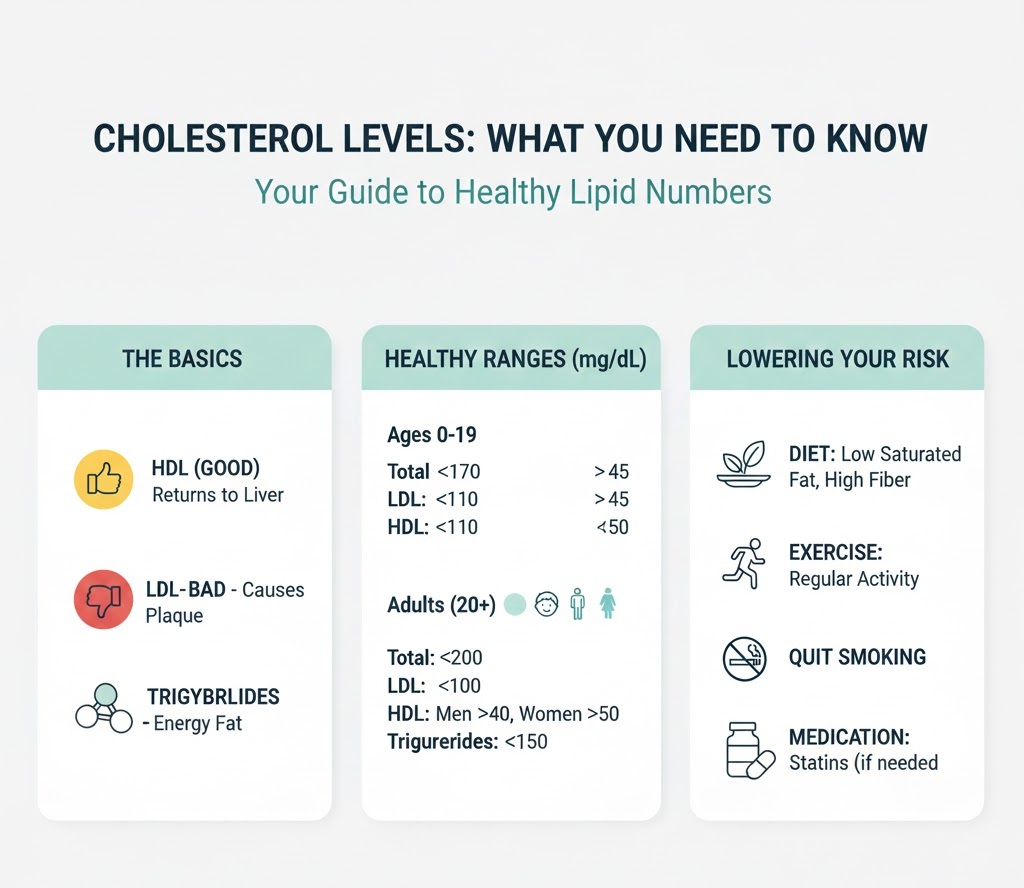
Cholesterol is essential for your body, but maintaining the right balance is critical for heart health. A lipid panel measures these levels in milligrams per deciliter (mg/dL).
1. Decoding Your Lipid Panel
When you receive your results, you will see several different values. Understanding the “good” vs. the “bad” is the first step in managing your cardiovascular risk.
- LDL (Bad) Cholesterol: The primary contributor to plaque buildup in arteries. Lower is generally better.
- HDL (Good) Cholesterol: This helps “scavenge” cholesterol from the blood and takes it to the liver for removal. Higher is better.
- Triglycerides: A type of fat used for energy. High levels (above 150 mg/dL) combined with high LDL increase the risk of heart attack and stroke.
- Non-HDL: Calculated as Total Cholesterol – HDL. This is often a more accurate predictor of heart disease risk than LDL alone.
2. Healthy Reference Ranges
The definition of “healthy” changes as you age. Below are the general guidelines for desirable levels.
Age 19 or Younger
| Type | Healthy Level |
| Total Cholesterol | Less than 170 mg/dL |
| LDL | Less than 110 mg/dL |
| HDL | More than 45 mg/dL |
Adults (Age 20 or Older)
| Type | Healthy Level (Men & Women) |
| Total Cholesterol | Less than 200 mg/dL |
| LDL | Less than 100 mg/dL |
| HDL | Men: $\ge$ 40 mg/dL |
| Triglycerides | Less than 150 mg/dL |
3. Demographics & Risk Statistics
Cholesterol risk is not distributed equally. Factors like race, ethnicity, and sex play a significant role in how your body processes fats.
- Racial Groups: In the United States, approximately 11.4% of non-Hispanic White adults have high total cholesterol ($\ge$ 240 mg/dL). In comparison, Asian Americans (about 11.3%) often show higher LDL levels even at lower Body Mass Index (BMI) levels. Non-Hispanic Black adults have a prevalence of about 9.3%, and Hispanic adults are at approximately 8.1%.
- The Gender Shift: Before age 40, men typically have higher total cholesterol. However, after menopause, women’s risk increases significantly as declining estrogen levels can lead to a drop in “good” HDL and a rise in “bad” LDL.
4. How to Improve Your Profile
Managing cholesterol is a combination of lifestyle changes and, when necessary, medical intervention.
- Dietary Changes: Reduce saturated fats (found in fatty meats and full-fat dairy). Focus on Soluble Fiber (oats, beans, apples) which can reduce the absorption of cholesterol into your bloodstream.
- Physical Activity: Regular exercise can increase HDL (good) cholesterol. Aim for at least 150 minutes of moderate aerobic activity per week.
- Smoking Cessation: Quitting smoking improves your HDL level and helps protect the walls of your arteries from damage.
- Medication: If lifestyle changes aren’t enough, doctors often prescribe Statins. These drugs work by blocking a specific enzyme in the liver ($HMG-CoA$ reductase) that the body uses to create cholesterol.
About the Author