Pharm'Up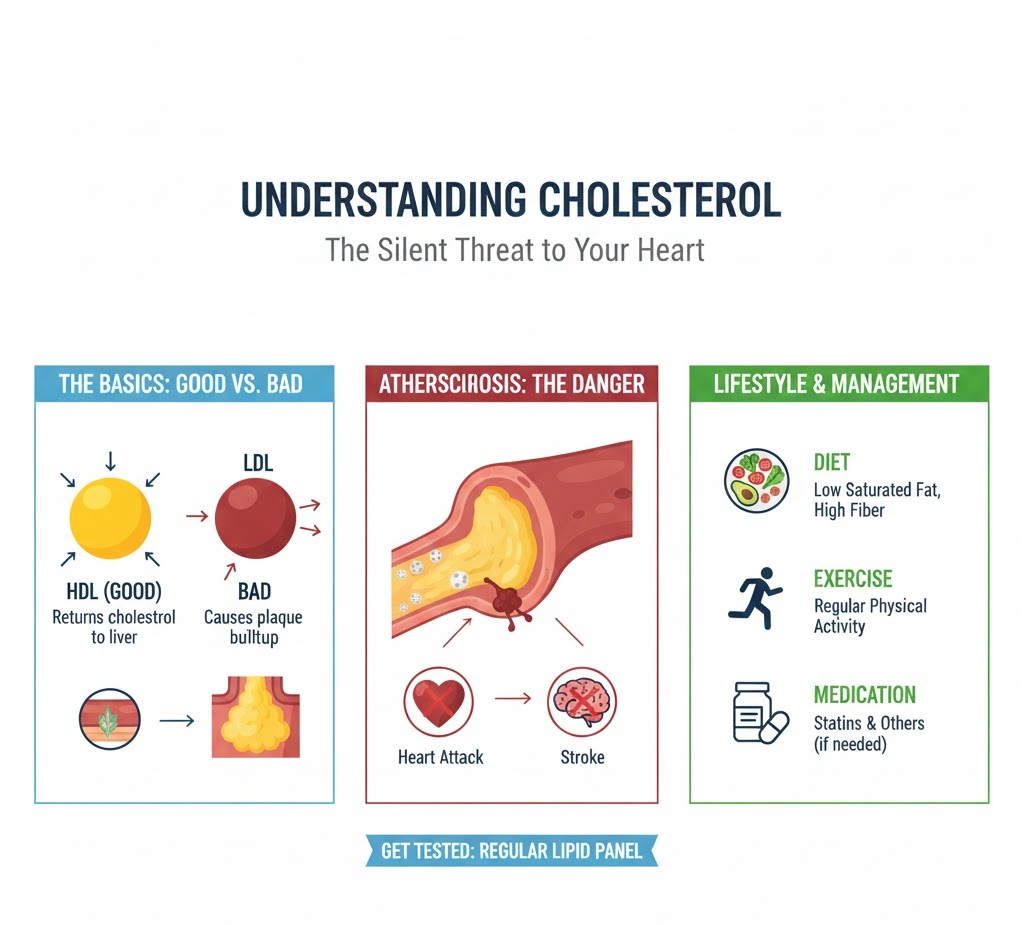
Cholesterol is a waxy, fat-like substance produced naturally by your liver and found in certain animal-based foods. While it is essential for building cell membranes, producing hormones (like estrogen and testosterone), and creating Vitamin D, having too much of it in your bloodstream creates significant health risks.
1. Lipoproteins: The “Transport Vehicles”
Since cholesterol is fatty and blood is watery, they don’t mix. To travel through your body, cholesterol hitches a ride on proteins called lipoproteins.
- LDL (Low-Density Lipoprotein): Often called “bad” cholesterol. It carries cholesterol to your arteries. High levels lead to plaque buildup.
- HDL (High-Density Lipoprotein): Often called “good” cholesterol. It acts as a scavenger, picking up excess cholesterol and taking it back to the liver to be flushed out.
- VLDL (Very Low-Density Lipoprotein): Another “bad” type that primarily carries triglycerides (another type of fat) to your tissues.
2. The Danger of High Cholesterol: Atherosclerosis
When you have an excess of LDL, it can combine with other substances to form plaque. This sticky substance clings to artery walls, a process called atherosclerosis. Over time, this narrows the arteries and restricts blood flow.
3. Risk Factors and Demographics
While lifestyle choices like diet and exercise are primary drivers, statistics show that risk varies significantly across different groups:
Statistics by Race and Ethnicity (U.S. Data)
According to the CDC, the prevalence of high total cholesterol ($\ge$ 240 mg/dL) varies among adults aged 20 and over:
- Non-Hispanic White: Approximately 11.4%
- Asian Americans: Approximately 11.3% (notably, this group often has higher LDL even at lower body weights)
- Non-Hispanic Black: Approximately 9.3%
- Hispanic: Approximately 8.1%
Age and Sex
- Men (Ages 20–39): More likely to have higher total cholesterol than women.
- Women (Post-Menopause): Risk increases sharply as estrogen levels—which help maintain HDL—drop.
- Children: About 7% of U.S. children (ages 6–19) have high total cholesterol.
4. Diagnosis and Testing
High cholesterol is a “silent” condition—it has no symptoms. It is diagnosed via a Lipid Panel blood test.
| Age Group | Testing Frequency |
| 9–11 Years | First screening for all children |
| 20–45 Years | Every 5 years |
| 45–65 Years | Every 1–2 years |
| Over 65 | Annually |
5. How to Lower Your Cholesterol
Management typically starts with the “Therapeutic Lifestyle Changes” (TLC) approach:
- Diet: Swapping saturated fats (butter, red meat) for unsaturated fats (olive oil, nuts) and increasing soluble fiber (oats, beans).
- Exercise: Aerobic activity can raise “good” HDL levels.
- Medication: Statins are the most common prescription. They work by blocking the enzyme in your liver that creates cholesterol ($HMG-CoA$ reductase).
About the Author