Pharm'Up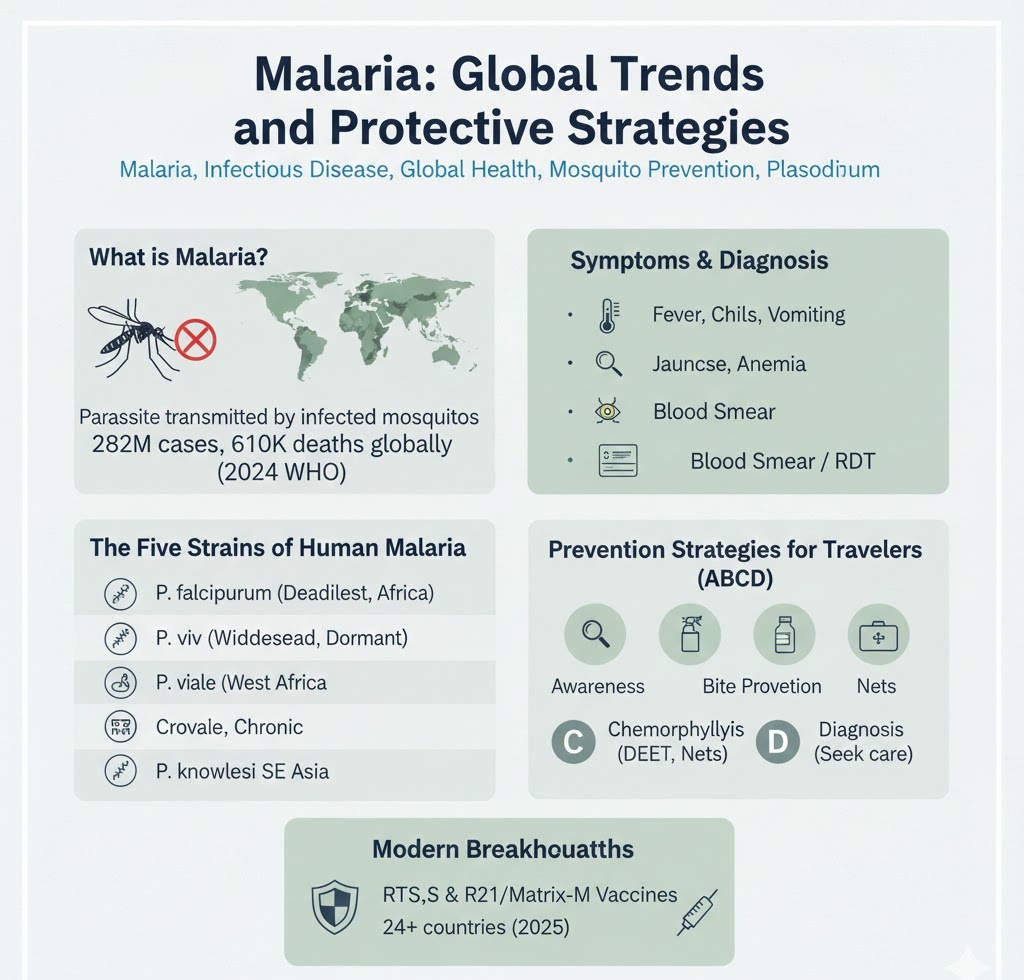
What is Malaria?
Malaria is a life-threatening disease caused by Plasmodium parasites. It is transmitted to humans through the bites of infected female Anopheles mosquitoes. While almost eliminated in the United States, it remains a critical global health challenge, especially in tropical and subtropical regions.
As of 2024, the WHO reported approximately 282 million cases and 610,000 deaths worldwide. The African region continues to carry the heaviest burden, accounting for about 95% of all cases and deaths.
The Five Strains of Human Malaria
While there are many parasites, five specific species are known to infect humans:
| Parasite Type | Severity & Characteristics |
| P. falciparum | The Deadliest. Most prevalent in Africa; can cause organ failure and death within 24 hours if untreated. |
| P. vivax | Most Widespread. Common in Asia and Latin America; can lie dormant in the liver and cause relapses years later. |
| P. ovale | Also capable of remaining dormant in the liver; primarily found in West Africa. |
| P. malariae | Causes a “chronic” infection; can stay in the blood for decades with very mild symptoms. |
| P. knowlesi | Originally found in monkeys in Southeast Asia; can progress rapidly in humans. |
Symptoms and Diagnosis
Symptoms typically appear 10–15 days after the infective mosquito bite. Because they often mimic a “flu-like” illness, travel history is a vital piece of information for your doctor.
- Initial Signs: Fever, headache, chills, and vomiting.
- Severe Signs: Jaundice (yellowing of skin/eyes), anemia, breathing difficulties, and kidney failure.
- Diagnosis: A blood smear test (microscopy) or a Rapid Diagnostic Test (RDT) is used to confirm the presence and type of parasite.
Prevention Strategies for Travelers
If you are traveling to a malaria-endemic area in 2026, the “ABCD” of prevention is highly recommended:
- A – Awareness: Research the risk level of your specific destination.
- B – Bite Prevention: * Use repellent containing DEET, Picaridin, or IR3535.
- Wear long-sleeved clothing treated with permethrin.
- Always sleep under insecticide-treated bed nets.
- C – Chemoprophylaxis: See a travel clinic 4–6 weeks before departure for preventive medicines (like Malarone or Doxycycline).
- D – Diagnosis: Seek immediate medical help if you develop a fever up to one year after returning home.
Modern Breakthroughs
The fight against malaria has entered a new era with the rollout of the RTS,S/AS01 and R21/Matrix-M vaccines. As of 2025, over 24 countries have integrated these into routine childhood immunization programs, significantly reducing severe illness in high-risk areas.
About the Author