Pharm'Up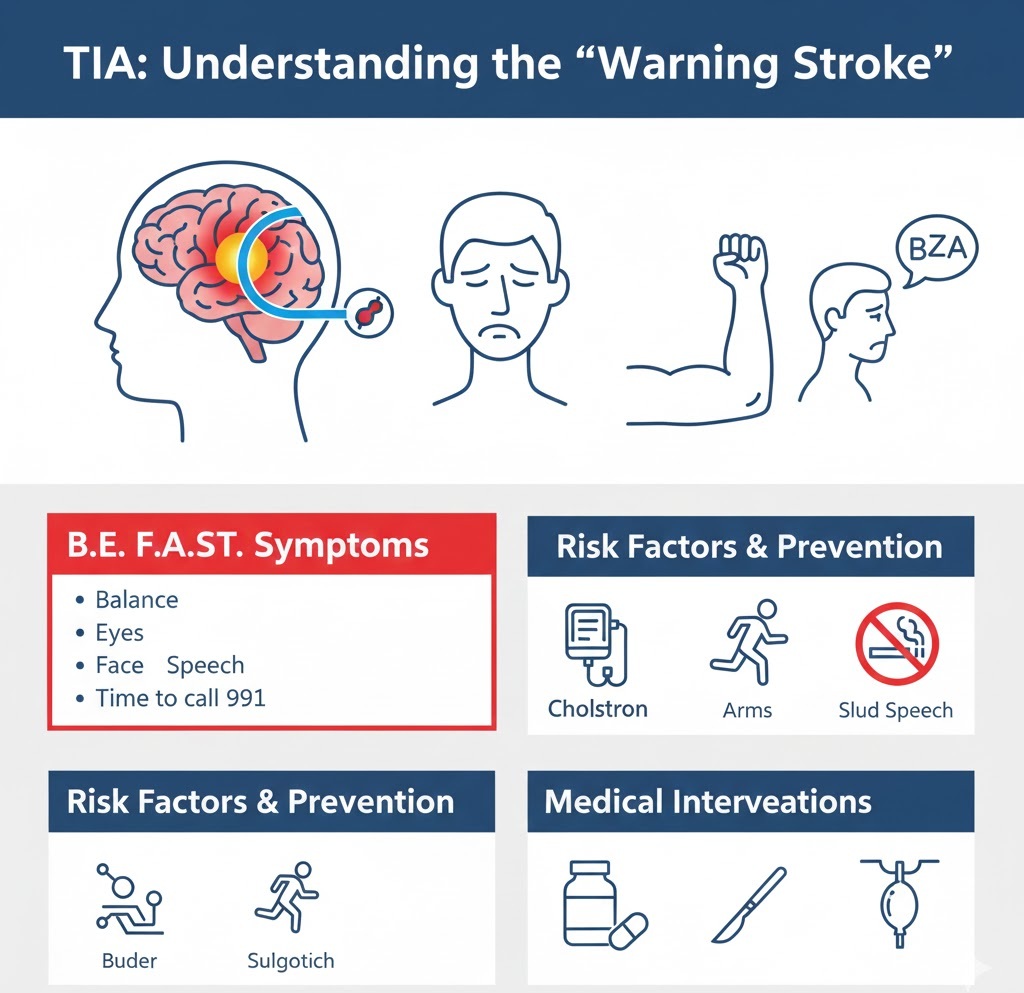
What is a TIA?
A Transient Ischemic Attack (TIA) is often called a “mini-stroke.” It occurs when the blood supply to a part of the brain, spinal cord, or retina is briefly blocked. Unlike a full stroke, the blockage is temporary and does not cause permanent brain damage—however, it is a medical emergency and a critical warning sign that a major stroke may be imminent.
Recognizing the Sudden Symptoms
Symptoms of a TIA are identical to a stroke but typically disappear within an hour (though they can last up to 24 hours). Remember the acronym B.E. F.A.S.T.:
- B – Balance: Sudden loss of balance or coordination; dizziness.
- E – Eyes: Sudden trouble seeing in one or both eyes or double vision.
- F – Face: Sudden numbness or weakness, especially on one side of the body.
- A – Arms: Difficulty lifting an arm or leg; weakness.
- S – Speech: Confusion, slurred speech, or trouble understanding others.
- T – Time: If these occur, call emergency services immediately. You cannot distinguish a TIA from a stroke while it is happening.
Risk Factors and Prevention
A TIA is the body’s “red alert.” Statistics show that about 1 in 3 people who have a TIA will eventually have a major stroke, with the highest risk occurring within the first 48 hours.
| Risk Factor | How to Manage It |
| High Blood Pressure | The #1 cause of TIA. Monitor regularly and use prescribed meds. |
| High Cholesterol | Limits plaque buildup in the arteries leading to the brain. |
| Lifestyle Habits | Quit smoking, limit alcohol, and maintain a healthy weight. |
| Physical Activity | Regular exercise improves vascular health and blood flow. |
Medical Interventions
Once a TIA is diagnosed, doctors focus on preventing a future, permanent stroke:
- Medications: Antiplatelet drugs (like aspirin) or anticoagulants (blood thinners) to prevent clots.
- Surgical Procedures: In some cases, a Carotid Endarterectomy is performed to clear fatty deposits from the neck arteries.
- Angioplasty: Using a balloon and stent to open narrowed brain-supplying arteries.
About the Author