Pharm'Up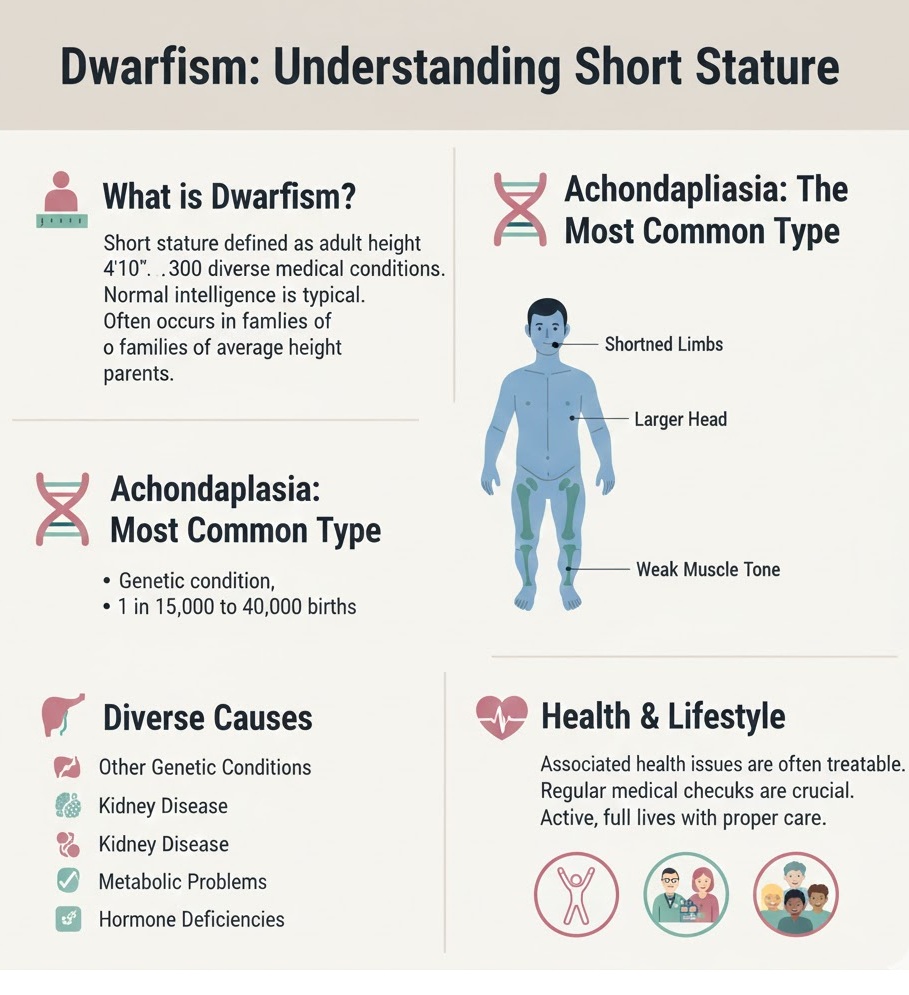
Dwarfism is a condition characterized by short stature, typically defined as an adult height of 4 feet 10 inches (147 cm) or less. It is not a single disease but a clinical manifestation of hundreds of different medical and genetic conditions.
1. What Causes Dwarfism?
Dwarfism is primarily caused by over 300 distinct conditions, most of which are genetic. Interestingly, the majority of children with genetic dwarfism are born to parents of average height.
- Genetic Mutations: Spontaneous changes in genes during conception.
- Metabolic/Hormonal Disorders: Deficiencies in growth hormones or problems with how the body processes nutrients.
- Organ-Related Issues: Chronic conditions like kidney disease can stunt growth during critical developmental years.
2. Common Types of Dwarfism
Dwarfism is generally divided into two broad categories: Disproportionate and Proportionate.
Disproportionate Dwarfism (Achondroplasia)
This is the most common form. It results in some body parts being average size while others are small.
- Achondroplasia: Occurs in roughly 1 in 15,000 to 40,000 births.
- Physical Features: Shorter limbs (arms and legs) relative to the torso, a larger head (macrocephaly) with a prominent forehead, and potentially lower muscle tone in infancy.
Proportionate Dwarfism
In this category, all parts of the body are small to the same degree and appear to be in proportion to each other.
- Cause: Often results from medical conditions present at birth or appearing in early childhood, such as growth hormone deficiency.
3. Potential Health Considerations
While dwarfism does not affect intelligence, the skeletal changes associated with it can lead to specific physical health challenges:
- Spinal Health: Conditions like spinal stenosis (narrowing of the spinal canal) or kyphosis (hunching).
- Ear & Respiratory Issues: Frequent ear infections or sleep apnea due to smaller facial/airway structures.
- Joint Problems: Early-onset osteoarthritis due to the way weight is distributed on the joints.
- Weight Management: Maintaining a healthy weight is vital to reduce extra stress on the spine and joints.
4. Living with Dwarfism
With modern medical care, most individuals with dwarfism live long, active, and fulfilling lives. The key to management is proactive healthcare.
- Regular Checkups: Ongoing monitoring by specialists (orthopedists, neurologists, and geneticists) can catch and treat complications early.
- Adaptive Environments: Minor modifications to homes, cars, and workplaces allow for full independence.
- Social Support: Connecting with organizations like Little People of America (LPA) provides a community and resources for families and individuals.
About the Author