Pharm'Up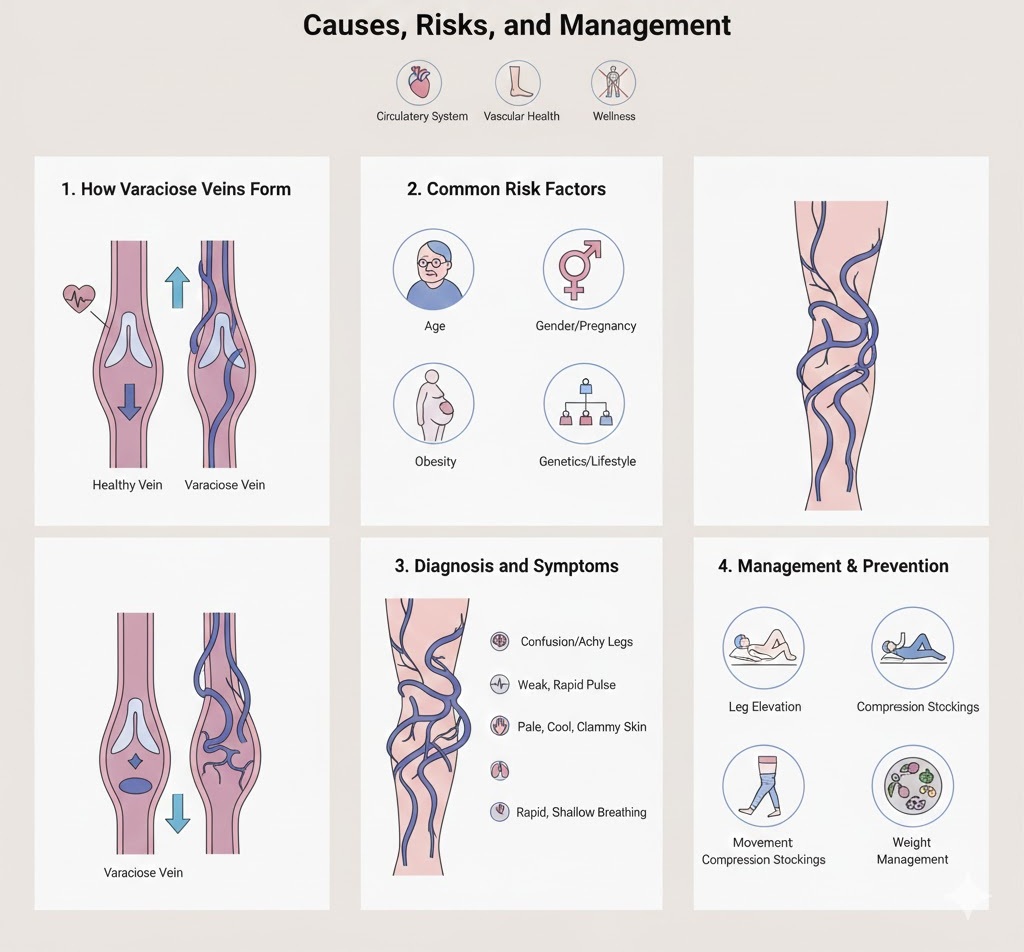
Varicose veins are more than just a cosmetic concern; they are a sign of underlying circulatory changes. When veins become swollen and twisted, it indicates that the system responsible for returning blood to your heart is struggling to fight gravity.
1. How Varicose Veins Form
To understand varicose veins, you must understand how healthy veins function. Unlike arteries, which have the heart to pump blood throughout the body, veins rely on one-way valves and muscle contractions to push blood upward toward the heart.
- Healthy Veins: Valves open to let blood through and snap shut to prevent it from flowing backward.
- Varicose Veins: If these valves become weak or damaged, gravity pulls the blood back down, causing it to pool. This pressure causes the vein walls to stretch, twist, and bulge.
2. Common Risk Factors
While anyone can develop varicose veins, certain factors increase the likelihood:
- Age: Aging causes natural wear and tear on vein valves.
- Gender: Hormonal changes during pregnancy, pre-menstruation, or menopause can relax vein walls.
- Lifestyle: Obesity puts extra pressure on veins. Long periods of sitting or standing keep blood from flowing as easily.
- Genetics: A family history significantly increases your risk.
3. Diagnosis and Symptoms
Most people recognize varicose veins by their dark blue or purple color and cord-like appearance on the legs. However, they can also cause physical discomfort, including:
- An achy or heavy feeling in the legs.
- Burning, throbbing, or muscle cramping.
- Itching around one or more of the veins.
- Skin discoloration near the affected area.
4. Management and Prevention
While you cannot always prevent varicose veins, you can stop existing ones from worsening and reduce the pain.
| Strategy | How it Helps |
| Leg Elevation | Raising legs above the heart uses gravity to help blood flow back. |
| Compression | Compression stockings squeeze the legs, helping veins and muscles move blood. |
| Movement | Walking uses calf muscles to “pump” the blood upward. |
| Weight Management | Reduces the overall pressure on the venous system. |
5. Medical Treatment
If lifestyle changes aren’t enough, doctors may suggest procedures such as:
- Sclerotherapy: Injecting a solution to close the vein.
- Laser Treatment: Using light bursts to make the vein fade away.
- Vein Stripping: Removing long veins through small incisions.
About the Author