Pharm'Up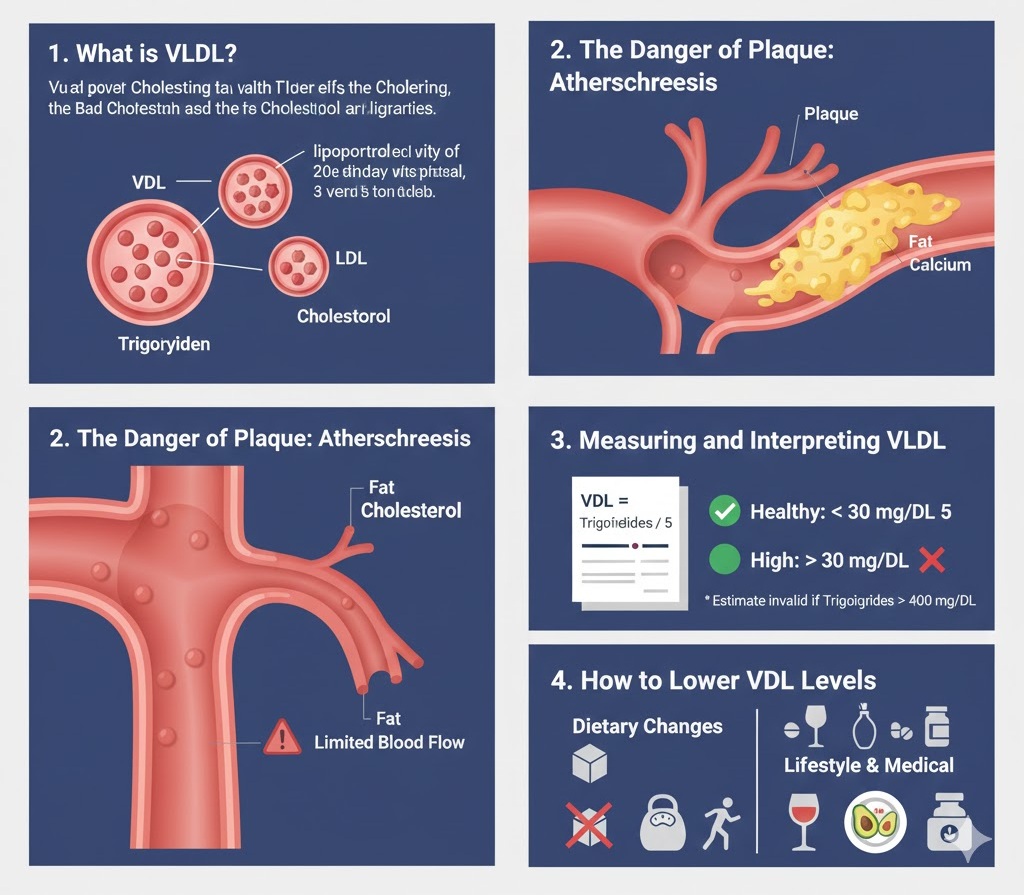
VLDL (Very-Low-Density Lipoprotein) is a critical component of your lipid profile. While many people focus on “good” and “bad” cholesterol (HDL and LDL), VLDL plays a unique role in how your body transports and stores fat.
1. What is VLDL?
VLDL is a type of lipoprotein produced by your liver. Think of lipoproteins as “shuttle buses” that carry fats through your bloodstream, which is mostly water (fats and water don’t mix).
- VLDL vs. LDL: While LDL primarily carries cholesterol, VLDL primarily carries triglycerides (the most common type of fat in your body) to your tissues for energy or storage.
- The “Bad” Category: Like LDL, VLDL is considered “bad” because high levels contribute to the clogging of your arteries.
2. The Danger of Plaque: Atherosclerosis
When you have too much VLDL and LDL in your blood, they can stick to the walls of your arteries. This leads to a process called atherosclerosis.
- Plaque Formation: A sticky mixture of fat, cholesterol, and calcium builds up.
- Hardening: Over time, this plaque hardens, making arteries stiff and narrow.
- Blood Flow: Narrowed arteries restrict the flow of oxygen-rich blood to the heart and brain, which can trigger a heart attack or stroke.
3. Measuring and Interpreting VLDL
You won’t usually see a direct “VLDL” measurement on a standard lab report because it is difficult to measure directly. Instead, doctors use a mathematical estimate.
- The Calculation: Since VLDL is mostly triglycerides, your VLDL level is typically estimated as one-fifth ($1/5$) of your triglyceride level.
- The Goal: A healthy VLDL level is generally less than 30 mg/dL.
- The Exception: If your triglycerides are extremely high (over 400 mg/dL), this estimation method becomes inaccurate.
4. How to Lower VLDL Levels
Because VLDL is so closely tied to triglycerides, the strategies to lower them are identical. Lifestyle changes are often the first line of defense.
Dietary Changes
- Cut the Sugar: High intake of simple sugars and refined carbs causes the liver to produce more triglycerides.
- Limit Alcohol: Alcohol is potent at raising triglyceride levels.
- Healthy Fats: Replace saturated fats (found in red meat) with monounsaturated fats (like olive oil or avocado).
Lifestyle & Medical
- Exercise: Regular physical activity lowers triglycerides and raises “good” HDL cholesterol.
- Weight Loss: Losing even 5-10% of your body weight can significantly reduce VLDL.
- Medication: If lifestyle changes aren’t enough, your doctor may prescribe fibrates, omega-3 fatty acids, or statins.
About the Author