Pharm'Up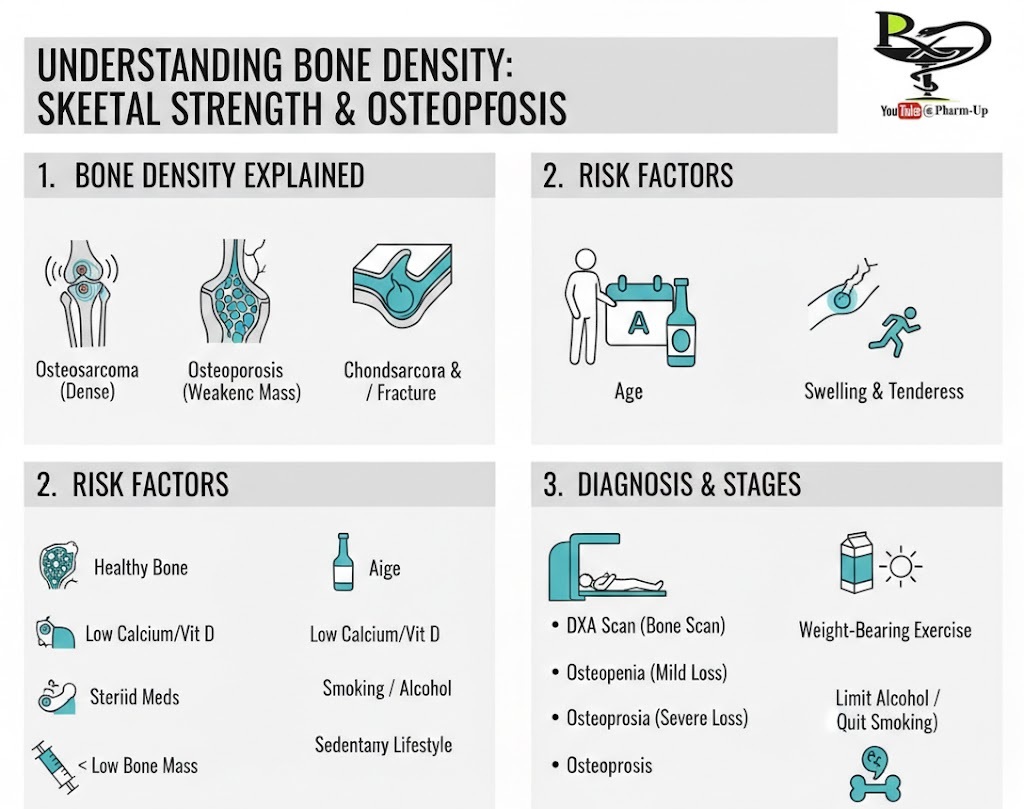
Bone density, often referred to as bone mass, is a measurement of the amount of calcium and other vital minerals packed into your bone tissue. Think of it as the “internal architecture” of your skeleton. When your bones are dense, they are structurally sound, resilient, and far less likely to fracture.
1. The Living Balance of Bone
Bones are not static; they are living tissues in a constant state of renewal.
- Remodeling: Your body continuously breaks down old bone and replaces it with new bone.
- The Imbalance: As we age, or due to various health factors, the body may break down bone faster than it can replace it. This leads to a decrease in density, making bones porous and fragile.+1
2. From Osteopenia to Osteoporosis
Bone loss exists on a spectrum. Depending on the results of a density test, a doctor may diagnose:
- Osteopenia: This means your bone density is lower than average for your age, but not yet at the dangerous level of osteoporosis. It is a “warning zone” that allows for early intervention.
- Osteoporosis: A disease where bones become so thin and brittle that even minor stresses—like bending over or coughing—can cause a fracture, most commonly in the hip, spine, or wrist.
3. Factors That Accelerate Bone Loss
While aging is the most common cause, several other factors can drain your bone mass:
- Medical Conditions: Endocrine disorders, digestive diseases that block mineral absorption, and inflammatory conditions like Rheumatoid Arthritis.
- Medications: Long-term use of corticosteroids (prednisone) or certain reflux medicines (PPIs).
- Lifestyle Habits: Smoking, heavy alcohol use, and physical inactivity significantly weaken the skeleton.
- Nutrition: A lack of calcium (the building block) and Vitamin D (the “key” that lets calcium into the bone).
4. Testing: The DXA Scan
The gold standard for measuring bone health is a Bone Density Scan (DXA). This painless, low-dose X-ray compares your bone mass to a healthy young adult’s. It is essential for:+1
- Diagnosing osteoporosis before a break occurs.
- Predicting your future risk of fractures.
- Monitoring how well osteoporosis medications are working.
5. Strategies for Stronger Bones
You can take proactive steps to maintain and even improve your bone health:
- Diet: Prioritize calcium-rich foods (dairy, leafy greens) and ensure adequate Vitamin D through sunlight or supplements.
- Exercise: Weight-bearing activities like walking, jogging, and weightlifting signal your body to build denser bone.
- Avoid Toxins: Quitting smoking and limiting alcohol can stop accelerated bone depletion.
About the Author