Pharm'Up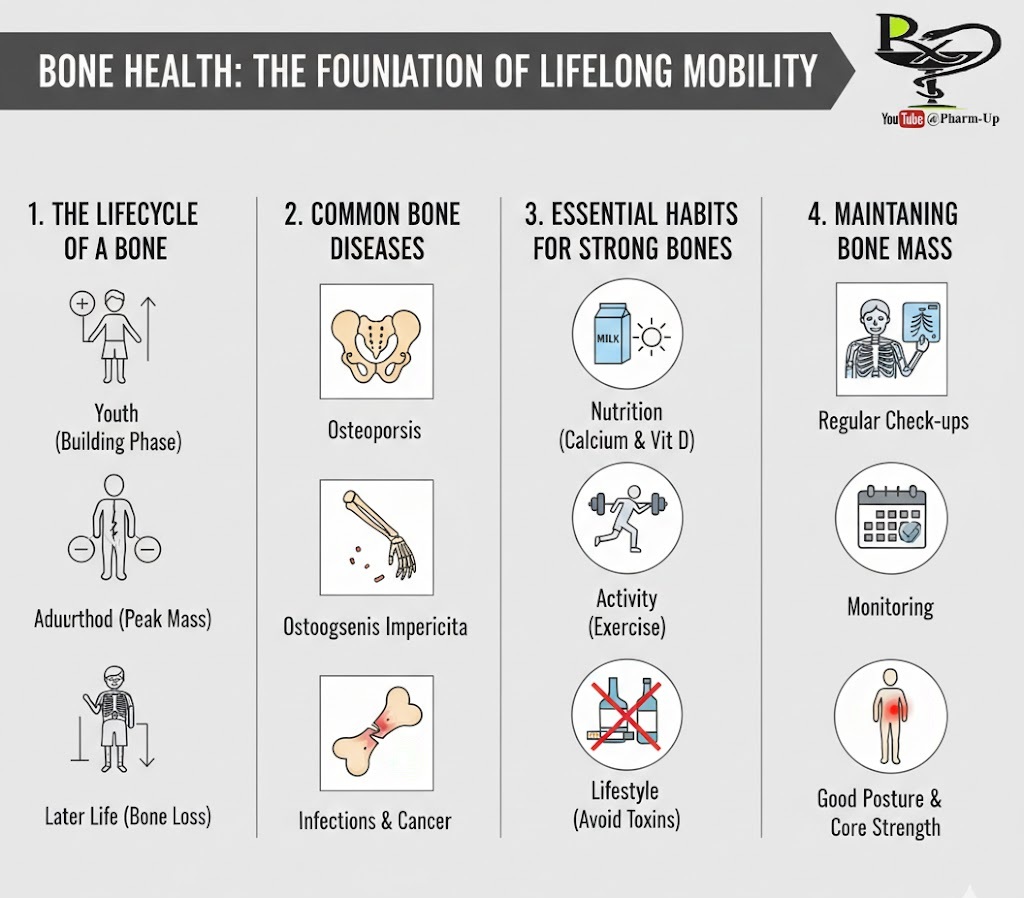
Your bones are much more than a rigid framework; they are living, dynamic tissues that undergo constant renewal. They provide structural support, protect your vital organs, and anchor your muscles to enable movement.
1. The Lifecycle of a Bone
Bone health is a balance between bone formation and bone resorption (breakdown).
- Youth (Ages 0–20): This is the “building phase.” Your body adds new bone faster than it removes the old, leading to peak bone mass.
- Adulthood (Age 20+): The balance shifts. You may begin to lose bone slightly faster than your body can replace it.
- Later Life: Maintaining bone density becomes critical to prevent fragility and fractures.
2. Common Bone Diseases and Conditions
When the rebuilding process is disrupted by genetics, nutrition, or age, several conditions can arise:
- Osteoporosis: The most common bone disease, characterized by porous, weak bones that break easily.
- Osteogenesis Imperfecta: A genetic disorder often called “brittle bone disease” that causes bones to break with little or no apparent cause.
- Paget’s Disease: A chronic disorder that interferes with the normal recycling process, causing bones to grow too large and weak.
- Infections & Cancer: Osteomyelitis (bone infection) and primary or metastatic bone cancers can severely damage bone structure.
3. Essential Habits for Strong Bones
Preventing bone loss is a lifelong commitment that relies on three pillars:
- Nutrition: Sufficient intake of Calcium (the primary building block) and Vitamin D (which helps your body absorb calcium).
- Activity: Weight-bearing exercises (walking, jogging, dancing) and resistance training (weights) signal your bones to stay strong.
- Lifestyle Choices: Avoiding tobacco and limiting alcohol intake, as both interfere with the body’s ability to maintain bone mass.
About the Author