Pharm'Up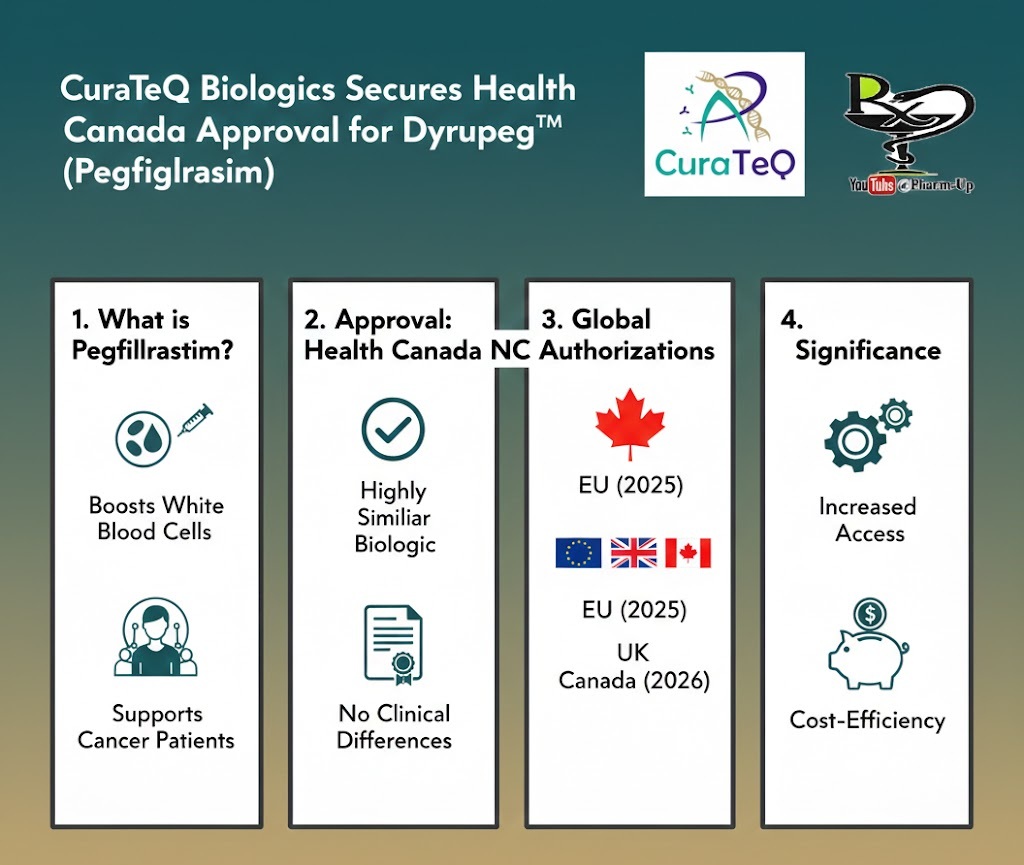
CuraTeQ Biologics, a subsidiary of Aurobindo Pharma Ltd, has achieved a significant regulatory milestone with the receipt of a Notice of Compliance (NOC) from Health Canada for Dyrupeg™. This approval authorizes the marketing of their pegylated filgrastim biosimilar within the Canadian healthcare system.
1. Understanding the Approval: The NOC
The Notice of Compliance (NOC) issued by the Biologics and Radiopharmaceutical Drugs Directorate (BRDD) serves as the final green light for sale in Canada.
- Safety and Efficacy: The review confirmed that Dyrupeg™ is “highly similar” to the original reference biologic.
- No Meaningful Differences: Health Canada found no clinically significant differences in quality, safety, or how the drug moves through the body (pharmacokinetics/pharmacodynamics).
2. What is Pegylated Filgrastim?
Dyrupeg™ is a biosimilar version of pegfilgrastim, a medication typically used to:
- Boost White Blood Cells: It stimulates the production of neutrophils (a type of white blood cell).
- Support Cancer Patients: It is commonly prescribed to patients undergoing chemotherapy to reduce the risk of infection caused by a low white blood cell count (neutropenia).
- Long-Acting Formula: The “pegylated” nature of the drug allows it to stay in the system longer, requiring less frequent dosing than standard filgrastim.
3. Global Expansion and Pipeline
Canada joins a growing list of major markets that have cleared Dyrupeg™ for clinical use:
- European Union: Approved by the European Commission (EC) in 2025.
- United Kingdom: Authorized by the Medicines and Healthcare products Regulatory Agency (MHRA).
- Future Outlook: CuraTeQ currently has three additional biosimilars under review by Health Canada, signaling a robust expansion into the North American biologics market.
4. Significance of Biosimilars
The approval of biosimilars like Dyrupeg™ is critical for healthcare systems because they provide:
- Increased Access: More treatment options for patients requiring immune system support.
- Cost Efficiency: Biosimilars typically offer a more affordable alternative to expensive reference biologics, helping to reduce the overall burden on public and private health insurance.
About the Author