Pharm'Up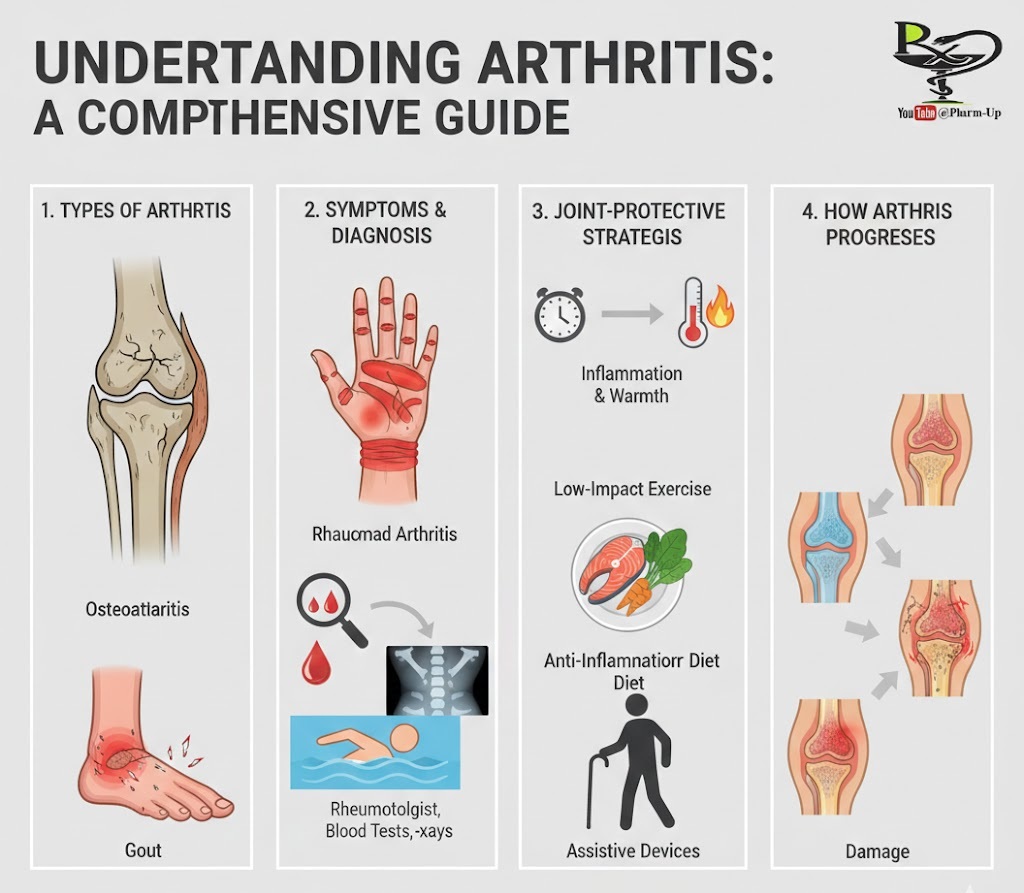
Arthritis is a broad term used to describe more than 100 different conditions that cause inflammation, pain, and stiffness in the joints. A joint is any point in the body where two or more bones meet, such as the knees, hips, or knuckles. While often associated with aging, arthritis can affect people of all ages, including children.
1. The Major Categories of Arthritis
Arthritis is generally classified based on the underlying cause of the joint damage:
- Degenerative (Osteoarthritis): The “wear and tear” variety. It occurs when the protective cartilage on the ends of your bones wears down over time. It is highly common in the hands, knees, and hips.
- Autoimmune & Inflammatory: The immune system mistakenly attacks healthy joint tissue. This includes Rheumatoid Arthritis (RA), which usually affects joints symmetrically (both hands or both knees), and Ankylosing Spondylitis.
- Metabolic (Gout): Occurs when the body produces too much uric acid, which forms needle-like crystals in the joint (most famously the big toe), causing sudden, excruciating pain.
- Infectious: Triggered by a bacterium, virus, or fungus entering the joint. This requires immediate medical attention to prevent permanent damage.
2. Recognizing the Signs
While each type has unique characteristics, the general symptoms of arthritis include:
- Joint Pain and Tenderness: Persistent aching or sharp pain when moving.
- Swelling and Redness: Visible inflammation and warmth around the affected area.
- Stiffness: Especially “morning stiffness” that lasts more than 30 minutes.
- Decreased Range of Motion: Difficulty fully extending or bending a limb.
3. Risk Factors: Who is at Risk?
Several factors influence the likelihood of developing arthritis:
- Genetics: Specific genes can make you more susceptible to environmental factors that trigger autoimmune arthritis.
- Weight: Excess body weight puts extra stress on weight-bearing joints (knees/hips) and can trigger chemical signals that increase inflammation.
- Previous Injuries: A joint injured during sports or an accident is much more likely to develop osteoarthritis later in life.
- Occupation: Jobs involving repetitive squatting or heavy lifting can wear down cartilage prematurely.
4. Diagnosis and the Road to Recovery
Diagnosis usually involves a Rheumatologist, who uses blood tests to look for inflammatory markers (like Rheumatoid Factor) and imaging (X-rays or MRIs) to see the extent of joint damage.
Current Treatment Approaches:
- Medication: Ranging from over-the-counter pain relievers to DMARDs (Disease-Modifying Anti-Rheumatic Drugs) that slow down autoimmune attacks.
- Lifestyle Changes: Low-impact exercise (swimming/cycling) keeps joints flexible without adding stress.
- Assistive Tools: Using jar openers, ergonomic keyboards, or braces to protect joints during daily tasks.
About the Author