Pharm'Up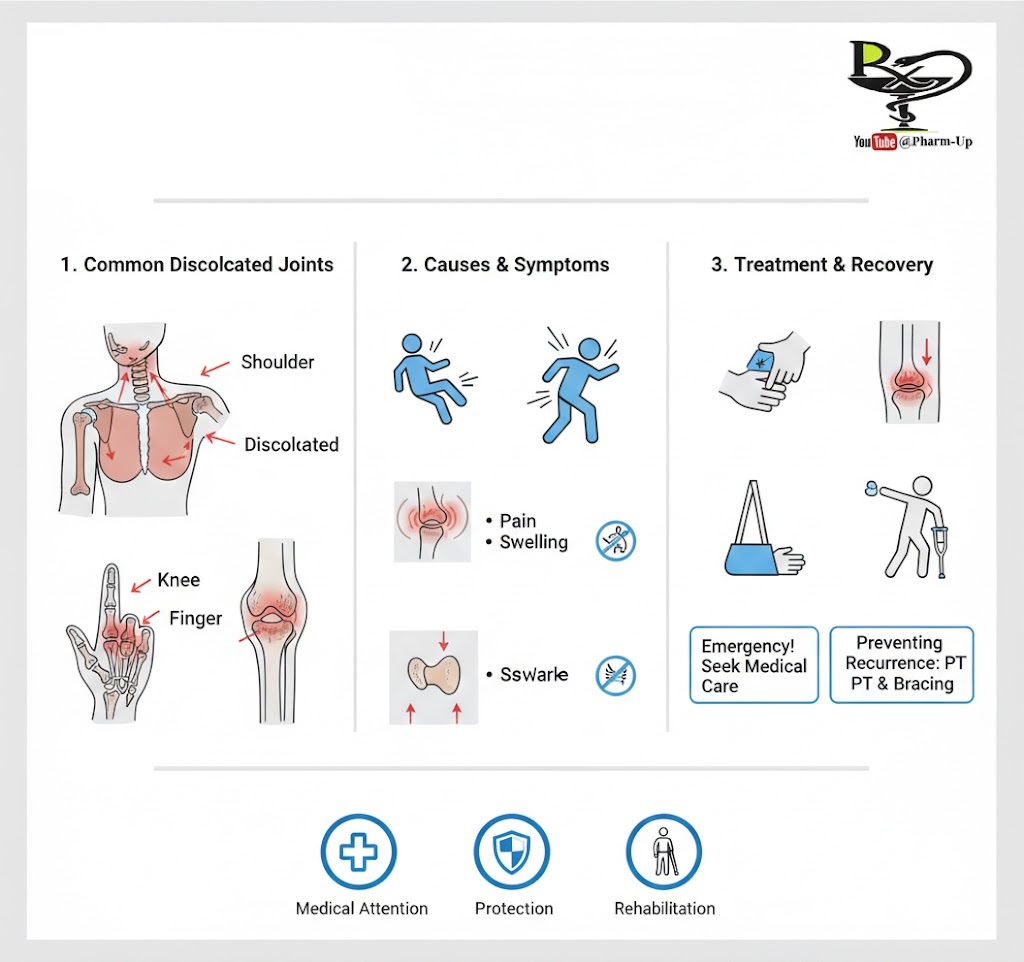
A dislocation is a painful joint injury that occurs when the ends of your bones are forced out of their natural positions. This structural disruption is usually caused by sudden trauma, such as a fall, a heavy blow, or high-impact contact during sports.
While shoulders are the most common site, you can dislocate almost any joint, including:
- Major Joints: Hips, knees, elbows, and ankles.
- Small Joints: Fingers, toes, and the jaw.
1. Identifying a Dislocation
A dislocated joint is often easy to identify because the area will look visibly out of place or deformed. Other key symptoms include:
- Intense Pain: Immediate and severe discomfort.
- Inability to Move: The joint becomes “locked” or impossible to maneuver.
- Swelling and Bruising: Rapid inflammation around the injured site.
2. Emergency Treatment and Recovery
A dislocated joint is a medical emergency. You should never attempt to “pop” a bone back into place yourself, as this can damage surrounding nerves, blood vessels, and ligaments.
Medical interventions typically include:
- Manipulation: A doctor manually repositions the bones (often under sedation).
- Immobilization: Using a splint or sling to keep the joint still while tissues heal.
- Medication: To manage pain and reduce inflammation.
- Rehabilitation: Physical therapy to restore strength and prevent future injury.
3. Prevention and Long-Term Stability
Once a joint—particularly the shoulder or kneecap—has been dislocated, the surrounding ligaments may remain stretched or weakened. This increases the likelihood of recurring dislocations.
To protect your joints, it is highly recommended to:
- Wear Protective Gear: Use braces or padding during contact sports.
- Strengthen Supporting Muscles: Focus on the muscles that stabilize your joints to compensate for ligament laxity.
About the Author