Pharm'Up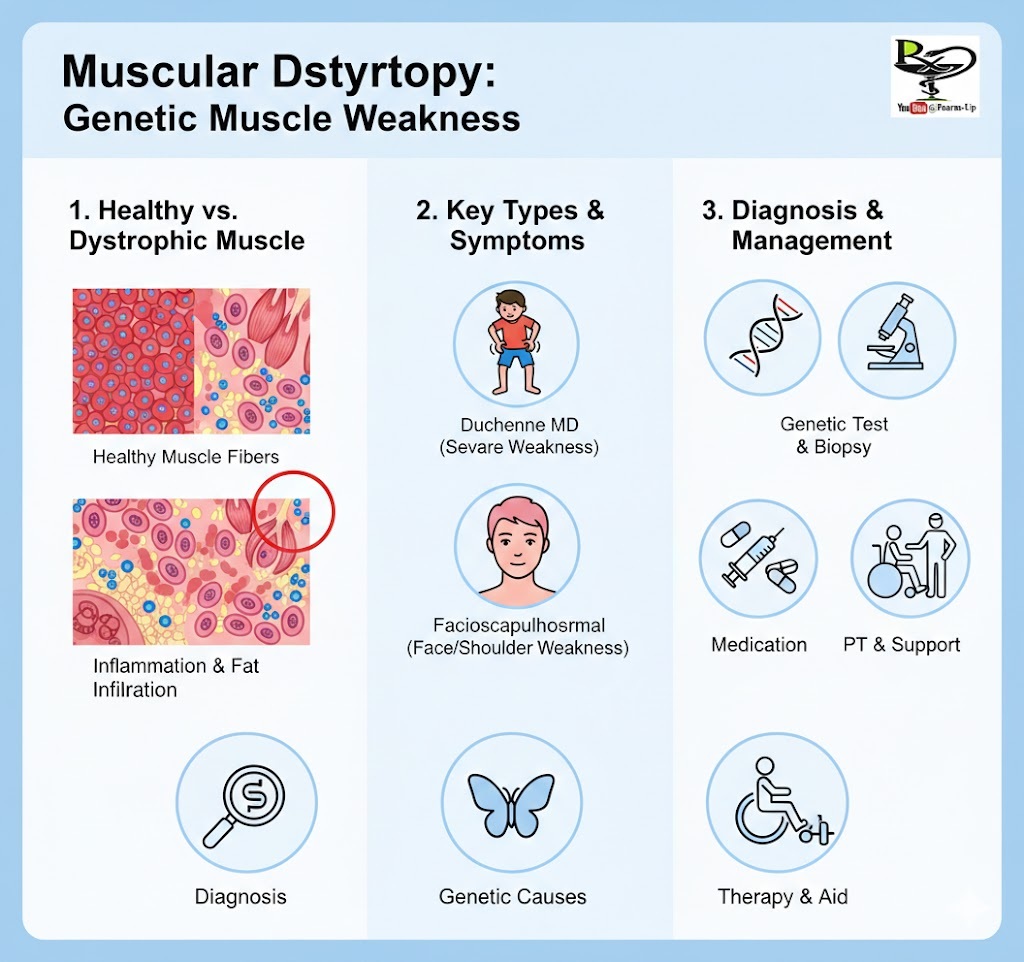
Muscular dystrophy (MD) is a group of more than 30 genetic diseases characterized by progressive muscle weakness. Over time, these conditions make it difficult to walk and perform daily activities. In some cases, MD can also affect vital organs like the heart and lungs.
1. Common Types of MD
While all types involve muscle degeneration, they differ in severity and the age at which symptoms appear:
- Duchenne MD: The most common childhood form; it is severe and primarily affects boys, typically appearing between ages 3 and 6.
- Becker MD: Similar to Duchenne but less severe and progresses more slowly; often starts in the teens.
- Facioscapulohumeral MD: Usually begins in the teenage years, initially affecting the muscles of the face, shoulders, and upper arms.
- Congenital MD: Present at birth or appearing before age 2.
2. Causes and Diagnosis
MD is caused by genetic mutations that interfere with the production of proteins needed to strengthen and protect muscle fibers. It can be inherited from parents or occur as a new mutation in an individual.
Diagnostic Tools Include:
- Genetic Testing: To identify the specific gene mutation.
- Blood Tests: Checking for enzymes (like CK) released by damaged muscles.
- Electromyography (EMG): Measuring electrical activity in the muscles.
- Biopsies & Imaging: Using MRIs or muscle tissue samples to examine muscle quality.
3. Treatment and Management
While there is currently no cure, a combination of therapies can manage symptoms and improve quality of life:
- Therapies: Physical, occupational, and speech therapy to maintain mobility and function.
- Respiratory Care: Breathing exercises or ventilators for weakened lung muscles.
- Assistive Devices: Using wheelchairs, braces, or walkers for independence.
- Medication: Specific drugs to delay muscle damage or minimize symptoms.
- Surgery: To correct secondary issues like scoliosis or heart problems.
About the Author