Pharm'Up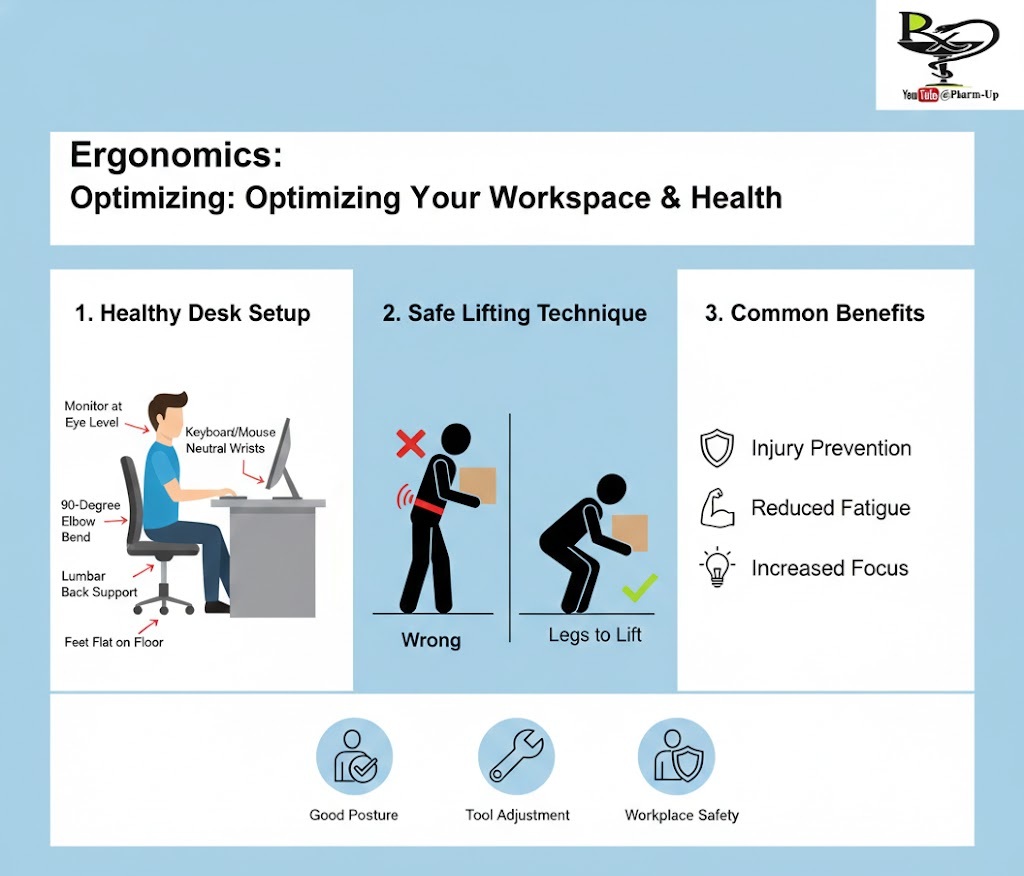
Ergonomics is the science of designing the workplace, tools, and tasks to fit the user. Rather than forcing your body to adapt to a poorly designed environment, ergonomics focuses on adjusting your surroundings to support your natural posture and movement. The ultimate goal is to increase comfort, boost productivity, and prevent Work-Related Musculoskeletal Disorders (WMSDs).
1. Key Ergonomic Adjustments
Small changes in your daily routine and setup can prevent long-term strain on your muscles, nerves, and joints.
- Computer Setup: Adjusting your keyboard and mouse position keeps your wrists in a neutral position, which is essential for preventing carpal tunnel syndrome.
- Seating Mechanics: Ensuring your chair height allows your feet to rest flat on the floor (or a footrest) supports your lower back and improves circulation.
- Safe Lifting: Using your legs rather than your back to lift heavy objects helps prevent debilitating back injuries.
- Vibration Control: For those using power tools, handle coatings or anti-vibration gloves can prevent nerve damage and “hand-arm vibration syndrome.”
2. The Importance of Posture
Good posture is not just about sitting up straight; it is about maintaining the natural curves of your spine in any position:
- Sitting: Shoulders relaxed, elbows at a 90-degree angle, and lower back supported.
- Standing: Distributing weight evenly on both feet and keeping the head balanced over the shoulders.
- Moving: Keeping objects close to the body when carrying them and avoiding twisting motions.
3. Benefits of an Ergonomic Approach
Implementing ergonomic principles provides several long-term advantages:
- Injury Prevention: Reduces the risk of repetitive strain injuries (RSI).
- Reduced Fatigue: By working in neutral positions, your muscles use less energy.
- Increased Focus: When you are comfortable and pain-free, your mental clarity and efficiency improve.
About the Author