Pharm'Up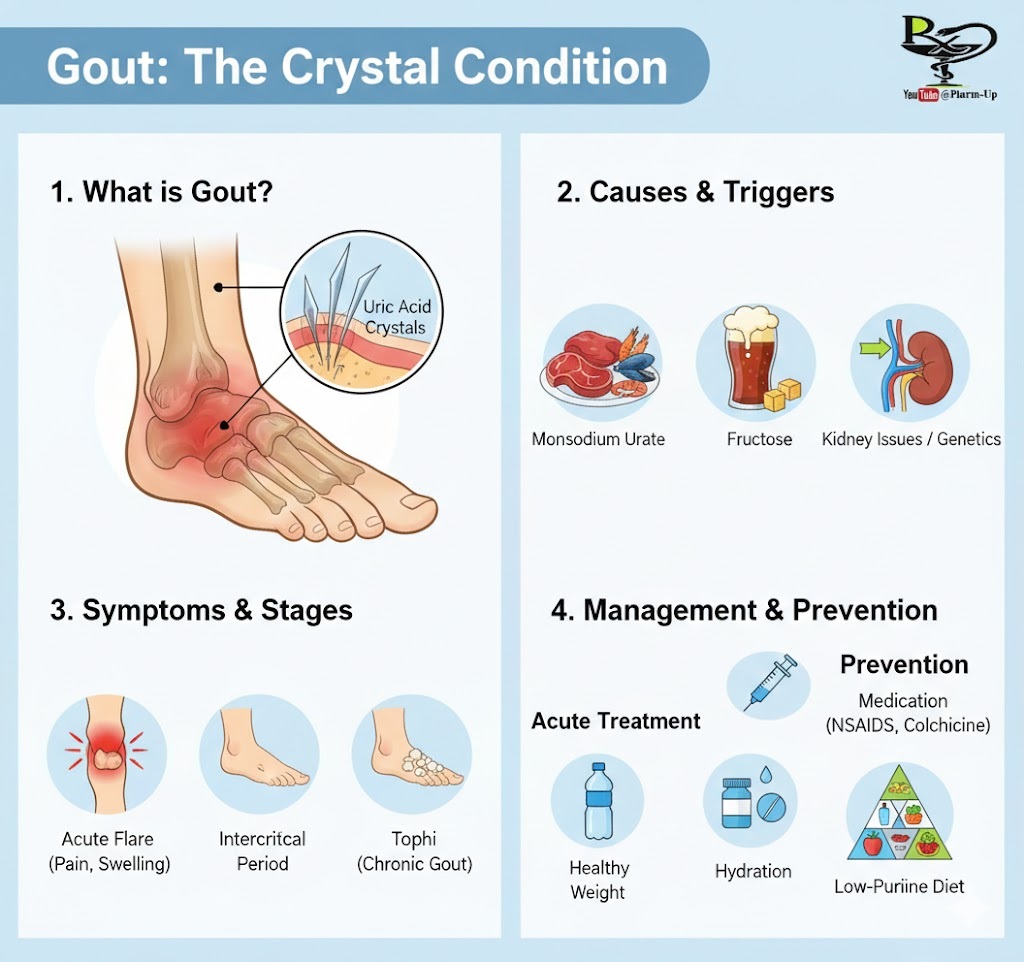
Gout is a type of arthritis characterized by sudden, severe attacks of pain, swelling, and redness in the joints. It is caused by the accumulation of uric acid crystals within the joint space. Historically known as the “disease of kings,” we now know it can affect anyone, particularly those with certain dietary habits or underlying health conditions.
1. The Science of the “Sting”
The pain of gout is uniquely intense because of the shape of the deposits.
- Purines to Uric Acid: Your body produces uric acid when it breaks down purines (found naturally in the body and in foods like red meat).
- Crystal Formation: If the kidneys cannot flush enough uric acid, it crystallizes into sharp, needle-like structures (monosodium urate).
- The Immune Response: Your immune system attacks these “needles” in the joint, causing the characteristic heat, redness, and excruciating pain.
2. Common Triggers and Risk Factors
Gout flares often start at night because lower body temperatures during sleep can encourage uric acid to crystallize.
- Dietary Culprits: High-purine foods such as organ meats (liver), red meat, and certain seafood (sardines, mussels).
- Beverages: Alcohol (especially beer) and drinks high in fructose (corn syrup) significantly raise uric acid levels.
- Medical Conditions: Obesity, high blood pressure, and chronic kidney disease reduce the body’s ability to process waste.
- Medications: Diuretics (water pills) and low-dose aspirin can sometimes interfere with uric acid excretion.
3. Symptoms and Progression
A typical gout flare lasts 1 to 2 weeks, but the damage can become permanent if left untreated.
| Stage | Symptoms |
| Acute Flare | Sudden, intense pain usually in the big toe, ankle, or knee. The joint feels “on fire.” |
| Intercritical Period | Symptom-free intervals between flares. |
| Chronic Gout (Tophi) | Development of tophi—hard, lumpy deposits of crystals under the skin that can deform joints. |
4. Diagnosis and Management
Gout is one of the most treatable forms of arthritis when managed correctly.
- Diagnosis: Doctors often use a needle to draw synovial fluid from the joint to look for crystals under a microscope.
- Acute Treatment: NSAIDs (like ibuprofen), Colchicine, or Corticosteroid injections to stop the flare.
- Long-term Control: Medications like Allopurinol to lower the production of uric acid in the blood.
5. Prevention: Lifestyle Adjustments
- Hydration: Drink plenty of water to help your kidneys flush out urate.
- Weight Management: Reducing body weight lowers the overall uric acid load.
- Vitamin C: Some studies suggest Vitamin C may help lower uric acid levels.
- Low-Purine Diet: Switch to low-fat dairy, vegetables, and complex carbohydrates.
About the Author