Pharm'Up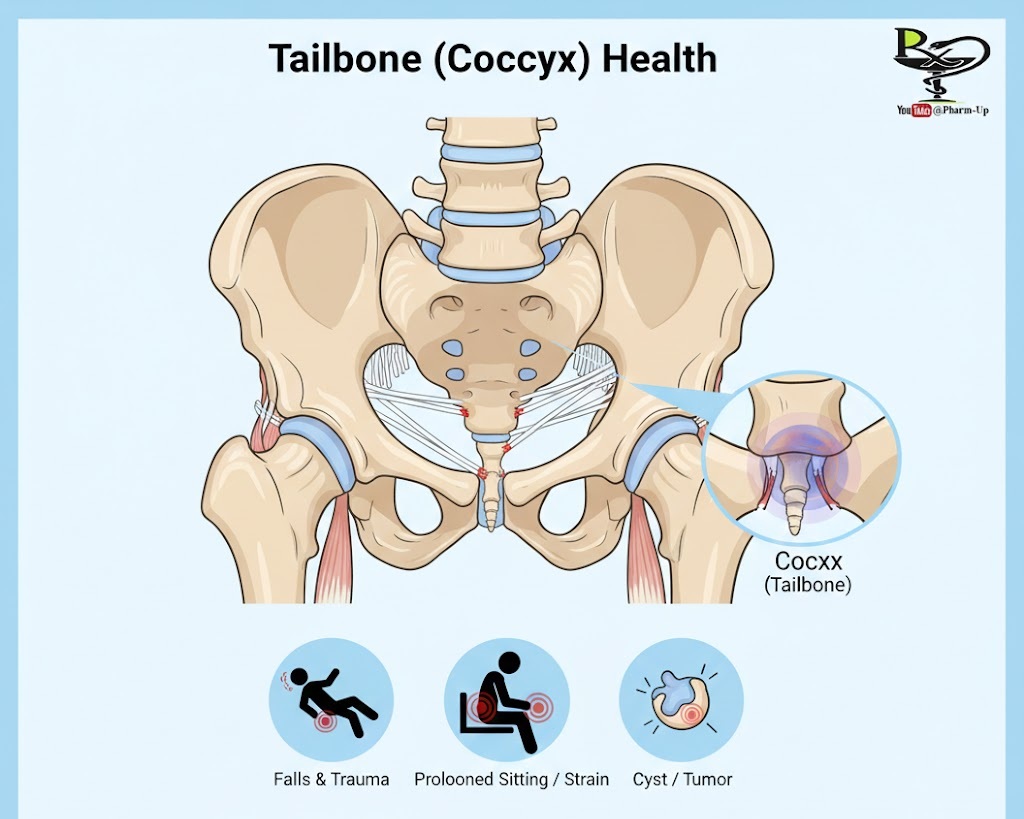
The tailbone, medically known as the coccyx, is the small, triangular bone situated at the very bottom of the vertebral column or spine. While it is a relatively small structure, disorders affecting it can significantly impact daily comfort and mobility.
1. Types of Tailbone Disorders
Tailbone issues encompass a range of conditions, from physical trauma to abnormal growths:
- Injuries: Most common issues involve bruising or pulled ligaments rather than actual breaks.
- Coccydynia: General term for pain localized in the tailbone area.
- Infections and Cysts: Such as pilonidal cysts that develop near the tailbone.
- Tumors: Rare instances of masses or growths occurring in the coccyx region.
2. Common Causes of Injury
The tailbone is rarely fractured; instead, it is usually subjected to soft tissue damage.
- Backward Falls: Slipping on ice or falling onto a hard surface is the most frequent cause of tailbone trauma.
- Ligament Strain: Sudden impacts can pull the ligaments that hold the coccyx in place.
- Repetitive Pressure: Prolonged sitting on hard or narrow surfaces can contribute to discomfort.
3. Recognizing the Symptoms
Symptoms can vary depending on the underlying disorder but often involve localized or radiating discomfort:
- Localized Pain: Deep aching or sharp pain specifically in the tailbone area.
- Discomfort When Sitting: Pain that intensifies when applying pressure to the bottom of the spine.
- Nerve Pressure: Numbness or pain that radiates into the arms or legs if the disorder puts pressure on surrounding nerves.
- Physical Changes: The presence of a visible or feelable mass or growth in the area.
4. Management and Care
For minor injuries like bruises, recovery often involves allowing the ligaments to heal. Using specialized cushions (such as “donut” pillows) can help relieve pressure while sitting. If symptoms persist or if a mass is detected, professional medical evaluation is necessary to rule out more serious conditions like tumors or infections.
About the Author