Pharm'Up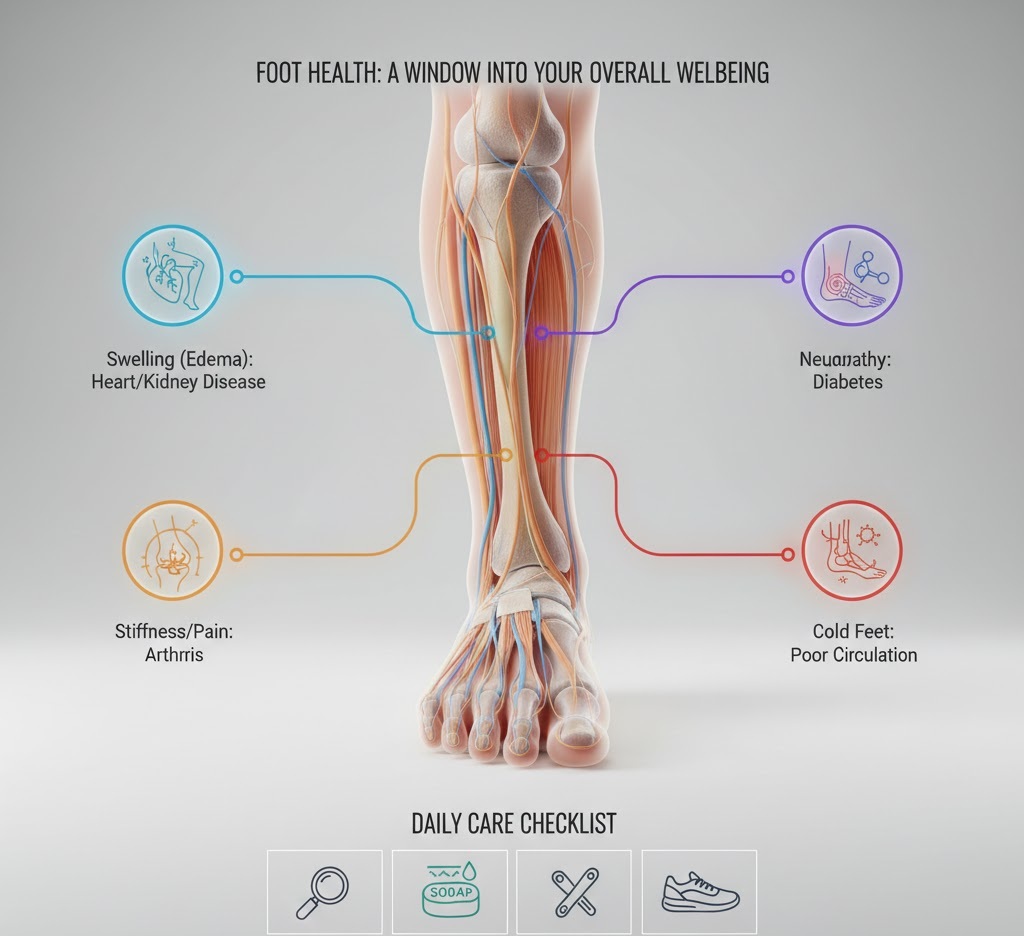
Your feet are the foundation of your body, comprising a complex network of 26 bones and over 100 moving parts. Because they support your entire body weight and are located furthest from your heart, they often serve as an “early warning system” for serious systemic health issues.
The Gold Standard of Foot Maintenance
Preventing foot pain and complications starts with a proactive daily routine. Small habits can prevent significant mobility issues later in life.
- Daily Inspection: Check for blisters, cuts, or redness. For those with decreased sensation, this is the most critical step in preventing infection.
- Hygiene & Moisture: Wash daily with lukewarm water and soap. Ensure they are dried thoroughly, especially between the toes, to prevent fungal growth.
- Proper Grooming: Always trim toenails straight across. Rounding the corners or cutting them too short is the primary cause of painful ingrown nails.
- Invest in Fit: Wear shoes that provide adequate arch support and room for your toes to move. Avoid shoes that are too tight or lack cushioning.
Diagnostic Signs: What Your Feet Reveal
Changes in your feet are rarely just “local” issues; they often point to your internal health:
- Swelling (Edema): Persistent puffiness can be a sign of high blood pressure, heart disease, or kidney dysfunction.
- Neuropathy (Tingling/Numbness): Often one of the first indicators of Diabetes.
- Stiffness: Morning stiffness in the small joints of the feet can be an early sign of Arthritis.
When to See a Specialist
If you notice persistent pain, changes in skin color, or wounds that refuse to heal, you should consult a doctor or a podiatrist immediately. Regular foot checks are not just about comfort—they are a vital part of comprehensive healthcare.
About the Author