Pharm'Up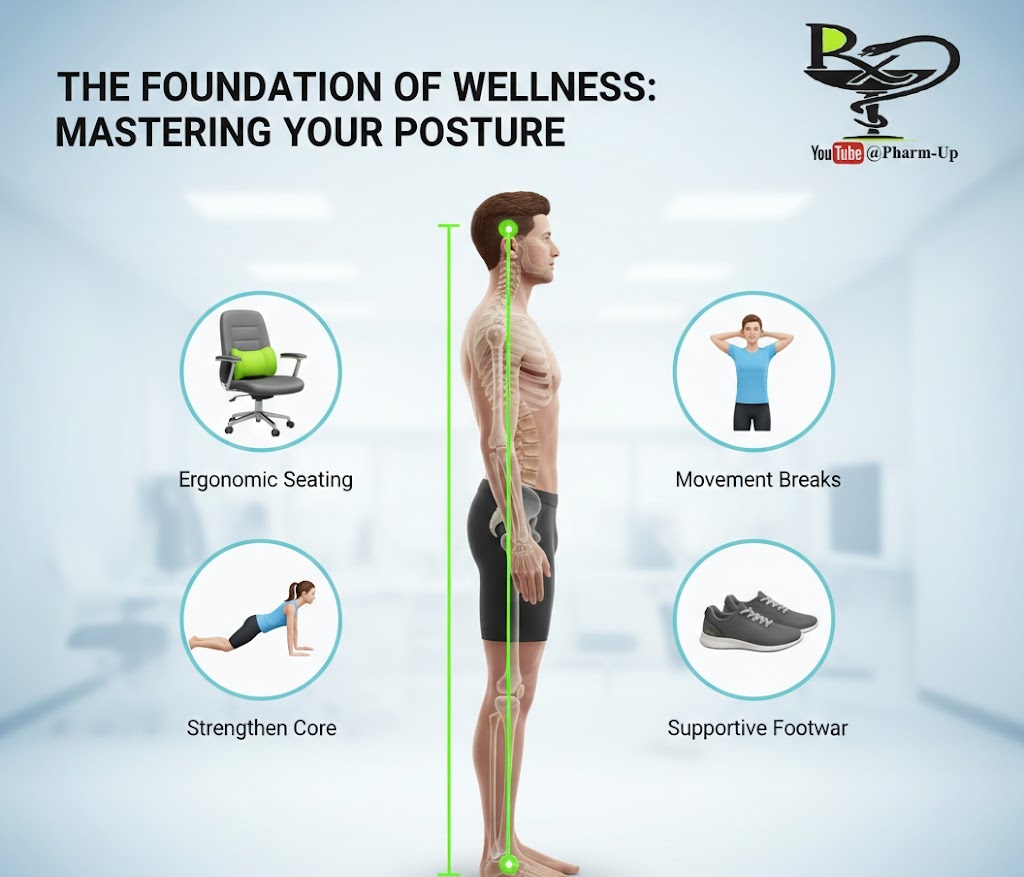
Posture is often overlooked as a mere aesthetic choice, but it is actually the structural foundation of your health. It is defined by how you hold your body against gravity, divided into dynamic posture (during movement) and static posture (while resting).
The Anatomy of Alignment
A healthy spine is not perfectly straight; it consists of three natural curves located at the neck, mid-back, and lower back. Proper posture maintains these curves without exaggerating them.
- The Plumb Line: Ideally, your head should be centered over your shoulders, and your shoulders should sit directly over your hips.
- The Core Connection: Good posture relies heavily on “core” muscles—the abdomen, pelvis, and back—to stabilize the spine.
The Hidden Dangers of Slouching
Chronic poor posture does more than cause a sore neck; it can impact systemic body functions:
- Respiratory Issues: Slumping compresses the ribcage, making it harder for your lungs to fully expand.
- Digestion: Poor alignment can compress abdominal organs, leading to slower digestion or acid reflux.
- Musculoskeletal Wear: Misalignment puts uneven pressure on joints, leading to premature “wear and tear” or arthritis.
Posture Correction Checklist
| Scenario | Key Adjustment |
| Sitting | Keep feet flat on the floor (don’t cross legs); maintain 90-120° elbow bends. |
| Standing | Distribute weight on the balls of your feet; keep feet shoulder-width apart. |
| Working | Ensure your screen is at eye level to prevent “tech neck.” |
| Footwear | Choose low-heeled, supportive shoes to maintain your natural center of gravity. |
About the Author