Pharm'Up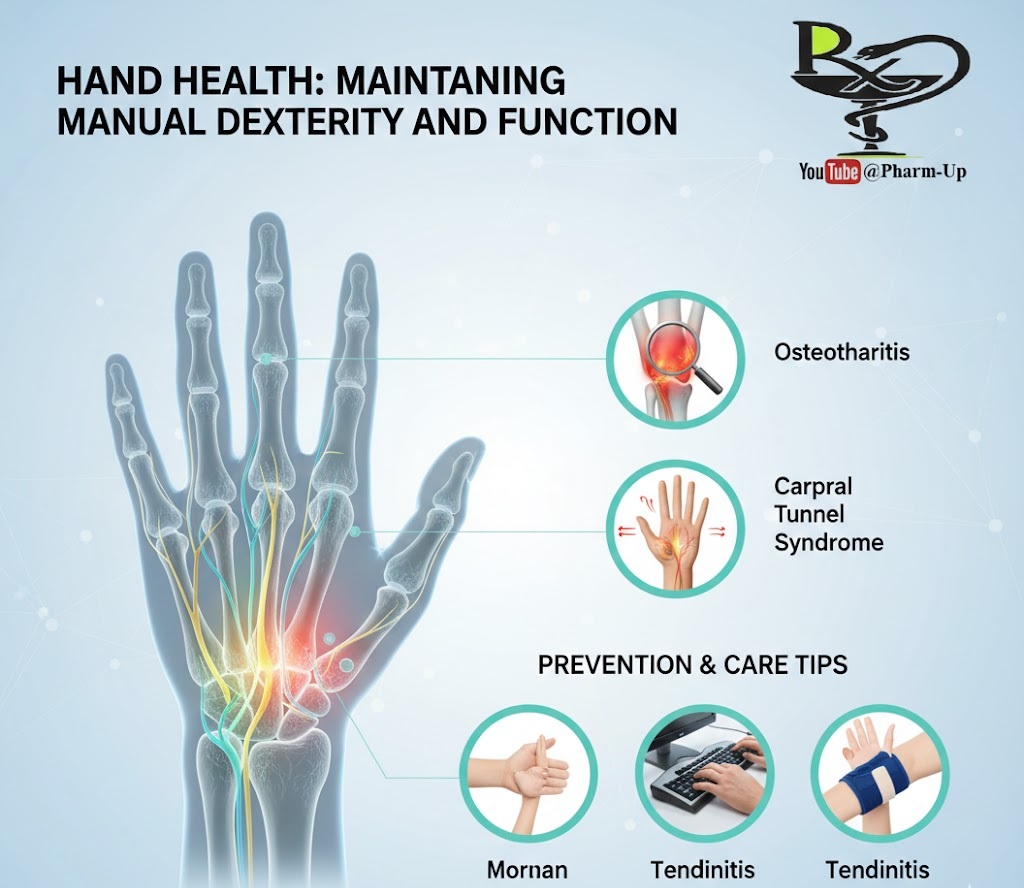
Our hands are among the most utilized tools in the human body, allowing us to perform everything from high-precision tasks to heavy lifting. Because of their constant use, hand problems can significantly impact your independence and quality of life.
Common Hand Conditions and Injuries
Hand health involves a delicate balance of bones, nerves, and connective tissues. When this balance is disrupted, several common issues can arise:
- Carpal Tunnel Syndrome: This occurs when the median nerve is compressed at the wrist. It typically causes numbness, tingling, or weakness in the thumb and first three fingers.
- Osteoarthritis: Often called “wear-and-tear” arthritis, this affects the cartilage in the small joints of the fingers and the base of the thumb, sometimes leading to visible deformities or nodules.
- Tendinitis: Overuse can lead to inflammation of the tendons (the tissues connecting muscle to bone), causing pain and restricted movement.
- Acute Injuries: This category includes fractures (broken bones), dislocations of joints, and ruptured ligaments, often resulting from falls or sports.
Identifying Symptoms
Early intervention is key to preventing long-term damage. Seek medical advice if you experience:
- Persistent numbness or a “falling asleep” sensation in the hand.
- Reduced grip strength (e.g., dropping items or difficulty turning doorknobs).
- Visible swelling or redness around finger joints.
- Clicking or locking sensations when moving your fingers (often called “Trigger Finger”).
Prevention and Care Tips
- Ergonomic Adjustments: Ensure your workspace allows your hands and wrists to remain in a neutral, relaxed position.
- Stretching: Regularly stretch your fingers and wrists, especially if you perform repetitive tasks like typing or manual labor.
- Protective Gear: Wear gloves or palm protectors when engaged in high-risk activities or heavy lifting.
- Rest: Listen to your body—if your hands ache, take frequent breaks to allow the tendons to recover.
About the Author