Beyond the Jab: Microneedle Technology to Revolutionize Biomacromolecule Therapy
 Pharm'Up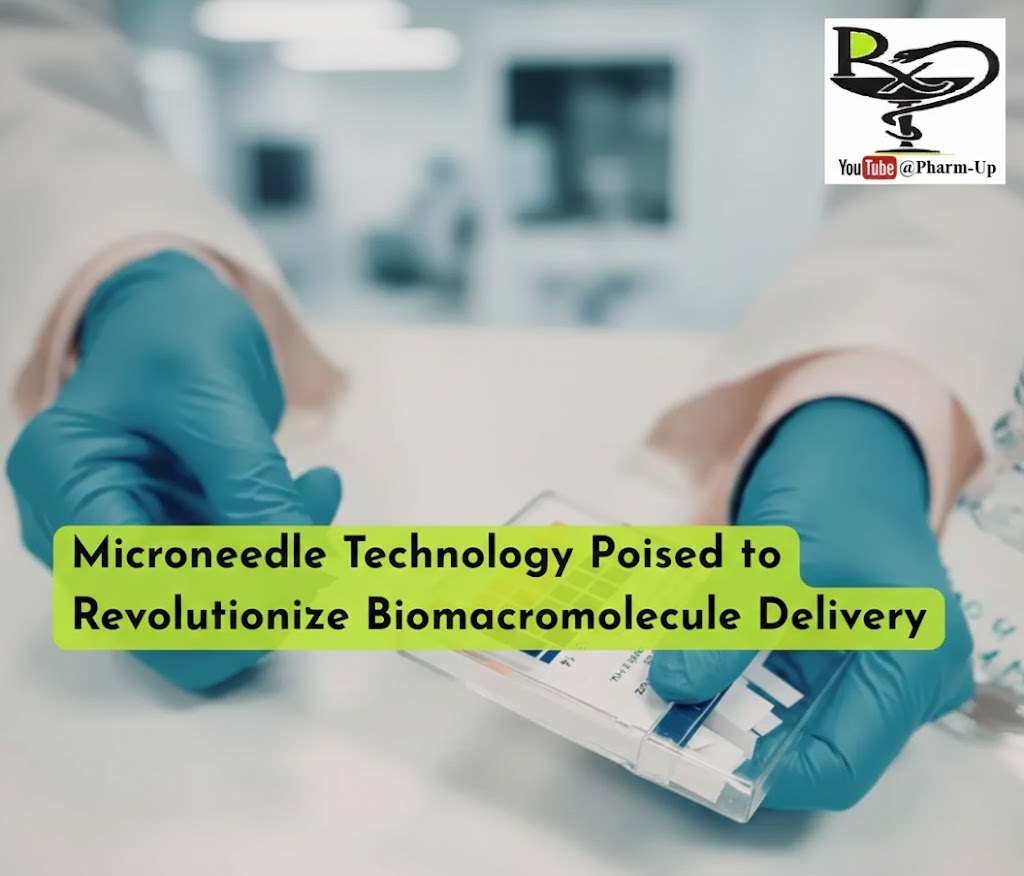
A comprehensive new review published in Research Journal suggests that the era of painful injections for chronic diseases may soon be coming to an end. Researchers from Sun Yat-sen University and Jinan University have detailed the rapid evolution of microneedle (MN) technology, a platform that promises to transform the delivery of large, complex therapeutic molecules—known as biomacromolecules—into a painless, self-administered process.
Biomacromolecules, including proteins, peptides, and nucleic acids (like mRNA), are the backbone of modern treatments for cancer, autoimmune disorders, and metabolic diseases like diabetes. However, their size and fragility have historically required delivery via traditional hypodermic needles.
Breaking the Barrier: How Microneedles Work
The primary obstacle to drug delivery is the stratum corneum, the skin’s tough outer layer. Microneedles are arrays of microscopic needles (typically less than 1mm in length) that are long enough to bypass this barrier but short enough to avoid reaching the nerve endings that cause pain.
Key Advantages Over Traditional Injections
- Painless Administration: Because they do not stimulate dermal nerves, patient compliance is significantly higher.
- Reduced Medical Waste: Many microneedles are “dissolvable,” eliminating the risk of needle-stick injuries and biohazardous sharps waste.
- Stability: Biomacromolecules are often more stable in the solid state used within microneedle patches than in the liquid formulations required for refrigerated vials.
Innovation: Beyond “Simple” Patches
The review highlights that microneedles are no longer just passive delivery tools. Advanced engineering has led to several specialized structures designed for high-precision medicine:
- Stimuli-Responsive Release: Some microneedles are “smart,” designed to dissolve or release their payload only when triggered by specific physiological cues, such as high blood glucose levels (for insulin delivery) or specific pH levels in a tumor environment.
- Deep Tissue Targeting: Researchers are exploring microneedle applications beyond the skin, including specialized arrays that can deliver drugs directly to the heart or blood vessels during surgical procedures to treat cardiovascular conditions.
- Vaccination: Microneedles can target the skin’s rich population of immune cells, often requiring a lower dose of vaccine to achieve the same level of protection as a standard intramuscular shot.
The Path to Clinical Reality
Despite the scientific promise, the authors identify several hurdles that must be cleared before microneedle patches become common in local pharmacies:
- Manufacturing Scalability: Moving from laboratory-scale “mold-casting” to mass industrial production while maintaining the precise integrity of the needles.
- Regulatory Frameworks: As a “combination product” (both a drug and a device), microneedles face complex approval processes from agencies like the FDA.
- Loading Capacity: Large-molecule drugs often require high doses, which can be difficult to fit into the tiny volume of a micron-scale needle array.
Conclusion
The shift toward microneedle technology represents a move toward more personalized, humane, and efficient healthcare. By overcoming biological barriers with minimal trauma, these tiny arrays could soon be the primary method for delivering the world’s most sophisticated medicines.
About the Author