Pharm'Up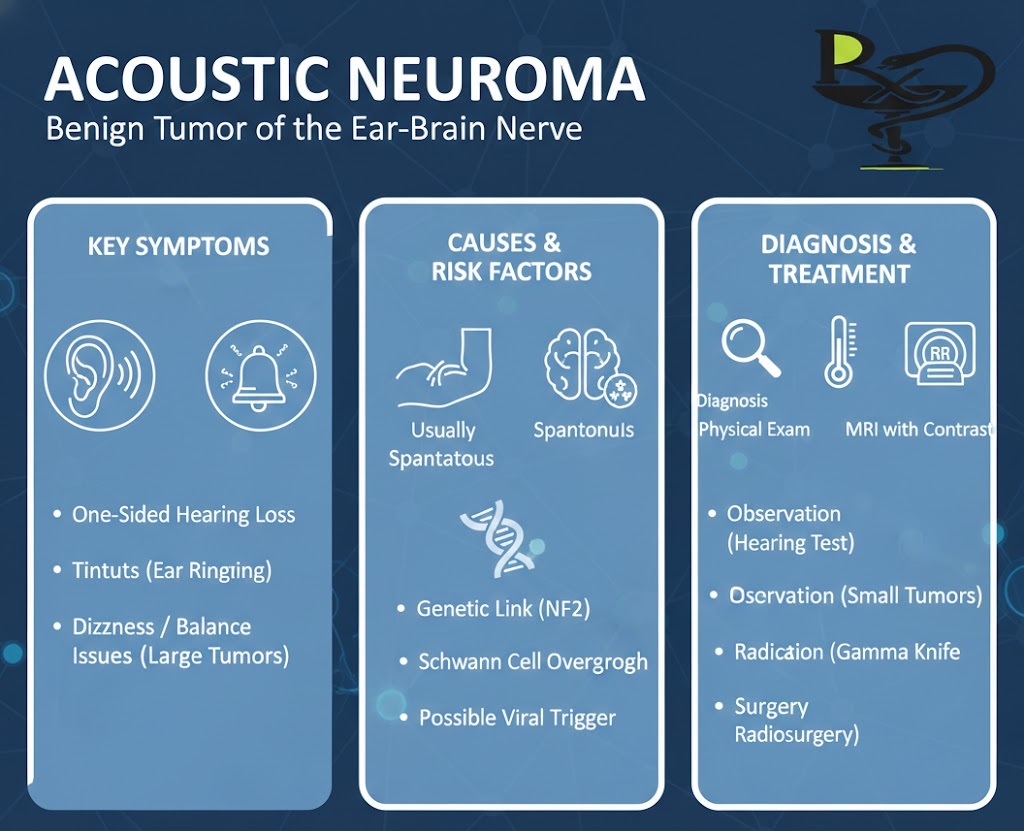
An Acoustic Neuroma (also known as a vestibular schwannoma) is a non-cancerous (benign), usually slow-growing tumor that develops on the main nerve leading from your inner ear to your brain. This nerve has two branches: one for hearing and one for balance.
Symptoms and Progression
Because these tumors usually grow slowly over many years, symptoms may be subtle or absent in the early stages. Common signs include:
- Unilateral Hearing Loss: Gradual (or occasionally sudden) loss of hearing on one side.
- Tinnitus: A persistent ringing, buzzing, or hissing sound in the affected ear.
- Balance Issues: Unsteadiness, dizziness, or vertigo, as the tumor presses on the balance branch of the nerve.
- Facial Effects: If the tumor grows large enough, it can press on the nearby facial nerve, causing facial numbness or weakness.
- Critical Risk: Large tumors can press on the brainstem or cerebellum, which can interfere with vital functions and become life-threatening.
Causes and Risk Factors
- Genetic Link: Most cases occur spontaneously without a clear cause. However, tumors affecting both ears are often linked to a rare genetic disorder called Neurofibromatosis Type 2 (NF2).
- Cell Overgrowth: The tumor is caused by an overproduction of Schwann cells, which normally wrap around nerve fibers to support and insulate them.
Diagnosis and Management
Diagnosis
Early diagnosis is challenging because symptoms mimic common middle-ear infections or age-related hearing loss. Providers use:
- Audiometry: A hearing test to measure how well you hear sounds and speech.
- MRI with Contrast: The “gold standard” for identifying even small tumors.
Treatment Options
Treatment depends on the size of the tumor and your overall health:
- Observation (Watchful Waiting): For small tumors that aren’t growing or causing severe symptoms, periodic imaging is used to monitor them.
- Radiation: Stereotactic radiosurgery (like Gamma Knife) delivers precise radiation to stop the tumor’s growth while preserving surrounding tissue.
- Surgery: Removal of the tumor through the skull. This is often necessary for larger tumors or those causing significant symptoms.
About the Author