Pharm'Up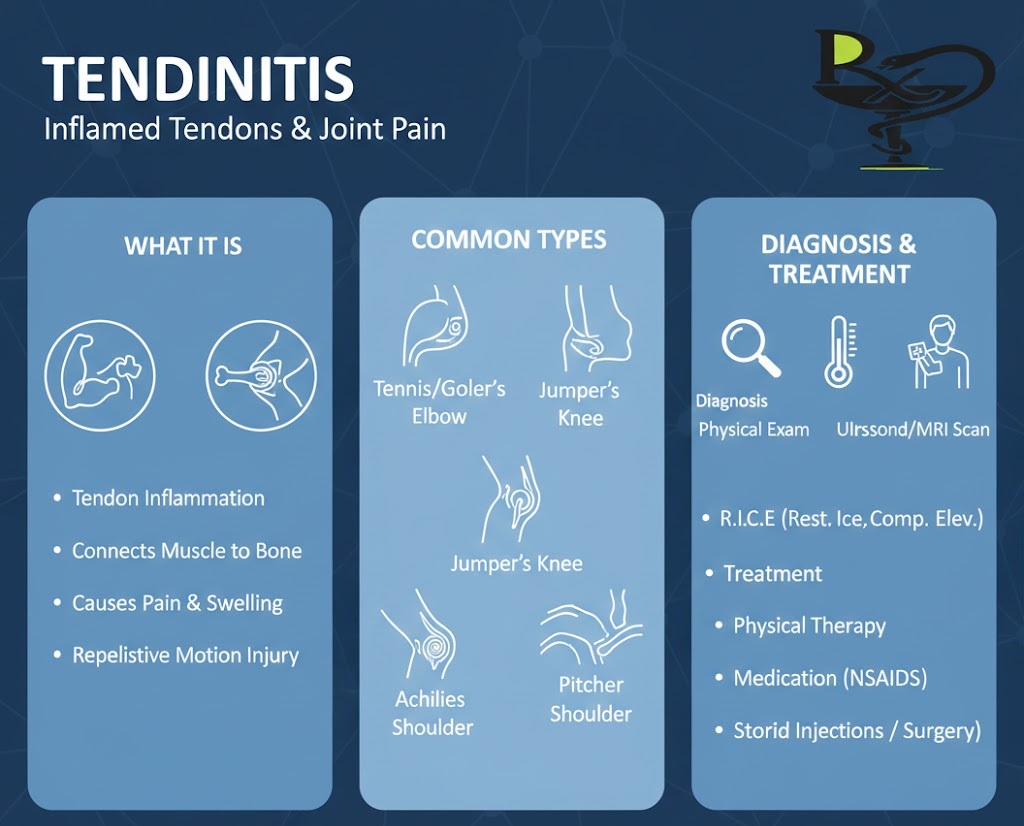
Tendinitis (also spelled tendonitis) is the inflammation or irritation of a tendon—the thick, fibrous cords that attach muscle to bone. This condition causes pain and tenderness just outside a joint and most commonly occurs around the shoulders, elbows, wrists, knees, and heels.
How It Happens
While tendinitis can be caused by a sudden injury, it is much more likely to stem from the repetition of a particular movement over time. Most people develop tendinitis because their jobs or hobbies involve repetitive motions, which put undue stress on the tendons.
Common “Sports” Forms
Many types of tendinitis are nicknamed after the activities that frequently cause them:
- Tennis Elbow / Golfer’s Elbow: Inflammation of the tendons on the outside or inside of the elbow.
- Pitcher’s or Swimmer’s Shoulder: Overuse of the rotator cuff tendons.
- Jumper’s Knee: Irritation of the patellar tendon that helps you kick and jump.
- Achilles Tendinitis: Pain in the tendon connecting the calf muscles to the heel bone.
Symptoms and Diagnosis
- Pain: Often described as a dull ache, especially when moving the affected limb or joint.
- Tenderness: The area is sensitive to touch.
- Mild Swelling: The area may appear slightly puffed up compared to the healthy side.
Diagnosis: A doctor usually diagnoses tendinitis during a physical exam. If symptoms are severe, they may use Ultrasound or MRI to see if there is a partial tear or significant thickening of the tendon.
Treatment and Recovery
The primary goal of treatment is to reduce pain and inflammation.
- R.I.C.E. Protocol:
- Rest: Avoid activities that increase the pain.
- Ice: Apply ice packs to the area for 20 minutes several times a day.
- Compression: Use a wrap or elastic bandage to reduce swelling.
- Elevation: Keep the injured joint above the level of your heart.
- Medications: Over-the-counter anti-inflammatories (NSAIDs) like ibuprofen.
- Physical Therapy: Specific exercises to strengthen the muscle-tendon unit.
- Advanced Options: Corticosteroid injections for chronic pain or surgery if the tendon is physically torn.
About the Author