Pharm'Up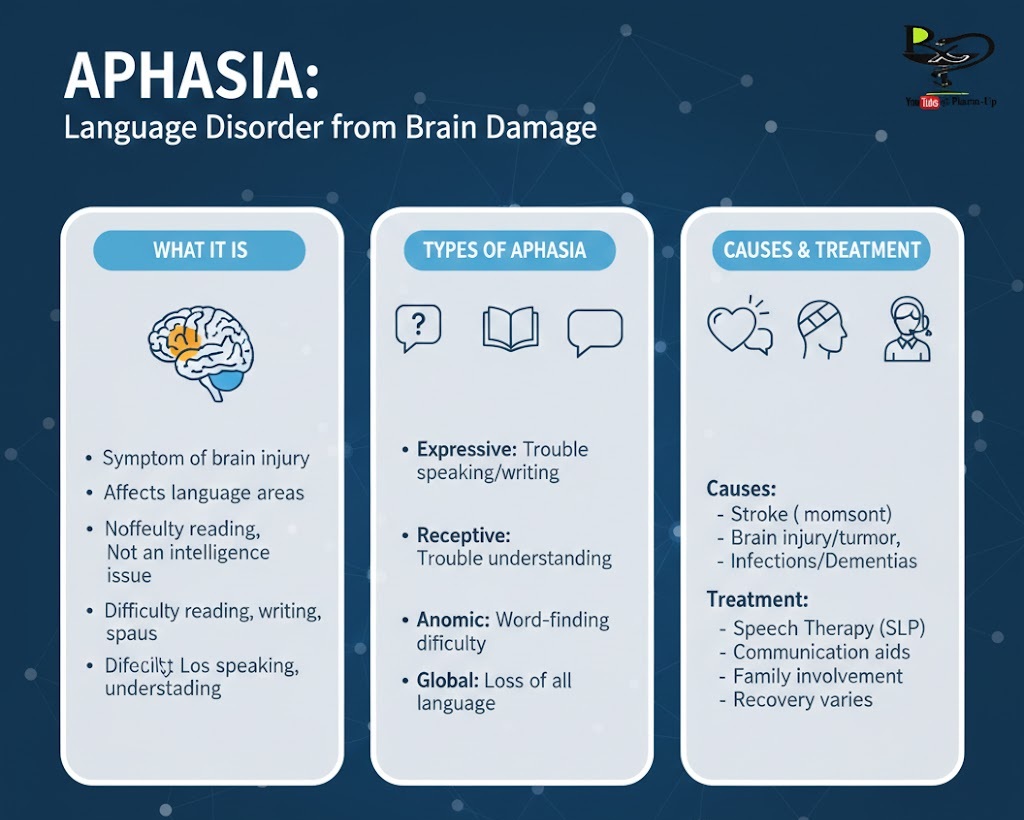
Aphasia is a communication disorder that results from damage to the portions of the brain that are responsible for language. For most people, these areas are located in the left hemisphere. It is important to remember that aphasia does not affect a person’s intelligence; it affects their ability to access and use language.
Types of Aphasia
The symptoms of aphasia vary depending on which specific area of the brain is injured. The four primary types include:
- Expressive Aphasia (Broca’s): You know what you want to say, but struggle to produce the words or write them down. Speech often requires great effort and may be limited to short phrases.
- Receptive Aphasia (Wernicke’s): You can hear words or see them on a page, but you cannot make sense of them. People with this type may speak in long, complex sentences that don’t make sense, often adding unnecessary or made-up words.
- Anomic Aphasia: A persistent inability to find the right words for specific things, people, or places. It’s like having a word on “the tip of your tongue” constantly.
- Global Aphasia: The most severe form, resulting from extensive damage to the brain’s language centers. This causes near-total loss of the ability to speak, understand, read, or write.
Causes and Risk Factors
Aphasia is a sign of brain injury. While it can happen to anyone, it is most common in older adults.
- Stroke: The leading cause of aphasia.
- Traumatic Brain Injury (TBI): From falls, accidents, or sports.
- Brain Tumors or Infections: Which can damage language tissues as they grow.
- Neurodegenerative Diseases: Such as Alzheimer’s or other dementias, where language loss happens gradually.
Diagnosis and Recovery
Diagnosis
If aphasia is suspected, medical professionals use:
- Imaging: MRI or CT scans to identify the location and extent of the brain damage.
- Clinical Assessment: A speech-language pathologist (SLP) performs tests to check the patient’s ability to follow commands, name objects, and carry on a conversation.
Treatment: Speech-Language Therapy
While some people experience “spontaneous recovery” shortly after a brain injury, most require long-term therapy:
- One-on-One Therapy: Exercises tailored to the specific type of language loss.
- Group Therapy: Practicing communication skills in a safe, social environment.
- Augmentative Communication: Learning to use gestures, pictures, or electronic devices to convey meaning.
Prevention
Protecting your brain health is the best way to prevent aphasia:
- Stroke Prevention: Manage blood pressure, eat a heart-healthy diet, and stay active.
- Safety Gear: Always wear helmets during sports and seatbelts in vehicles.
- Fall Prevention: Keep living spaces clear of hazards, especially for older adults.
About the Author