Pharm'Up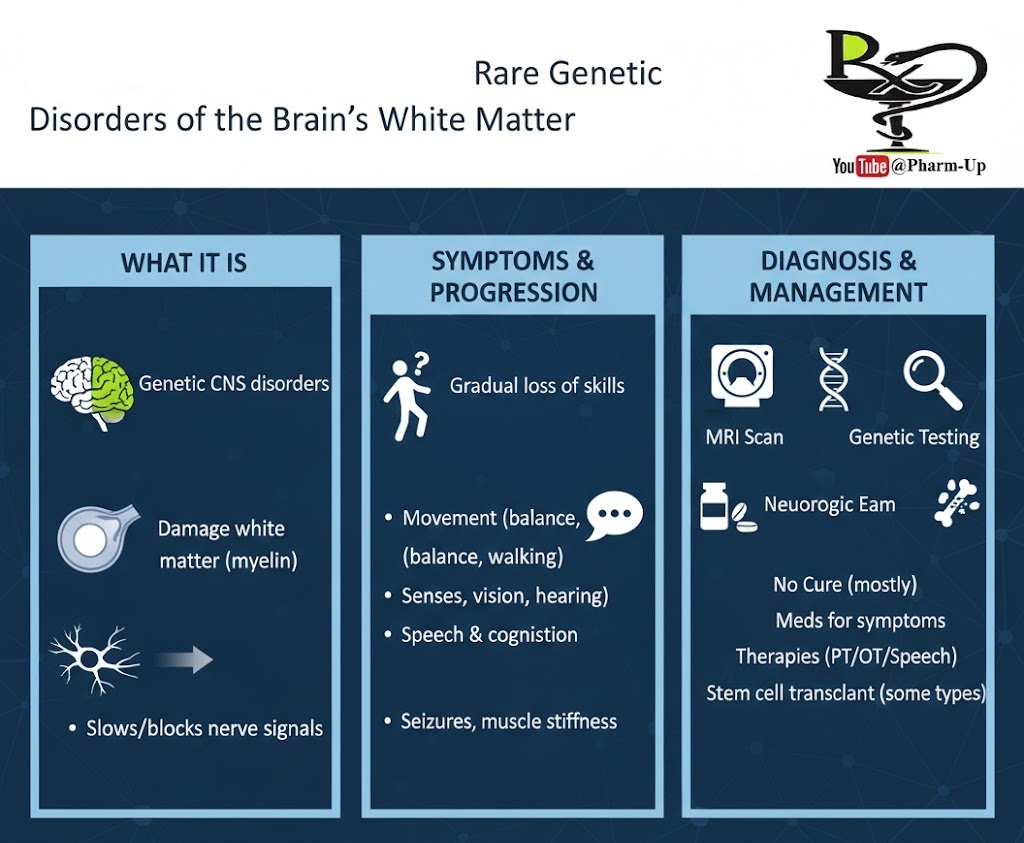
Leukodystrophies are a group of rare, progressive genetic disorders that specifically attack the white matter of the central nervous system (CNS), which includes the brain and spinal cord.
The term comes from the Greek words leuko (white), dys (abnormal), and trophe (nourishment). Essentially, the “nourishment” or maintenance of the white matter is faulty.
The Role of White Matter and Myelin
To understand leukodystrophy, it helps to look at the structure of a nerve cell.
Explore
- Axons: These are the long nerve fibers that act like electrical wires, connecting nerve cells.
- Myelin: This is the fatty, protective coating (insulation) around the axons. Myelin is critical because it allows electrical signals to travel quickly and efficiently throughout the brain and body.
In leukodystrophy, genetic mutations interfere with the production or maintenance of this myelin. When the insulation is damaged or missing, nerve signals slow down or stop entirely, leading to a breakdown in physical and mental functions.
Symptoms and Progression
There are over 50 different types of leukodystrophies (such as Krabbe disease, Adrenoleukodystrophy, and Metachromatic leukodystrophy). While each type behaves differently, they generally cause a gradual loss of previously gained skills.
Key signs include:
- Motor Decline: Loss of balance, abnormal muscle tone (spasticity), and eventual inability to walk.
- Sensory Loss: Progressive blindness and hearing loss.
- Cognitive & Speech Issues: Slurred speech, loss of language, and learning disabilities.
- Physical Struggles: Difficulty swallowing, bladder control issues, and seizures.
Diagnosis and Management
Diagnosis
Because these diseases are rare and varied, doctors often use a multi-step approach:
- MRI (Magnetic Resonance Imaging): This is the most important tool, as it can show specific patterns of white matter damage in the brain.
- Genetic Testing: To identify the specific DNA mutation responsible for the condition.
- Neurological Exams: To track the loss of reflexes and motor function.
Is there a treatment?
Currently, most leukodystrophies have no cure, and treatment is focused on “supportive care”:
- Symptom Management: Medications for seizures and muscle stiffness.
- Therapies: Physical, occupational, and speech therapy to maintain quality of life for as long as possible.
- Advanced Interventions: For a specific few types, bone marrow or stem cell transplants can slow the disease if performed very early.
- CTX Exception: Cerebrotendinous xanthomatosis (CTX) is one of the few types that can be effectively treated with replacement therapy if caught early.
About the Author