Pharm'Up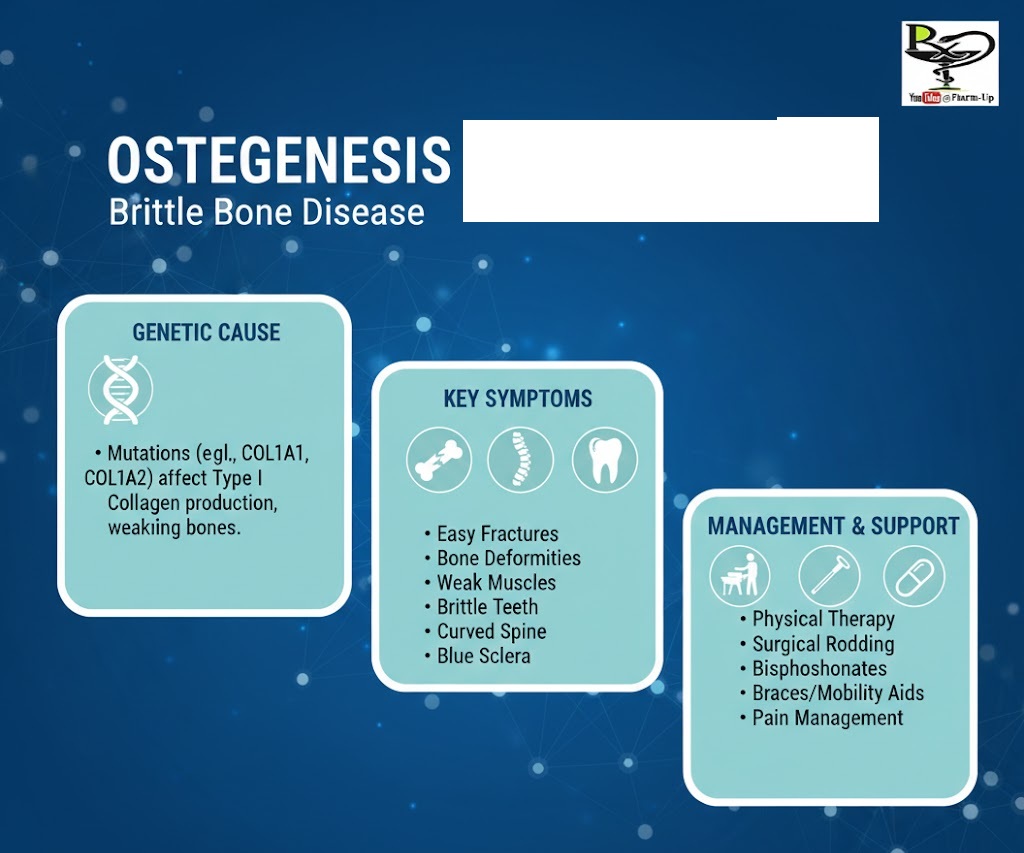
Osteogenesis Imperfecta (OI), often referred to as “brittle bone disease,” is a complex genetic connective tissue disorder. Its primary hallmark is extreme bone fragility, but because collagen is a fundamental building block for many parts of the body, the condition often affects multiple systems.
The Role of Collagen in OI
The core issue in OI lies in Type I collagen. Collagen acts like the “scaffold” or “reinforcing bar” in a building. In healthy bones, collagen fibers provide flexibility, while minerals (like calcium) provide hardness.
- Genetic Cause: Mutations in genes such as COL1A1 or COL1A2 typically cause the body to either produce poor-quality collagen or too little of it.
- Result: Without high-quality collagen, bones become brittle and snap easily under pressure that would not normally cause a break.
Common Symptoms & Physical Features
While bone fractures are the most known symptom, OI presents in various ways depending on the severity:
- Skeletal Issues: Curved spine (scoliosis), bowed legs, and a small stature.
- Dental Health: Brittle, discolored teeth (Dentinogenesis Imperfecta).
- Hearing Loss: Caused by malfunctions in the tiny bones of the middle ear.
- Distinctive Eyes: Many individuals with OI have a blue or grey tint to the “whites” of their eyes (sclera) because the underlying blood vessels show through the thin collagen layer.
Diagnosis and Management
Diagnosis
Since symptoms vary wildly, doctors use a multi-faceted approach:
- Clinical History: Reviewing the frequency and nature of past fractures.
- Genetic Testing: Blood tests to identify specific gene mutations.
- Biochemical Testing: Skin biopsies to analyze the quality of collagen produced by cells.
- Imaging: X-rays to check for healing fractures or “wormian bones” (small extra bones in the skull).
Treatment Options
There is currently no cure, so the focus is on preventing fractures and maximizing mobility:
- Physical Therapy: Strengthening muscles to better support the bones.
- Surgical “Rodding”: Placing metal rods inside long bones (like the femur) to provide internal support and prevent bowing.
- Bisphosphonates: Medications often used for osteoporosis that can help increase bone density in people with OI.
- Assistive Devices: Using braces, walkers, or wheelchairs to ensure safe movement.
About the Author