Pharm'Up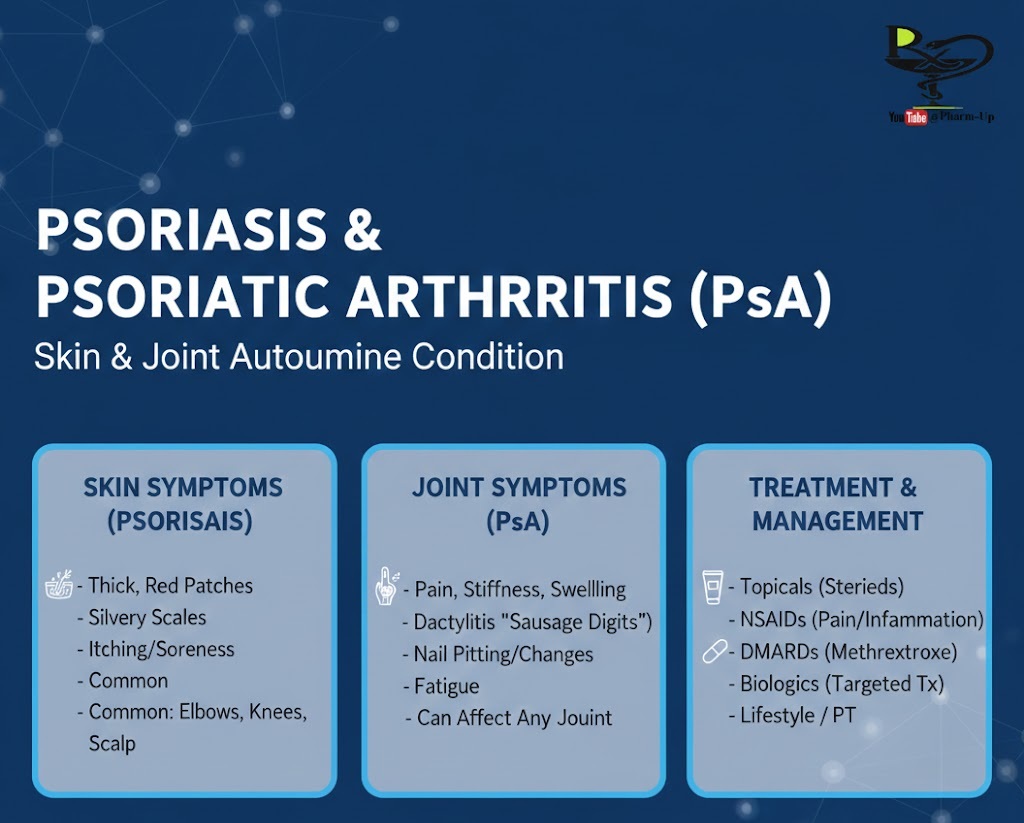
Psoriasis is a chronic autoimmune skin condition that accelerates the life cycle of skin cells. This rapid growth causes cells to build up quickly on the surface of the skin, forming thick, silvery scales and itchy, dry, red patches that are sometimes painful.
Key Characteristics of Psoriasis
Psoriasis is more than just dry skin; it is a systemic inflammatory condition.
- Appearance: Distinct patches of red skin covered with “micaceous” (silvery, layer-like) scales.
- Common Locations: Most frequently found on the elbows, knees, and scalp, though it can affect the face, palms, feet, and lower back.
- The Koebner Phenomenon: New psoriasis patches often form at the site of a skin injury, such as a cut or burn.
The Progression to Psoriatic Arthritis (PsA)
About 30% of people with psoriasis will develop Psoriatic Arthritis. This is an inflammatory joint disease that occurs when the immune system begins to attack the joints as well as the skin.
- Joint Symptoms: Pain, swelling, and stiffness in any joint, but often affecting the fingertips and spine.
- Dactylitis (“Sausage Digits”): A hallmark of PsA where an entire finger or toe swells significantly, giving it a sausage-like appearance.
- Nail Changes: Pitting (small dents), crumbling, or discoloration of the fingernails and toenails often precedes joint pain.
- Timing: Skin symptoms typically appear first, but for some, joint pain can occur simultaneously or even years before skin patches appear.
Diagnosis and Management
Diagnosis
Because symptoms can mimic other types of arthritis (like Rheumatoid Arthritis or Gout), doctors use a combination of methods:
- Physical Exam: Checking for skin plaques and joint tenderness.
- Imaging: X-rays or MRIs to look for specific types of joint damage unique to PsA, such as the “pencil-in-cup” deformity.
- Lab Tests: Blood tests to rule out other conditions (like checking for Rheumatoid Factor).
Treatment & Control
While there is no cure, modern medicine offers significant control over the disease:
- Topical Treatments: Corticosteroids or Vitamin D analogues for skin plaques.
- NSAIDs: To manage immediate joint pain and swelling.
- DMARDs (Disease-Modifying Antirheumatic Drugs): Such as Methotrexate, to slow the progression of joint damage.
- Biologics: Advanced medications that target specific parts of the immune system to stop inflammation at its source.
- Surgery: In severe cases where joints are significantly damaged, joint replacement surgery may be necessary.
About the Author