Pharm'Up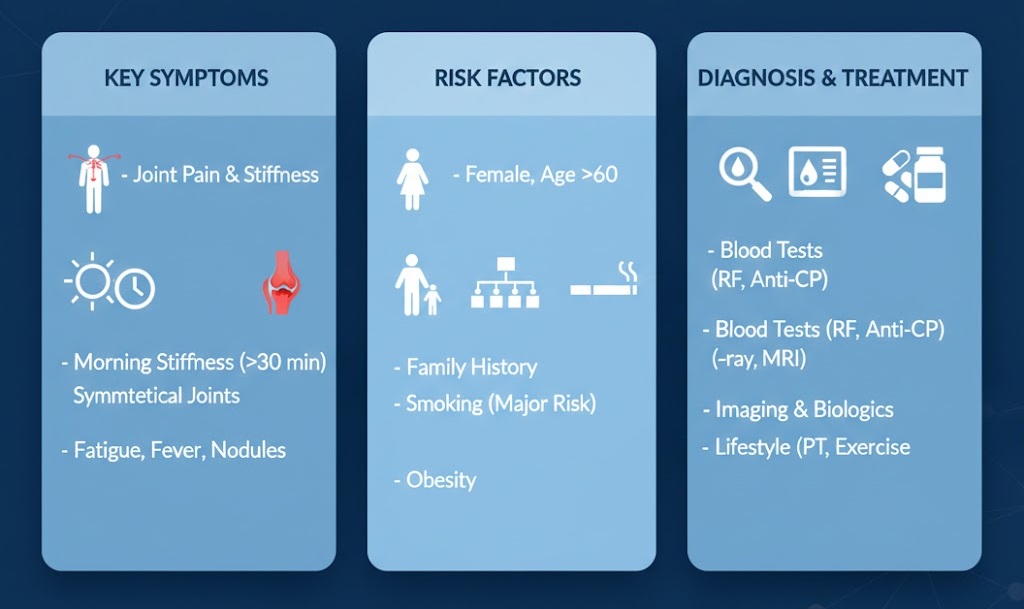
Rheumatoid Arthritis (RA) is a chronic autoimmune disease where the body’s immune system mistakenly attacks the synovium—the thin lining of the membranes that surround your joints. Unlike wear-and-tear arthritis (osteoarthritis), RA affects the lining of your joints, causing a painful swelling that can eventually result in bone erosion and joint deformity.
Key Symptoms & Systemic Effects
RA is a systemic disease, meaning it can affect the entire body, not just the joints.
- Symmetrical Pattern: A hallmark of RA is that it usually affects joints on both sides of the body (e.g., both wrists or both knees).
- Morning Stiffness: Stiffness that lasts for hours in the morning or after long periods of inactivity.
- Rheumatoid Nodules: Firm bumps of tissue that grow under the skin, often near pressure points like elbows.
- Beyond Joints: Chronic inflammation can damage the eyes, heart, lungs, and blood vessels.
- Flare-ups: Symptoms often come in cycles called “flares,” followed by periods of remission.
Risk Factors: Who is Most Affected?
- Gender: Women are significantly more likely to develop RA than men.
- Age: While it can start at any age, it most commonly begins in middle age.
- Lifestyle: Smoking is a major risk factor and can make the disease more severe.
- Genetics: Having a family member with RA increases your risk.
- Weight: Being overweight or obese puts more strain on joints and increases inflammatory markers.
[Image comparing a healthy joint vs. a joint with Rheumatoid Arthritis showing synovial inflammation]
Diagnosis & Modern Management
Diagnosis
Early diagnosis is critical to prevent permanent joint damage. Doctors use:
- Blood Tests: Checking for Rheumatoid Factor (RF) and Anti-CCP antibodies, as well as inflammatory markers (ESR and CRP).
- Imaging: X-rays, Ultrasound, or MRI to track the progression of joint erosion.
- Physical Exam: Checking for warmth, redness, and range of motion.
Treatment Strategies
While there is no cure, the goal of treatment is “Treat to Target” (reaching clinical remission).
- DMARDs: Drugs like Methotrexate are the first line of defense to slow the disease.
- Biologics: Advanced therapies that target specific parts of the immune system.
- Lifestyle: Low-impact exercise (swimming, cycling), weight management, and smoking cessation.
- Surgery: In advanced cases, joint replacement or tendon repair may be necessary.
About the Author