Pharm'Up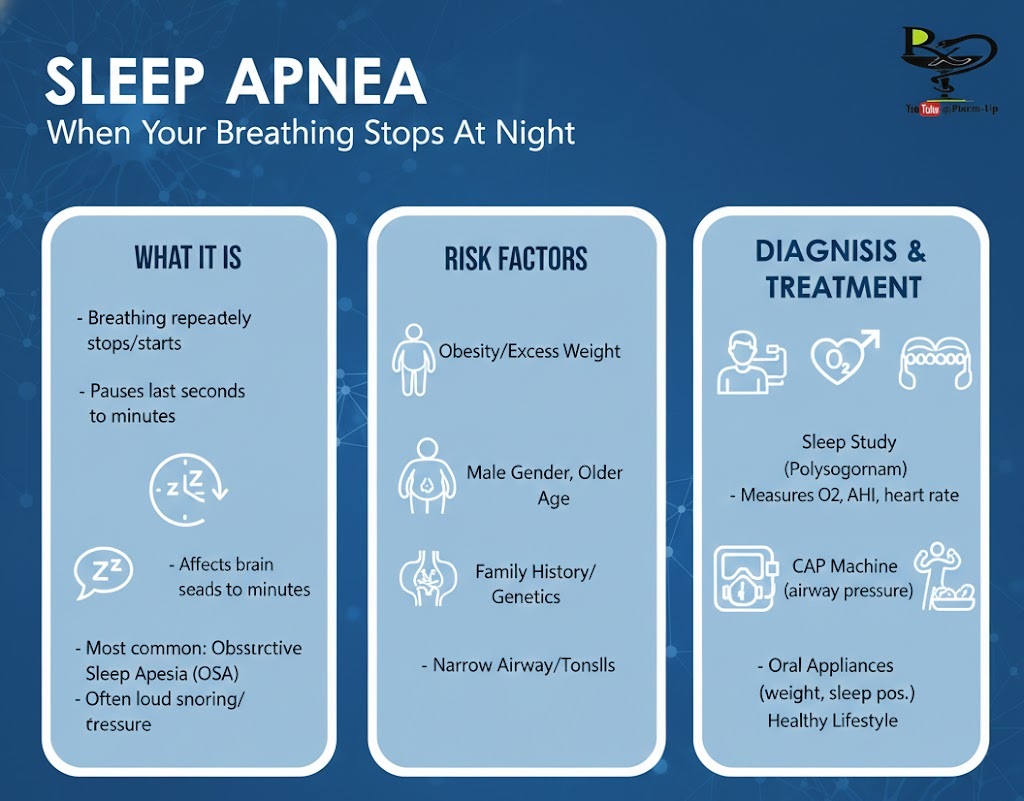
Sleep apnea is a common yet serious sleep disorder characterized by repeated interruptions in breathing during sleep. These pauses, called “apneas,” can last from a few seconds to several minutes and may occur dozens of times per hour, preventing the body from getting enough oxygen and disrupting deep sleep cycles.
The Main Type: Obstructive Sleep Apnea (OSA)
Obstructive sleep apnea is the most frequent form of the disorder. It occurs when the muscles in the back of the throat relax excessively during sleep.
- The Mechanism: When these muscles relax, the airway narrows or closes as you breathe in. This lowers the oxygen level in your blood.
- The “Wake-up” Response: Your brain senses this inability to breathe and briefly arouses you from sleep so that you can reopen your airway. This awakening is usually so brief that you don’t remember it.
- Signs: This cycle often ends with a loud snort, choking, or gasping sound. Loud, chronic snoring is a hallmark sign, though not everyone who snores has apnea.
Risk Factors
While anyone can develop sleep apnea, certain factors increase the likelihood:
- Weight: Excess fat deposits around the upper airway can obstruct breathing.
- Gender and Age: It is more common in men and in older adults.
- Anatomy: Naturally narrow airways, a thick neck, or enlarged tonsils and adenoids (especially in children) can contribute.
- Family History: Genetics play a role in airway structure and sleep patterns.
Diagnosis and the Sleep Study
If sleep apnea is suspected, a doctor will review your symptoms and family history. The definitive tool for diagnosis is a Polysomnogram (Sleep Study).
- What happens: You may go to a sleep center or use a home testing kit.
- What is measured: Sensors monitor your heart rate, blood oxygen levels, airflow, and breathing patterns throughout the night to determine the Apnea-Hypopnea Index (AHI)—the number of breathing pauses per hour.
Treatment and Management
Treatment is vital because untreated sleep apnea is linked to high blood pressure, heart disease, and daytime fatigue that leads to accidents.
- CPAP Therapy: The “gold standard” treatment. A Continuous Positive Airway Pressure machine uses a mask to provide a steady stream of air that keeps the airway open.
- Oral Appliances: Custom-fit mouthpieces that shift the jaw forward to keep the throat open.
- Lifestyle Changes: Weight loss, quitting smoking, and avoiding sleeping on your back can significantly reduce symptoms.
- Surgery: Options to remove excess tissue from the throat or nose, or to reposition the jaw.
About the Author