Pharm'Up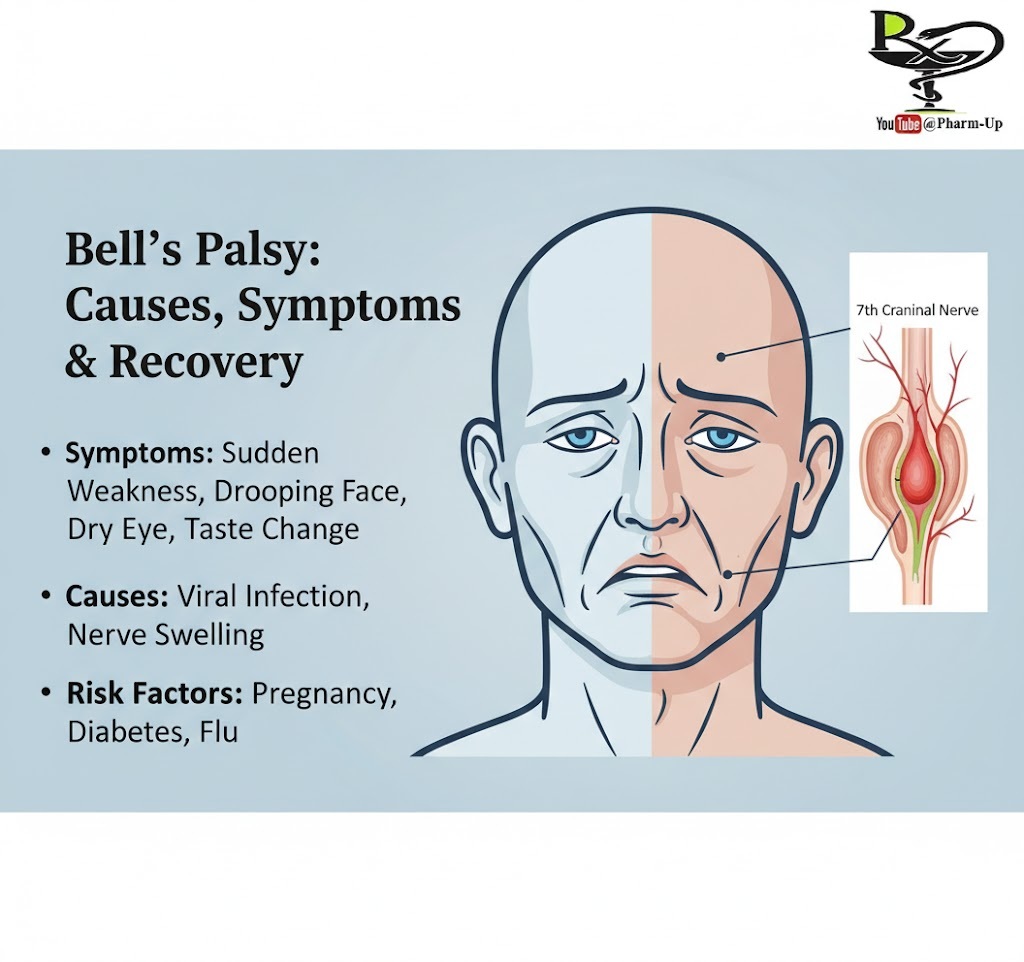
Bell’s Palsy is a condition that causes sudden, temporary weakness or paralysis in the facial muscles. It is the most common cause of facial paralysis globally and typically occurs when the 7th cranial nerve (the facial nerve) becomes compressed or inflamed. While the experience can be alarming—often mistaken for a stroke—the majority of cases are temporary and resolve with time.
What Happens to the Facial Nerve?
The facial nerve controls most of the muscles in the face, as well as parts of the ear and tongue. It travels through a very narrow bony corridor toward the face. Scientists believe that a viral infection (such as the herpes simplex virus or the virus that causes shingles) can cause the nerve to swell. Because the nerve is encased in bone, it has no room to expand, leading to pressure that disrupts the signals between the brain and facial muscles.
Recognizing the Symptoms
Symptoms of Bell’s Palsy appear rapidly, usually reaching their peak intensity within 48 hours. While it almost always affects only one side of the face, the severity can range from a mild twitch to total immobility.
- Facial Presentation: A noticeable “droop” at the corner of the mouth or a drooping eyelid. The affected side may feel stiff or “pulled.”
- Eye Issues: Difficulty closing the eye on the affected side, which can lead to a dry eye or, conversely, excessive tearing.
- Oral Impact: Drooling, a dry mouth, or a significantly impaired ability to taste food.
- Muscle Dysfunction: Twitching, weakness, or total paralysis of the facial muscles.
Who is at Risk?
While Bell’s Palsy can strike anyone at any age, certain groups are statistically more susceptible:
- Expectant Mothers: Specifically during the third trimester or the first week after childbirth.
- Diabetics: Individuals with high blood sugar levels are at a higher risk for nerve-related complications.
- Viral Infections: Those currently recovering from an upper respiratory infection, such as the common cold or the flu.
Prognosis and Recovery Timeline
The outlook for Bell’s Palsy is highly favorable. Statistics show that 3 out of 4 patients improve significantly without any medical intervention.
- The First 2 Weeks: Most people notice the beginning of muscle return and symptom relief.
- 3 to 6 Months: The vast majority of patients achieve a complete recovery and regain full facial symmetry.
- Treatment Options: To speed up recovery, doctors may prescribe corticosteroids (to reduce nerve swelling) or antiviral drugs. Protecting the eye with drops or a patch is also crucial if the patient cannot blink.
Safety Note: If you experience sudden facial drooping, seek emergency medical care immediately to rule out a stroke, which requires a completely different type of urgent treatment.
About the Author